From Rajkot to Bhopal, tier-II India pushes Instamart's next growth wave
/ 3 min read
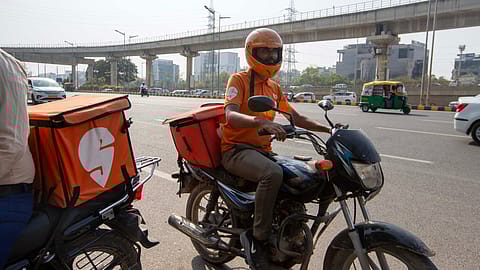
Credits: Sanjay Rawat
From Rajkot to Bhopal, tier-II India pushes Instamart's next growth wave
Instamart's growth in India's quick-commerce sector is driven by Tier-II cities, with Rajkot, Ludhiana, and Bhubaneswar showing significant order increases. The platform's appeal extends beyond groceries to high-value items, with notable purchases like iPhones and gold. Instamart's Quick India Movement sale saw a surge in first-time buyers from smaller cities, contributing significantly to overall sales.
This summary is AI-generated, and Fortune India is not responsible for its content or any associated copyright issues.
Instamart’s Quick India Movement sale helped shoppers save around ₹500 crore, with first-time buyers from Tier-II and Tier-III cities doubling and contributing nearly one-third of all orders placed during the sale period.
Credits: Sanjay Rawat
India’s quick-commerce habits stretched from ₹10 printouts to ₹4.3 lakh gadget splurges in 2025, showing how q-commerce space is no longer just an emergency grocery stop but a platform for everything from daily staples to big-ticket purchases.
According to Instamart’s fifth annual order analysis, Tier-II cities played a central role in the platform's growth.
Rajkot recorded a tenfold year-on-year jump in orders, Ludhiana grew seven times, while Bhubaneswar saw fourfold growth. Health and wellness categories expanded sharply beyond large cities, led by Bhopal with a 16x rise in orders, followed by Varanasi, Ludhiana and Warangal. The data suggests that speed-led commerce is increasingly becoming part of everyday life outside Tier-I markets.
This widening footprint also translated into higher volumes during sales events. Instamart’s Quick India Movement sale helped shoppers save around ₹500 crore, with first-time buyers from Tier-II and Tier-III cities doubling and contributing nearly one-third of all orders placed during the sale period. In one instance from Chennai, a shopper purchased a ₹1 lakh cart for ₹7,000, which included a smartwatch and wireless earphones.
At the extremes, shopping behaviour ranged from ultra-small to ultra-large carts. The smallest order of the year was a ₹10 printout in Bengaluru, while the biggest single cart came from Hyderabad, where a user spent ₹4.3 lakh on three iPhone 17s. Over the year, Instamart’s top spender clocked more than ₹22 lakh in cumulative purchases, buying everything from 22 iPhone 17s and gold coins to milk, eggs, fruits and mints.
Daily essentials continued to anchor repeat usage. India ordered more than four packets of milk per second on the platform in 2025, a volume Instamart says could fill over 26,000 Olympic-size swimming pools. Paneer outsold cheese by more than 50%, while butter and spreads remained a breakfast staple, with nine butter orders placed for every ten cheese orders. Curry leaves, dahi, eggs, bananas and milk dominated repeat purchases, with one Kochi user placing 368 orders for curry leaves alone.
Non-grocery and high-value categories gained further traction. A Mumbai user bought gold worth ₹15.16 lakh through Instamart, while Bengaluru shoppers added a one-kilogram silver brick worth ₹1.97 lakh during Diwali. Gold orders during Dhanteras grew over 400% compared to 2024, showing increasing consumer comfort with purchasing precious metals via quick commerce.
Interestingly, 1 in every 127 orders in Instamart included a condom. September stood out as a peak month for condom purchases on Instamart, with a 24 % surge in orders.
Speed remained central to the platform’s appeal. A pack of instant noodles was delivered in under two minutes in Lucknow, while smartphones reached users in Pune and Ahmedabad in under three minutes during the iPhone 17 launch. Ordering patterns showed peak activity between 7 am and 11 am, and again from 4 pm to 7 pm, indicating that quick commerce is now integrated into daily routines rather than being reserved for emergencies.
More recently, Swiggy Instamart has opened an offline, Instamart-branded experiential store in Gurugram as part of a limited consumer experiment. It is seller-owned and seller-operated, with Instamart providing branding and services. However, the store stocks only a few hundred SKUs, compared with nearly 40,000 SKUs typically housed in a dark store. This development comes only a few days after Swiggy raised a massive ₹10,000 crore via a qualified institutional placement (QIP).
"We ramped our quick commerce business to almost a third of the food delivery business in just ~3 years. This rapid expansion was on the back of increased density of dark stores in existing cities and expansion to new cities," Swiggy had said in its last annual report. It reported $1 billion gross order value in its quick commerce segment.
NEXT STORY