GIFT City can emerge as a credible alternative to Singapore, Dubai: DSP Asset Managers’ Jay Kothari
/ 5 min read
A dollar-denominated investment framework, regulatory stability and a broader product ecosystem can strengthen GIFT IFSC’s appeal to global investors, but currency risk and country-specific tax obligations remain key considerations, says Kothari.
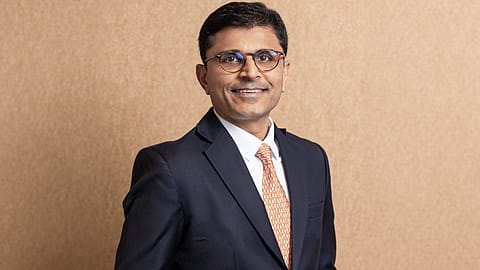
Jay Kothari, executive director and international business head, DSP Asset Managers.
GIFT City can emerge as a credible alternative to established international financial centres such as Singapore and Dubai, with regulatory predictability, product innovation, and ease of doing business determining its ability to attract global capital, says Jay Kothari, executive director and international business head at DSP Asset Managers.
In an exclusive interview with Fortune India, Kothari says GIFT International Financial Services Centre (IFSC) offers global investors, particularly non-resident Indians (NRIs), a dollar-denominated framework to access Indian markets. However, he cautions that investing through a dollar-denominated product does not eliminate currency risk when the underlying assets are Indian securities. Edited excerpts:
What is driving the growing preference among HNIs and NRIs for GIFT City over traditional offshore financial centres?
The interest in India among NRIs and global investors has always been strong. What is changing is the route through which they access Indian markets. GIFT IFSC offers a dollar-denominated investment framework that can make investing in India more convenient for global investors, particularly those who earn and hold their wealth in foreign currency.
For NRIs, investing directly in India through conventional routes can involve currency conversion and additional tax and reporting requirements. GIFT IFSC offers an alternative structure that can simplify the investment experience, depending on the product and the investor’s circumstances. As the ecosystem develops, we expect more global Indians to consider it a preferred route for accessing India’s growth opportunities.
How significant is GIFT City’s dollar-denominated investment ecosystem in addressing currency and cross-border investment concerns?
GIFT IFSC has grown faster and across a broader range of financial services than many would have anticipated. We believe it will increasingly become a preferred gateway for global capital seeking exposure to India. At DSP, we expect GIFT IFSC to play a key role in how international investors access our Indian investment strategies. However, it is important to distinguish between the currency in which an investment is denominated and the currency risk of the underlying assets. A dollar-denominated investment that ultimately invests in Indian securities remains exposed to movements in the rupee. If the rupee depreciates against the dollar, the investor’s dollar returns can be lower; if it appreciates, dollar returns can benefit.
The value of GIFT IFSC, therefore, goes beyond the currency of investment. Depending on the structure, it can offer a more efficient framework for accessing Indian markets, with potential tax and operational advantages over other investment routes. The choice of route should ultimately be guided by the investor’s objectives, tax residency and the structure of the investment.
Can GIFT City realistically emerge as a long-term alternative to established hubs such as Singapore and Dubai?
I have little doubt that GIFT IFSC can emerge as a credible alternative to established financial centres such as Singapore and Dubai. In fact, that transition has already begun, with several fund managers and financial institutions setting up operations in GIFT IFSC or evaluating a shift from traditional offshore jurisdictions.
India has the scale, investment opportunities, and ambition to become a major global financial centre. With continued support from regulators and policymakers, GIFT IFSC has the potential to attract more fund managers, investors, and financial services businesses. The opportunity is not simply to replicate what other financial centres offer. It is to build an ecosystem that combines global standards with direct access to India's capital markets and growth opportunities. Sustaining this momentum will depend on regulatory predictability, ease of doing business, product innovation, and the depth of the overall ecosystem.
{{#most-powerful-women-snapshot-individual.slug}} {{/most-powerful-women-snapshot-individual.slug}} {{^most-powerful-women-snapshot-individual.slug}} {{/most-powerful-women-snapshot-individual.slug}} {{#showRanking}} {{current-rank}} {{/showRanking}} {{#photo.0.url}}
{{name}}
How can the growing AIF ecosystem make sophisticated investment opportunities more accessible to a wider HNI base?
Alternative Investment Funds (AIFs) are an established part of the investment landscape globally, offering access to strategies and asset classes beyond conventional equity and fixed-income investments. As India's wealth base expands, we expect demand for a broader range of investment opportunities to grow as well.
A deeper AIF ecosystem can give HNIs greater choice across investment strategies, risk profiles and time horizons. The opportunity lies in bringing relevant global investment ideas to Indian investors while developing strategies suited to their needs.
However, a wider product range must go hand in hand with investor understanding. These products can involve greater complexity, different liquidity profiles and higher risks. Making sophisticated investments more accessible is not merely about launching more products; it is also about helping investors understand where they fit within a well-diversified portfolio.
What role will regulatory stability and the extension of tax incentives through 2030 play in accelerating investor participation?
Regulatory stability and clarity on the continuity of tax incentives are important in building investor confidence. International investors and financial institutions make long-term decisions about where to establish operations, domicile funds, and deploy capital. They need confidence that the policy framework will remain predictable. The extension of incentives through 2030, where applicable, provides greater visibility for investment and business planning. This can encourage more institutions to establish a presence in GIFT IFSC and develop products for global and domestic investors. Over time, the ecosystem's growth will depend not only on incentives but also on consistent regulation, efficient execution, and the ease with which investors and institutions can operate. These factors together will determine how effectively GIFT IFSC competes with established international financial centres.
What are the key considerations NRIs should evaluate before choosing GIFT City, particularly around their country-specific tax and reporting obligations?
NRIs should begin by understanding their own circumstances rather than choosing an investment route solely based on its perceived tax advantages. Their country of tax residence, the nature of the investment, the fund structure and the applicable tax rules can all influence the outcome.
They should evaluate the tax treatment of returns in both the jurisdiction from which they invest and the country in which they are tax-resident, along with any applicable reporting and disclosure requirements. They should also consider investment costs, liquidity, the underlying portfolio, currency exposure, and the regulatory framework governing the product.
GIFT IFSC can offer a convenient and potentially tax-efficient route to Indian markets, but the benefits are not identical for every investor or product. Investors should undertake their own due diligence and seek qualified tax advice in the relevant jurisdictions before making a decision.
What further policy or ecosystem-level measures could help position GIFT City as India’s preferred gateway for global Indian capital?
GIFT IFSC has already evolved into a vibrant financial ecosystem, extending beyond fund management to banking, insurance, custody, brokerage and specialised activities such as aircraft and ship leasing. This breadth is important because a financial centre becomes more competitive when the different parts of the ecosystem develop together.
The next step is to build on this foundation by continuing to simplify processes, address operational bottlenecks and provide regulatory clarity. As the ecosystem expands, efficient coordination among regulators, service providers and financial institutions will become increasingly important. Equally, the development of a wider range of investment products and stronger international distribution channels will help connect global investors with Indian opportunities. The foundations are in place. Consistent execution and continued collaboration between industry and the authorities will be key to realising GIFT IFSC's full potential.
Follow Fortune India
NEXT STORY