“I felt motivated about taking on this journey on my own,” says Rohit Jain, founder & CEO, Lionsgate Play, on his journey from being an employee to owner
/ 4 min read
Most Hollywood studios are under tremendous pressure in terms of capital allocation, management bandwidth and stock market. In the last three years, most of them have started focusing on their domestic market.
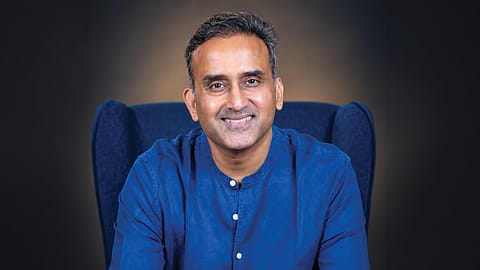
Rohit Jain, founder and CEO of Lionsgate Play
In January this year, Hollywood studio, Lionsgate, sold its streaming platform, Lionsgate Play, to its head of Asia business, Rohit Jain (founder and CEO, Lionsgate Play). While Lionsgate Play continues to offer cutting edge Hollywood content, Jain has recently launched Tiger TV, which aims to bring premium Hindi and Punjabi storytelling to audiences across 12 markets.
Jain is eyeing an over ₹500 crore portfolio of Punjabi and Hindi content IP over the next three years, with over 50 title premieres planned in its first year alone. In an interview with Fortune India, he speaks about his strategy for Lionsgate Play and Tiger TV, as well as the rationale behind the buy-out.
Excerpts:
You joined Lionsgate Play as an employee in 2017, and you now own the streaming platform in India and Asia. What’s your strategy?
We launched Lionsgate Play about seven years ago, and what we really enjoyed is the razor-sharp focus we had on bringing the best of Hollywood to India. We started to just focus on specific kind of content. Within that, we have focused around action, crime and thriller categories of content. In some ways, we are now the home to Hollywood action in India. If I leave aside the two global streaming platforms (Netflix and Amazon Prime Video) and the OTT service of the three broadcasters (JioHotstar, Sony Liv and ZEE5), we are probably the largest service today with five million paid subscribers.
We built out something really cool that we believed in. I did a management buyout. While I have been running the India operations from day one, I entirely own this across countries in Asia. My ambition has always been driven towards creating a certain scale, a legacy. That's what we did with Videocon D2H when we took it public on NASDAQ and created a $1 billion organisation.
I have followed the same template. With the launch of Tiger TV, we will focus on Hindi and Punjabi only. It covers essentially the Hindi speaking market and it also gives us access into key diaspora audiences in US, Canada, UK, Australia and New Zealand. They are dominantly Hindi-Punjabi audiences. That’s the direction of what you will see from us in the years to come. In the first phase, Tiger TV would be launched in 12 countries, but the plan is to expand to 50 countries.
How different is your content from what is already available?
Lionsgate Play is English content, which is best of Hollywood to India. Tiger TV is Hindi and Punjabi, so, it is best of India to the world. Lionsgate Play is around action and crime, this is going to be around comedy, drama and romance. This is a service that we want to focus largely on family and nationalist movies. We have always liked the idea of having 52 premiers in 52 weeks. So, can I make sure I bring something new to the audience every week? If we want to do over 50 premiers in Hindi and Punjabi, a large part of that has to be theatrical movies.
There will be original series too. We are also working on AI projects. Our first project, Eklavya, marks a new chapter in how the platform approaches storytelling and technology, reimagining how stories are told, built and experienced. The project introduces Yug R.Ai, Lionsgate Play’s first AI actor.
You bought a business from a legacy Hollywood studio. Moreover, you were in a category of content which is quite niche. Your competitors are deep-pocketed. What was really playing in your mind?
{{#most-powerful-women-snapshot-individual.slug}} {{/most-powerful-women-snapshot-individual.slug}} {{^most-powerful-women-snapshot-individual.slug}} {{/most-powerful-women-snapshot-individual.slug}} {{#showRanking}} {{current-rank}} {{/showRanking}} {{#photo.0.url}}
{{name}}
As far as competition is concerned, we already took that call when we launched Lionsgate Play. We were very clear that Hollywood is an underserved space. And again, as we speak, there are only three or four apps in India that offers Hollywood content. And, not all of them have the perception of Hollywood. I know JioHotstar may have a lot of Hollywood content, for example, but one usually logs into Hotstar for sports. So, it's also about what personality you form. That call, we took long back and we had tremendous success in that. At five- million paid subscribers, we are already one of the largest services.
To your question on what was playing in my mind, a lot depends from where you are coming from. I came from a lower middle class background, I have seen a very different India. In that context, I think it gives us a different ability of risk-taking. Because in the context of the background I come from, there isn't really much to lose. This is my sixth start-up. I have run Videocon D2H as a startup. My first start-up was when I was 21, I started my CA firm. It was also my first failure. Of course, like all failures, it taught me more than my success. When I did my first start-up, almost everybody told me I was too young to do a start-up at 21. Actually, a lot of people told me I am too old to do this startup (Lionsgate Play). I started Lionsgate office in 2017 from Starbucks. We didn't have an office till 2018.
My job last year was to was to find an exit for my parent company. At some point I felt motivated about taking on this journey on my own. I went to Jim (Jim Packer, president, worldwide television and digital distribution) and said, I would like to take this on. Of course, they have been extremely supportive. We are now taking forward that template, that legacy with Tiger TV.
Why was Lionsgate wanting to exit?
Most Hollywood studios are under tremendous pressure in terms of capital allocation, management bandwidth and stock market. If you see the trend in the last three years, all Hollywood studios have started focusing in their domestic market.
What kind of an equation do you have with the parent company now?
We have a multi-year agreement in terms of brand and content collaboration. So, that continues. As a part of the buyout, we agreed that we will continue to buy Lionsgate content. We have a multi-year deal that continues to support each other on that.
The Lionsgate content is probably 5-7% of our portfolio. Since our focus is on action, crime and thriller, and you know, in Lionsgate Play, we do almost 60 plus premiers every year, we have to buy from at least 25-30 studios and production houses across US and Europe.
Follow Fortune India
NEXT STORY