India’s green hydrogen push hinges on cheaper renewable power, infrastructure, and industrial demand
/ 2 min read
India’s potential to emerge as a green hydrogen exporter will depend on infrastructure that connects production centres with international markets.
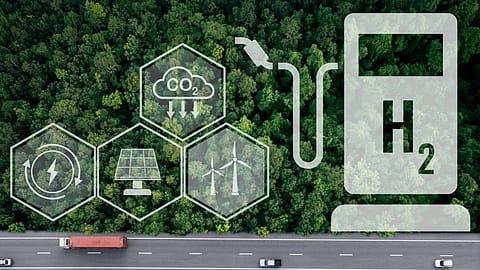
India’s ambitions to scale up green hydrogen production will depend on access to reliable and cost-competitive renewable power, stronger grid, and maritime infrastructure, policy certainty, and sustained industrial demand. | Credits: Fahroni
Industry experts at S&P Global Energy’s Horizons Clean Energy Expansion India 2026 conference highlighted the need for stronger transmission networks, port infrastructure, policy certainty and long-term offtake agreements to scale the green hydrogen market.
India’s ambitions to scale up green hydrogen production will depend on access to reliable and cost-competitive renewable power, stronger grid, and maritime infrastructure, policy certainty, and sustained industrial demand, according to discussions on the second day of S&P Global Energy’s Horizons Clean Energy Expansion India 2026 conference.
The two-day conference brought together stakeholders from the energy, infrastructure, shipping, policy and industrial sectors to discuss the opportunities and challenges shaping India’s clean energy transition.
Cheaper renewable power and stronger infrastructure key to growth
Discussions highlighted that the pace and cost of green hydrogen development will be closely linked to India’s ability to expand renewable energy capacity while strengthening transmission networks and open-access mechanisms.
Developing a competitive domestic supply chain will also be crucial, with industry stakeholders emphasising the need to balance domestic manufacturing ambitions against the cost and speed of adding new capacity.
India’s potential to emerge as a green hydrogen exporter will depend on infrastructure that connects production centres with international markets. Port readiness, shipping capacity, bunkering facilities, and safety protocols for hydrogen derivatives such as ammonia will be critical to supporting exports.
Credible offtake agreements and long-term contracts will also be essential to provide greater certainty to producers and buyers.
Policy certainty and pricing mechanisms crucial for investment
The conference underscored the need for greater alignment between hydrogen policies and standards across major international markets to facilitate cross-border trade.
Transparent price benchmarks, stable regulatory frameworks and effective price-discovery mechanisms will be necessary to reduce uncertainty, attract investment and support the development of a competitive global hydrogen market.
Fertiliser, refining, and steel could drive hydrogen demand
On the demand side, fertiliser, refining and steel emerged as key sectors that could accelerate green hydrogen adoption as India seeks to reduce emissions from hard-to-abate industries.
However, scaling up industrial consumption will require addressing the higher cost of replacing conventional hydrogen, the feasibility of adapting existing facilities and the economics of producing hydrogen on-site versus procuring it from third-party suppliers. The discussions highlighted that expanding production capacity alone will not be sufficient to establish a commercially viable green hydrogen market.
{{#most-powerful-women-snapshot-individual.slug}} {{/most-powerful-women-snapshot-individual.slug}} {{^most-powerful-women-snapshot-individual.slug}} {{/most-powerful-women-snapshot-individual.slug}} {{#showRanking}} {{current-rank}} {{/showRanking}} {{#photo.0.url}}
{{name}}
Instead, India will need coordinated development across the entire value chain, from renewable power generation and transmission networks to port infrastructure, regulatory frameworks, competitive pricing, and long-term industrial demand.
Follow Fortune India
NEXT STORY