Premiumisation hits a price ceiling as India’s durables consumers demand more value
/ 3 min read
As value-conscious buyers seek ‘affordable premium’, brands pivot to design, efficiency and meaningful tech over mere price hikes
THIS STORY FEATURES
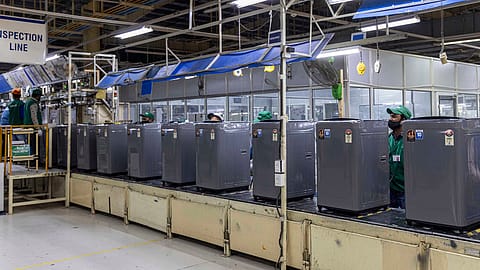
Credits: Narendra Bisht
India’s consumer durables industry is entering a phase where premiumisation alone may not be enough to win consumers. From air conditioners and fans to small appliances and electronics, manufacturers are finding that Indian buyers increasingly want better design, technology, energy efficiency and convenience, but remain sharply conscious of the value they get for every rupee spent.
During a discussion at the CII Consumer Electronics & Durables Summit 2026, Sanjay Sachdeva, managing director and CEO of Bajaj Electricals, described premiumisation as a long-term trend, but cautioned against treating it as the opposite of value.
“We see premiumisation is something which is secular. We see it long term. But we also understand that value and premium are the two sides of the same coin,” Sachdeva said.
According to him, even premium consumers are value conscious, making product design and the ability to identify where consumers see genuine value increasingly important. “How we design the products becomes very important. We design keeping in mind where the cost is and where the real value is,” he said.
That equation is particularly relevant in categories such as air conditioners, where penetration remains below 10% and the industry is looking to expand beyond large urban markets.
Kanwal Jeet Jawa, chairman and managing director of Daikin Air Conditioning India, said consumers are looking for what he called “affordable premium”, rather than simply paying more for a product.
“Customer is looking at affordable premium. Customer is not willing to pay you, even in India, for Ferrari also they want to probably buy it at a Suzuki price. So you need to really bring what the customer wants,” Jawa said.
He said Daikin's approach in India has been to design products around local consumer requirements rather than simply importing features developed for markets such as Europe or Japan. “You design what customer wants,” he said, adding that the company has sought to combine quality and market positioning with affordable pricing.
Technology must solve a consumer problem
For Atomberg Technologies chairman and managing director Manoj Meena, the shift is from consumers being cost sensitive to becoming value sensitive. The distinction, he said, is important because consumers are willing to pay for technology when they can see the benefit.
Atomberg, which began its journey with ceiling fans in 2015, has seen consumers place greater emphasis on the look and feel of products, including colour, material and finish, alongside technology such as motors, controllers and electronics that improve functionality and energy efficiency.
Meena also pointed to health and air quality as emerging areas of consumer demand, particularly in air conditioning. With greater intelligence built into appliances, products can potentially provide consumers with information on air purification, filters and energy consumption.
{{#most-powerful-women-snapshot-individual.slug}} {{/most-powerful-women-snapshot-individual.slug}} {{^most-powerful-women-snapshot-individual.slug}} {{/most-powerful-women-snapshot-individual.slug}} {{#showRanking}} {{current-rank}} {{/showRanking}} {{#photo.0.url}}
{{name}}
“AI, intelligent devices would be the new wave I believe where every appliance will go,” Meena said.
For the industry, however, the challenge is to make these features meaningful without pushing products beyond the consumer's willingness to pay. Bajaj Electricals’ Sachdeva described this as the real meaning of frugal innovation.
“Frugal innovation is not about just cost reduction. It's about giving a better value,” he said. That requires understanding changing lifestyles and consumer needs around wellness, connectivity and security, and then delivering them “in the most cost efficient way”.
The changing consumer journey is adding another layer to this equation. Sachdeva said product discovery, once concentrated in mass media and retail stores, is increasingly happening through digital platforms, with consumers in smaller towns discovering products at almost the same time as those in major cities.
“The discovery speed is changing,” he said, adding that the person buying the product may also be influenced by a younger family member.
For manufacturers, this means the value proposition has to be clear much earlier in the purchase journey, while the product itself has to justify its price through tangible benefits. JS Gujral, managing director of SYRMA SGS Technology, brought the manufacturing side of the equation into focus. While consumer-facing companies are trying to offer more value, manufacturers are facing intense cost and efficiency pressures.
“I am of the firm opinion profits are made on the shop floor,” Gujral said, arguing that Indian manufacturing will have to become increasingly efficient as value additions and margins come under pressure.
Ultimately, better energy efficiency, design, convenience, health features and connected technology can command a premium, but only when consumers see a clear benefit.

Follow Fortune India
NEXT STORY