Will the RBI relent on the Tata Sons merger proposal?
/ 3 min read
Tata Trusts chairman Noel Tata has proposed merging unlisted subsidiaries Tata Electronics Systems Solutions and Tata Consulting Engineers into Tata Sons to take it out of the NBFC ambit.
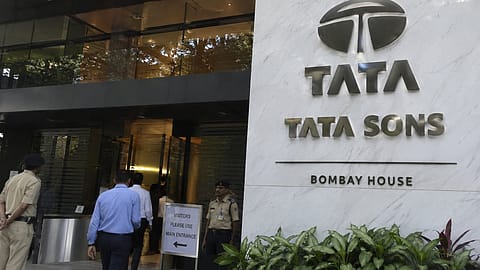
Tata Trusts, which holds over 66% stake in the holding company of the salt-to-chip conglomerate, had on Monday submitted the proposal to the chairman of Tata Sons, which will change the contours of the non-bank core investment company.
The proposal from Tata Trusts to merge two unlisted subsidiaries, Tata Electronics Systems Solutions and Tata Consulting Engineers, into Tata Sons, to take it out of the NBFC purview is unlikely to be cleared by the Reserve Bank of India (RBI) in a hurry.
Tata Trusts, which holds over 66% stake in the holding company of the salt-to-chip conglomerate, had on Monday submitted the proposal to the chairman of Tata Sons, which will change the contours of the non-bank core investment company, which would earn most of its income from operating businesses rather than financial assets.
Farokh N. Subedar, advisor to Tata Trusts, said the change is not a new direction for Tata Sons. According to Subedar, Tata Sons has had operating businesses and revenues for close to 80 of its 100 years and used that income to fund newer ventures. He mentioned that Tata Consultancy Services was a division of Tata Sons until it was demerged in 2004, adding that other operating businesses followed the same path.
Based on figures as of March 31, 2026, the Trusts said the new merged entity would have operating revenues of ₹1,05,043 crore, or 64.3% of total income, well above its income from financial assets of ₹40,072 crore. Hence, it will no longer meet the “principal business criteria” that defines an NBFC. Following the merger, the company’s net assets would be ₹2,00,158 crore, of which investments in group companies would be ₹1,77,120 crore. “That is below the 90% threshold that makes a company a CIC,” said Subedar.
The amalgamation of operating non-financial companies (such as TESS and TCE) will need to be undertaken in accordance with the provisions of the Reserve Bank of India (Non-Banking Financial Companies – Voluntary Amalgamation) Directions, 2025, including the requirement to obtain a prior ‘no objection certificate’ from the regulator. Given that TSPL will also cease to be a CIC upon the conclusion of the proposed reorganisation, TSPL will be required to surrender its certificate of registration.
”We are attacking the root of the issue as we will not be an NBFC. And in fact, if you look at most very large business groups, their parent company has a large operating business,” Subedar had said at the media briefing on Monday.
RBI unlikely to decide in a hurry
However, a source with the Reserve Bank of India told Fortune India that the Trusts’ proposal “violates the guidelines in letter and spirit”.
The RBI had rejected Tata Sons’ application to deregister as a non-banking core investment company and has even filed a caveat in the Bombay High Court which will allow the central bank to be heard first in the event Tata Sons, Tata Trusts or any other petitioner challenges the decision or seeks a stay in the court.
While the Tata Sons board needs to ratify the proposal at a board meeting, the current stalemate between the chairman of Tata Trusts and the board of Tata Sons means the proposal is unlikely to be cleared anytime soon.
But even if Tata Sons were to accept the proposal and send it to the RBI, the source said the regulator “will deliberate [on the proposal] at length before a yes or a no as the merger appears to post-facto move aimed at avoiding the listing”.
In fact, when Fortune India had asked Subedar on what is the probability that the RBI will sit on the proposal just as it had for over two years on its original deregistration proposal, Subedar had said: “There is a regulation under which you are entitled to get out. Now, if we fall under the regulation, we don’t see why RBI should reject it.”
{{#most-powerful-women-snapshot-individual.slug}} {{/most-powerful-women-snapshot-individual.slug}} {{^most-powerful-women-snapshot-individual.slug}} {{/most-powerful-women-snapshot-individual.slug}} {{#showRanking}} {{current-rank}} {{/showRanking}} {{#photo.0.url}}
{{name}}
He went on to add that Tata Sons is unique. “Our entire shareholding is concentrated in one company. One talks about transparency and simple structures. Here is the simplest of simple structures. Like, instead of having 300 or 500 companies which have shareholders and now, of course, LLPs is the new avatar, which is totally outside the purview of this particular regulation, here is an entity which has been totally transparent, does not want to split its holding into 25 companies, and wants to comply with every regulation of the law,” said Subedar.
Follow Fortune India
NEXT STORY