YouTube, Balaji Telefilms join hands to launch premium shows
/ 2 min read
The five-show, 200-episode partnership comes as YouTube’s CTV reach expands, giving Balaji a new route to monetise premium content while retaining rights to the underlying IP
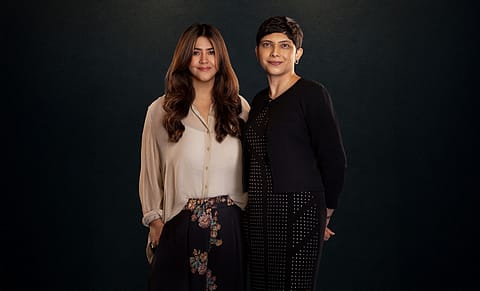
Ekta Kapoor, Joint MD, Balaji Telefilms Ltd. and Gunjan Soni, Managing Director - India, YouTube
YouTube and Balaji Telefilms are entering a five-show, 200-episode partnership as India's video viewing shifts to connected television (CTV), opening a route for long-form fiction beyond broadcast and subscription.
Balaji will produce five digital-first shows, with Ekta Kapoor leading the creative direction and retaining the intellectual property (IP). YouTube will provide distribution and monetisation through advertising and brand partnerships. The slate includes Haq Se Season 2, Phir Pyar Ki Yeh Kahani Suno and Kehne Ko Humsafar Hai Season 4, along with other projects in development. The shows will be produced in 4K and available globally.
The companies did not disclose financial details, including production funding or revenue-sharing terms. Kapoor described Balaji's approach as a “calculated risk policy” of “taking risk with enough calculations to de-risk your content”.
The slate joins a digital business still small relative to Balaji's operations. In its FY25 annual report, the company put digital revenue at ₹50 crore, with more than 10 million YouTube subscribers.
Can CTV make long-form digital entertainment more viable?
YouTube says the average online adult in India watched more than 72 minutes a day in April 2025, and that it reached more than 75 million adults on connected TV that month.
Gunjan Soni, managing director—India, YouTube, said CTV is expanding rather than redistributing viewers. “It is actually a fast-expanding pie. It gives a huge opportunity to create an entire new set of businesses,” she said.
Ownership matters as much as distribution. “Creativity and a certain amount of risk-taking in either scale, budgeting or storytelling can only happen if you have skin in the game. And owning the IP is that skin in the game,” Kapoor said.
She pointed to Kasamh Se, the Prachi Desai-led show Balaji produced but does not own. “I don't have the IP, so I can't decide its distribution. I can't decide when it comes back,” she said. Producer IP ownership is the norm in other markets but not in India.
Producing 200 episodes depends on scale. “In volume creation, you usually work out better costings,” Kapoor said, describing a balance between keeping per-episode costs from “burdening the economics of the programme” and giving characters room to develop. “You have to know where fatigue is setting in and then back off. Which channels don't do.”
How could episodic content change digital advertising economics?
For advertisers, the draw is the content structure rather than the spot. “The fact that it's episodic, it provides a certain continuity and a certain volume,” Soni said, adding that integrations “have been a hallmark of traditional TV” and will shape “the future of digital advertising”.
The deal gives Balaji another distribution channel while keeping the IP on its balance sheet, and gives YouTube scripted programming to monetise against a growing CTV audience.
{{#most-powerful-women-snapshot-individual.slug}} {{/most-powerful-women-snapshot-individual.slug}} {{^most-powerful-women-snapshot-individual.slug}} {{/most-powerful-women-snapshot-individual.slug}} {{#showRanking}} {{current-rank}} {{/showRanking}} {{#photo.0.url}}
{{name}}
Asked how Balaji will measure success beyond views, Kapoor framed the objective in terms of the format rather than numbers. “We are hoping it's a comeback of fiction,” she said. “Fiction is suffering the onslaught of short format, of reality TV, of everything that is instant excitement. Fiction is like single malt. It grows on you.”
The commercial test will be whether the 200-episode slate generates repeat audiences, advertising demand that supports production costs, and IP that retains value after its first run.
Follow Fortune India
NEXT STORY