Zepto clocked ₹17,000 crore in user savings and a 48-second delivery in 2025
/ 2 min read
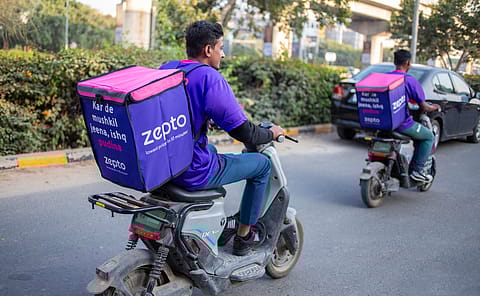
Zepto Delivery Partner | Credits: Sanjay Rawat
Zepto clocked ₹17,000 crore in user savings and a 48-second delivery in 2025
In 2025, Zepto's quick commerce platform reported significant user savings of ₹17,000 crore and a record 48-second delivery, highlighting the growing reliance on ultra-fast services for daily essentials. The app was accessed over 34.6 billion times, with delivery partners covering 2.45 billion kilometers, showcasing the sector's rapid integration into everyday life.
This summary is AI-generated, and Fortune India is not responsible for its content or any associated copyright issues.
The data also points to rising order frequency and higher-value purchases.
Zepto Delivery Partner | Credits: Sanjay Rawat
Quick commerce firm Zepto says Indian consumers are shopping more frequently, placing bigger baskets, and relying on ultra-fast delivery for both daily essentials and impulse needs, according to its year-end trends report for 2025.
The report shows the scale at which quick commerce has become embedded in everyday life. Zepto said its app was opened over 34.6 billion times during the year, while delivery partners collectively covered more than 2.45 billion kilometres. The fastest delivery on the platform was completed in 48 seconds, underlining the race for speed in the sector.
Beyond speed, the company claims consumers are also saving money. Zepto estimates that users saved nearly ₹17,000 crore in 2025 due to competitive pricing and faster access to essentials, though the company did not disclose how these savings were calculated.
The data also points to rising order frequency and higher-value purchases. One customer in Mumbai placed a single order worth ₹1.89 lakh, while another user completed nearly 5,900 deliveries over the year, averaging around 16 orders a day, the report said. Tips to delivery partners are also climbing, with a user in Gurugram tipping ₹54,000 over multiple orders.
City-level data highlights how quick commerce habits vary across regions but are anchored around staples. In Bengaluru, milk, tomatoes and packaged snacks topped order charts, while last-minute tech needs stood out with over 69,000 Type-C charging cables ordered. Mumbai consumers leaned heavily on milk, onions and bottled water, and the city logged consumption of over 7.8 lakh litres of energy drinks, reflecting its round-the-clock lifestyle.
Delhi NCR showed a split in preferences within the region. While milk, onions and packaged chips were among the most ordered items, North Delhi favoured guavas and South Delhi leaned towards avocados, according to the report. Face masks continued to feature prominently, with more than 1.3 lakh units ordered during the year.
Hyderabad’s data showed strong demand for milk, snacks and carbonated beverages, alongside traditional preferences such as Osmania biscuits, with over 65,000 kilograms ordered. The report also noted a rise in “contradictory” baskets across cities, with consumers frequently ordering health-focused products alongside indulgent food items.
The findings come at a time when quick commerce players are pushing to deepen penetration beyond top metros while managing rising competition and costs. While at the same time, delivery workers associated with major platform companies including Zepto have announced a nationwide strike on December 31, 2025, demanding better pay, job security and safer working conditions.
Follow Fortune India
NEXT STORY