The FAQs are AI-generated, and Fortune India is not responsible for its content or any associated copyright issues.
Budget 2026: Crisil pitches ₹12-lakh crore capex to sustain infra-led growth
/ 3 min read
Crisil further expects the Budget to revive asset monetisation
Budget 2026: Crisil pitches ₹12-lakh crore capex to sustain infra-led growth
Crisil Intelligence advocates for a ₹12-lakh crore capex in the Union Budget 2026 to sustain infrastructure-led growth, focusing on roads, railways, and logistics. The budget is expected to revive asset monetisation and accelerate the National Monetisation Pipeline, aiming to enhance India's global competitiveness and reduce logistics costs.
This summary is AI-generated, and Fortune India is not responsible for its content or any associated copyright issues.
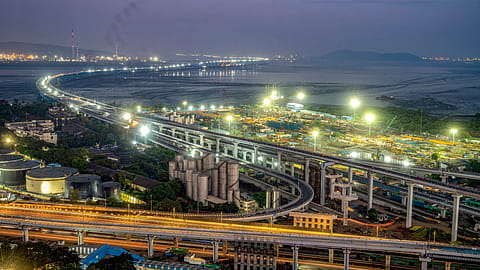
India’s infrastructure landscape has expanded rapidly over the past few years, with the government using public capital expenditure as a key growth driver
Crisil further expects the Budget to revive asset monetisation
As the Union Budget 2026 draws closer, industry leaders are urging the government to step up infrastructure spending while extending policy support to housing, energy transition, and faster project execution. Crisil Intelligence has pitched for a continued infrastructure-led growth strategy with a sharp focus on capital expenditure.
“India’s Union Budget 2026 must sustain the infrastructure-led growth trajectory with a capex outlay near ₹12 lakh crore, reinforcing roads, railways and logistics to unlock economic multipliers,” said Jagannarayan Padmanabhan, Senior Director and Global Head, Consulting at Crisil Intelligence.
Crisil further expects the Budget to revive asset monetisation. “The Budget should also accelerate the launch of National Monetisation Pipeline (NMP 2.0) with an ambitious ₹10 lakh crore target over FY26-30, unlocking brownfield asset value to fund new projects,” he added, noting that such steps could reduce logistics costs and strengthen India’s global competitiveness.
Within infrastructure, the railways sector is also looking at Budget 2026 as a test of execution and reform-led growth rather than just headline allocations.
Vivek Lohia, Managing Director, Jupiter Wagons Limited, said, “With the Union Budget 2026-27 approaching, the rail sector is entering a phase where execution and reform will matter as much as headline allocations. The Railways Minister’s ‘52 Reforms in 52 Weeks’ programme signals a clear push toward system-wide improvements in operations, safety, and service delivery.”
Based on current trends, Lohia expects a modest increase in rail spending. “The rail outlay is expected to see a calibrated increase of around five percent, taking the overall allocation to approximately ₹2.65 lakh crore, including extra-budgetary resources,” he said.
India’s infrastructure landscape
India’s infrastructure landscape has expanded rapidly over the past few years, with the government using public capital expenditure as a key growth driver. Experts suggest that large national programmes such as Bharatmala, Sagarmala, Dedicated Freight Corridors, metro rail projects, and airport modernisation have improved road connectivity, logistics efficiency, and urban mobility.
Recommended Stories
At the same time, infrastructure spending has been aligned with long-term goals such as manufacturing growth, export competitiveness, and energy transition, with rising investments in renewable power, transmission networks and digital infrastructure.
This push has been backed by steadily higher budgetary allocations. The government’s capital expenditure has more than doubled to about ₹11.1 lakh crore in FY25 from around ₹4.4 lakh crore in FY20, with infrastructure accounting for a major share. The Union Budget 2025 continued this trend by prioritising roads, railways, and urban infrastructure while also supporting states through interest-free capex loans.
Manoj Gaur, CMD, Gaurs Group, said continuity in infrastructure spending along with macro stability. “We expect that the forthcoming Budget will add to the momentum experienced by the real estate sector in the last few years. While we believe that infrastructure development will continue to receive higher allocation, we are also hopeful that the accommodative stance on the repo rate, along with continued thrust on growth and measures to keep inflation under control, will be accorded priority,” he said.
Gaur also sought relief for homebuyers. “We also appeal to the government to consider widening the scope of EWS and PMAY, and reinstate the benefits under Section 80EEA. These steps will bring relief to the first-time homebuyers and provide a much-needed fillip to the affordable housing segment,” he said, adding that single-window clearances and industry status for real estate remain key demands.
RANK
COMPANY NAME
REVENUE
(INR CR)
(INR CR)
{{#current-rank}} {{current-rank}} {{/current-rank}} {{^current-rank}} {{rank}} {{/current-rank}} {{name}} {{#revenue}} {{revenue}} {{/revenue}} {{^revenue}} {{noi}} {{/revenue}}
Improve affordability and ease of doing business
Alongside infrastructure, real estate players are looking for measures that improve affordability and ease of doing business.
Sandeep Chhillar, Founder and Chairman, Landmark Group, said policy clarity and tax support could lift demand across segments. “Ahead of Budget 2026, we expect the government to adopt a holistic approach. Enhancing tax incentives for individuals can strengthen housing demand, while rational taxation and policy clarity can enhance the viability of office and retail developments,” he said, while adding, “execution delays continue to be a concern. “Faster project approvals through a single-window clearance system remain essential to reduce cost overruns and execution delays.”
From an industry body perspective, Ashwinder R. Singh, Chair, CII Real Estate, said affordability and predictability should be central to the Budget. “The Budget can accelerate India’s housing cycle by improving affordability and reducing friction. Key expectations include a higher home-loan interest deduction, continued incentives for affordable housing, and faster approvals through digitisation and single-window timelines,” he said.
According to Singh, “A stable, predictable policy framework will be the biggest confidence signal for both consumers and investors.”