Explained: What is SHANTI Bill and the key concerns about it
/ 3 min read
Opposition criticises the bill for several reasons including the bill prioritises investment over safety and accountability in one of the country’s most critical sectors
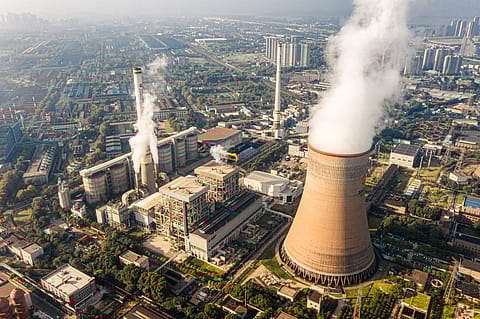
nuclear plant | Credits: shutterstock
Fortune India Explainer: The Lok Sabha recently passed the Sustainable Harnessing and Advancement of Nuclear Energy for Transforming India (SHANTI) Bill. This is aimed at replacing the Atomic Energy Act, 1962 and the Civil Liability for Nuclear Damage Act 2010 to overhaul India’s nuclear sector and energy laws by allowing private participation in the sector. Here is a detailed overview of the bill that explains why it matters for India’s nuclear ambitions and what the critics say about it.
Addressing the Parliament on the bill, Jitendra Singh, Minister of State for the department of atomic energy, said, “The SHANTI Bill marks a historic reform in India’s nuclear sector, unlocking its potential for peaceful, clean, and sustainable energy while maintaining uncompromising standards of safety, sovereignty, and public interest.”
He emphasised that such a reform was inconceivable for over six decades and became possible only due to Prime Minister Modi’s ability to dismantle legacy taboos and align India’s policies with global best practices.
However, the Opposition criticises the bill for several reasons including the bill prioritises investment over safety and accountability in one of the country’s most critical sectors.
Congress leader, Shashi Tharoos criticised the bill for containing the fundamental structural flaws. “SHANTI Bill is a milestone but for wrong reasons it is written with exceptions and heavy on discretion and largely indifferent to public welfare. The bill in its current form contains the fundamental structural flaws,” he said in the Parliament.
“It completely neglects the serious, massive and irreversible risks from radioactive leaks, long-lived nuclear waste and the potential for catastrophic accidents,” Throor added.
What is the SHANTI Bill actually?
The Bill replaces the old nuclear laws from 1962 and 2010. Now, all the rules are in one new act. This is expected to improve the management of rules and processes regarding nuclear energy.
For the first time, Indian private companies, joint ventures, and even foreign companies can construct and operate nuclear plants in India. This was not the case before, where only Nuclear Power Corporation of India (NPCIL) was authorised to do so.
Entry will still be private, and the government will regulate sensitive and important domains such as nuclear fuel, heavy water, and radioactive waste with the aim of safeguarding national security.
The Atomic Energy Regulatory Board (AERB) is going to receive statutory powers and will be responsible to Parliament. The intention is to make regulation more transparent and independent.
The Bill has removed the liability of the suppliers and has fixed the liability only for the operators of the plants, and the liability is also limited depending on the capacity, and not on the damage caused by the plants.
A tribunal for atomic disputes will also be established with the objective of addressing atomic disputes more efficiently.
It promotes new nuclear technology such as Small Modular Reactors and helps and supports a ‘cleaner and more secure’ energy vision for India in the years to come.
It aims to ensure nuclear security through modifications and introduces new measures
Concerns about the SHANTI Bill?
The loss of liability on the part of the supplier, along with reduced penalties on the part of the operators, has been the focus of criticism that the Bill does not promote accountability in the event of a nuclear accident
Critics argue that the measure of liability based on the size of the plant, rather than the actual damage, violates the polluter pays principle and can result in endangering public safety.
They further highlight that corporations may end up gaining profits while the government and the people will ultimately incur the cost of any potential accident.
Cases like India’s past experiences with industries turning to disasters, as happened in the Bhopal Gas Tragedy of 1984, make them take safety and accountability measures seriously.
India’s present Nuclear energy landscape
{{#most-powerful-women-snapshot-individual.slug}} {{/most-powerful-women-snapshot-individual.slug}} {{^most-powerful-women-snapshot-individual.slug}} {{/most-powerful-women-snapshot-individual.slug}} {{#showRanking}} {{current-rank}} {{/showRanking}} {{#photo.0.url}}
{{name}}
The nuclear power capacity for the year 2025 for India is 8.18 GW, and the targeted capacity for 2047 is 100 GW.
Currently, India has over 20 nuclear reactors, which are being operated by the NPCIL in the country. Many others are expected to follow in the coming years.
The Union Budget 2025-26 has launched the Nuclear Energy Mission to promote research on Small Modular Reactors.
India plans to construct and run a minimum of five indigenous SMRs by the year 2033.
New technologies include: Bharat Small Reactors, or BSRs; Small Modular Reactors, or SMRs; Molten Salt Reactors, or MSR; and High Temperature Gas-Cooled Reactors.
Follow Fortune India
NEXT STORY