Hormuz disruption may squeeze India’s LNG supply, hit industries: Report
/ 2 min read
The crisis intensified after the United States and Israel carried out coordinated strikes on Iran in late February
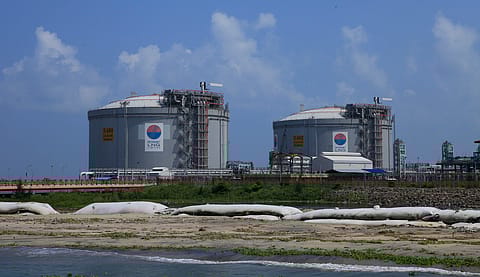
Credits: Fortune India archive
The escalating conflict involving Iran and the closure of the Strait of Hormuz could trigger a sharp squeeze in liquefied natural gas (LNG) supplies to India, posing risks for several energy-dependent sectors and potentially disrupting industrial activity, according to a report by Shriram Asset Management.
On February 28, in a dramatic escalation of long-standing tensions, the U.S. and Israel launched coordinated airstrikes across Iran under Operation Epic Fury. The strikes targeted Iran’s nuclear facilities and military infrastructure and killed several top leaders, including Supreme Leader Ayatollah Ali Khamenei.
The conflict soon spilled into the energy markets after Iran struck key infrastructure in the Gulf.
LNG supply risk for India
The Strait of Hormuz, one of the world’s busiest energy shipping routes, has been severely disrupted due to naval mines reportedly deployed by Iran.
“It is now confirmed that Iran has begun laying naval mines in the Strait of Hormuz… Even a ‘suspected’ minefield can halt all commercial traffic as insurers simply won't underwrite tankers into a mine-risk zone,” the report said.
Roughly 150 vessels, including 30–40 oil and LNG tankers, used to pass through the strait every day. According to the report, reopening the route could take weeks even if hostilities stop immediately.
“Even in an optimistic scenario where hostilities were to stop tomorrow, physical reopening of the Strait to commercial tankers could take anywhere between 4 to 8 weeks,” it said, warning that global LNG and crude markets may face tight supplies through the second quarter of 2026.
India appears particularly vulnerable to the disruption in gas flows. The report said 55–65% of India’s LNG imports pass through the Strait of Hormuz, while Qatar alone accounts for around 40% of India’s LNG imports.
“The scale of the disruption and India’s dependence on Qatari gas however means that LNG supplies will likely be very hard to procure,” the report noted, adding that oil supplies may be easier to substitute with imports from Russia and some shipments from Saudi ports on the Red Sea.
Industrial sectors face pressure
The tightening gas availability is already affecting domestic industries as the government prioritises supply for essential sectors such as households, hospitals and fertiliser production.
“Gas shortages are already hitting industrial end customers in India as India tries to direct the available domestic supplies to priority sectors like households, hospitals, and fertilizers,” the report said.
{{#most-powerful-women-snapshot-individual.slug}} {{/most-powerful-women-snapshot-individual.slug}} {{^most-powerful-women-snapshot-individual.slug}} {{/most-powerful-women-snapshot-individual.slug}} {{#showRanking}} {{current-rank}} {{/showRanking}} {{#photo.0.url}}
{{name}}
Sectors such as fertilisers, chemicals, city gas distribution, and ceramics are among the most exposed. For instance, about 65% of India’s ammonia imports come from Saudi Arabia, and Oman, raising concerns about fertilizer production if disruptions persist.
Ceramic clusters such as Morbi in Gujarat could also face shutdowns as gas supplies tighten. According to the report, factories in the region may be able to operate for only 10–15 days at current fuel availability.
Follow Fortune India
NEXT STORY