India, EU poised to seal landmark free trade pact at New Delhi summit on January 27
India, EU poised to seal landmark free trade pact at New Delhi summit on January 27
India and the EU are on the verge of finalizing a landmark free trade agreement at the EU–India Summit in New Delhi on January 27, after nearly two decades of negotiations. The deal, supported by leaders like Prime Minister Modi and Chancellor Merz, aims to enhance trade flows and strengthen economic ties between India and the EU.
The deal could mark EU’s biggest trade pact with a major emerging economy in over a decade
India and the European Union (EU) could be on the cusp of clinching a long-pending free trade agreement (FTA) at the upcoming EU–India Summit in New Delhi on January 27, potentially marking a decisive breakthrough after nearly two decades of negotiations.
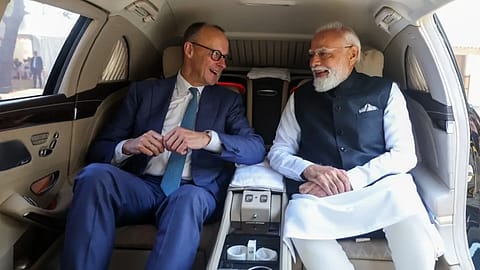
“Prime Minister Modi and Chancellor Merz reiterated their support for the conclusion of the India–EU Free Trade Agreement as a key outcome of the upcoming EU-India Summit, which will facilitate trade flows and inject further momentum into German-Indian economic relations,” according to the India–Germany Joint Statement issued by the Prime Minister’s Office.
German Chancellor Friedrich Merz, speaking after talks with Prime Minister Narendra Modi during his visit to Gujarat, said the agreement was crucial to unlocking the full potential of India–EU economic ties. “We must not and do not want to leave this opportunity unused,” Merz told reporters, adding that negotiations were “close to completion”. He also pointed to the EU’s recent agreement with Mercosur nations as an encouraging sign for long-running trade talks.
European Commission President Ursula von der Leyen and European Council President António Costa are expected to travel to New Delhi later this month and could sign the agreement at the summit if the remaining issues are settled. Talks on the India–EU FTA began in 2007, stalled in 2013, and were formally relaunched in June 2022 alongside parallel negotiations on investment protection and geographical indications.
The deal would be the EU’s most significant trade agreement with a large emerging economy in more than a decade, as Brussels seeks to diversify supply chains beyond China and counter rising global protectionism. According to the European Commission, EU–India goods trade reached €120 billion in 2024, accounting for 11.5% of India’s total goods trade.
While broad political momentum is evident, sensitive issues remain, including market access, services, public procurement, intellectual property and sustainability provisions. A key friction point has been the EU’s Carbon Border Adjustment Mechanism (CBAM), which India has criticised for potentially impacting exports.
Commerce and Industry Minister Piyush Goyal has said negotiations are in the final stages. Speaking in Rajkot on Monday, Goyal said the deal was “nearly finalised”, noting that outstanding issues had narrowed after recent talks in Brussels, even as India continues parallel trade discussions with the United States.