India tops macroeconomic resilience ranking among 10 major economies: ASSOCHAM
/ 2 min read
India scores 71/100 for 2026-30, ahead of China, Japan, and Russia; strong growth, savings and investment underpin top ranking.
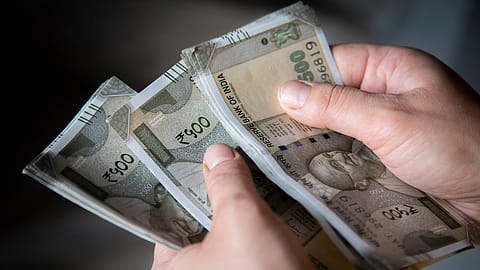
India's top ranking for 2026-30 was driven by its first-place ranking in real GDP growth and real GDP per capita growth. | Credits: Sanjay Rawat
India has emerged as the most resilient economy among the world’s 10 leading economies for the 2026-30 period, according to an ASSOCHAM assessment that ranks countries across key growth, fiscal, external-sector and investment indicators.
India scored 71 out of 100 on ASSOCHAM's Comparative Macroeconomic Resilience Score, ahead of China at 66, followed by Japan and Russia at 60 each. Germany scored 59 while Italy and Brazil were placed at 53 each. The U.K. scored 52, France 40, and the U.S. 36.
The findings were published in ASSOCHAM Global Research and Strategy Centre's latest report, India's Economic Edge in the Top Ten Economies.
India moves from third place to the top
India's position marks a significant improvement from the 2021-25 period, when it ranked third with a score of 66, behind Russia at 74 and China at 71. The industry body assessed the 10 economies across indicators including real GDP growth, export growth in goods and services, current account balance, government debt, fiscal balances, real GDP per capita growth, gross national savings, and gross capital formation.
Using data from the International Monetary Fund's World Economic Outlook database, ASSOCHAM ranked the economies on each indicator and converted their rankings into marks to arrive at the final resilience score. The study assessed the 2021-25 period retrospectively and 2026-30 as the forward-looking period while also examining 2025 and 2026 separately.
India's top ranking for 2026-30 was driven by its first-place ranking in real GDP growth and real GDP per capita growth. It ranked second in gross savings and gross capital formation, third in export growth and the debt-to-GDP ratio, and fifth in the primary fiscal balance.
India ranked seventh in the current account and structural fiscal balance indicators and eighth in the overall fiscal balance.
China, which secured the second position with 66 points, ranked first in export growth, gross savings and gross capital formation. It was placed second in real GDP growth and real GDP per capita growth.
Growth and investment underpin India's resilience
“India’s leading position in the Comparative Macroeconomic Resilience Score reflects the strength of its growth and the progress made in building its macroeconomic foundations," said Nirmal K. Minda, President, ASSOCHAM.
India's real GDP growth is projected at 6.9% during 2026-30, the fastest among the 10 economies assessed, according to the report. The country's savings and investment rates are also projected to remain among the highest, while its debt ratio is expected to decline over the forecast period.
“India’s strong growth momentum, robust savings and investment rates, and improving fiscal indicators provide a solid foundation for sustained economic expansion,” said Saurabh Sanyal, Secretary General, ASSOCHAM.
{{#most-powerful-women-snapshot-individual.slug}} {{/most-powerful-women-snapshot-individual.slug}} {{^most-powerful-women-snapshot-individual.slug}} {{/most-powerful-women-snapshot-individual.slug}} {{#showRanking}} {{current-rank}} {{/showRanking}} {{#photo.0.url}}
{{name}}
Fiscal consolidation remains a key challenge
Despite the strong overall score, the report flagged fiscal consolidation as an area requiring continued attention. India's general government deficit, which was the largest among the 10 economies during 2021-25, is projected to narrow from an average of 8.5% of GDP to 7.1% during 2026-30. ASSOCHAM said greater expenditure efficiency could further strengthen the country's fiscal position.
Dr S P Sharma, Chief Economist, ASSOCHAM, said sustaining reforms, boosting private investment, expanding manufacturing and exports, and developing a globally competitive workforce would be critical to maintaining India's economic momentum. He also called for efforts to reduce the cost of capital, power, compliance, logistics and labour, particularly to improve competitiveness and ease of doing business for MSMEs.
Follow Fortune India
NEXT STORY