The FAQs are AI-generated, and Fortune India is not responsible for its content or any associated copyright issues.
Rate cut, liquidity push: Economists, industry players see RBI's move as timely macro boost
/ 4 min read
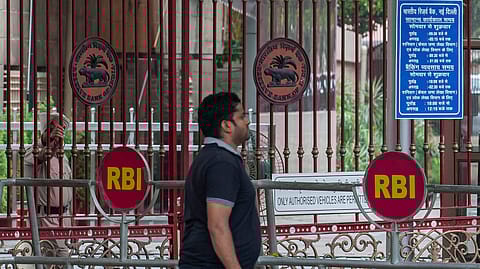
Economists and industry experts commend the RBI's 25-basis-point repo rate cut to 5.25% as a timely move to bolster growth amid low inflation. | Credits: Sanjay Rawat
Rate cut, liquidity push: Economists, industry players see RBI's move as timely macro boost
The RBI's 25-basis-point rate cut to 5.25% and liquidity measures are viewed as critical for sustaining growth. Economists highlight the importance of these actions in supporting economic momentum and improving credit access. The policy is seen as a response to strong growth and low inflation, with expectations of further rate cuts to enhance economic resilience.
This summary is AI-generated, and Fortune India is not responsible for its content or any associated copyright issues.
The RBI's liquidity measures, including OMOs and a $5-billion forex swap, are seen as crucial for sustaining economic momentum. This policy is expected to support growth and improve credit access, reinforcing a positive economic trajectory.
Economists and industry experts commend the RBI's 25-basis-point repo rate cut to 5.25% as a timely move to bolster growth amid low inflation. | Credits: Sanjay Rawat
India’s economists and market watchers have hailed the RBI’s 25-basis-point repo rate cut to 5.25%, calling it a timely move, prompted by strong growth numbers and low inflation. They feel that this fiscal, economic data has surprised on both growth and inflation fronts, creating elbow room for the RBI to initiate a key rate cut. Apart from the rate cut, the RBI’s moves such as liquidity infusion through OMOs and a $5-billion forex swap are being seen as critical for sustaining growth momentum into 2026.
Experts say accompanying liquidity-enhancing measures, including open market purchases and forex swaps, underscore the growth-supportive nature of this policy decision. “The repo rate cut is expected to support growth next fiscal, as monetary policy typically has a lagged effect. Today’s liquidity-enhancing measures will also help transmit the policy rate cut to broader market interest rates,” says Dharmakirti Joshi, Chief Economist at ratings agency Crisil.
Crisil forecasts India’s GDP growth at 7% this fiscal, following an expected slowdown to 6.1% in the second half due to higher US tariffs and normalisation of government capital expenditure. Next fiscal, it expects GDP to grow a healthy 6.7%. It projects inflation to remain benign at 2.5% this fiscal but rise to 5% next fiscal largely due to a statistical low-base effect.
Economists at Axis Bank writes that the RBI’s policy outcome mirrors its pre-policy expectations, with a focus on supporting growth amid benign inflation. It adds that the neutral stance and liquidity measures reinforce an accommodative environment, setting the stage for a “lower for longer” rates regime. "The central bank’s neutral stance, coupled with the rate cut and liquidity guidance through tools such as OMOs and FX swaps, aligns closely with our expectations. We expect 10yr GSec to trade in a range of 6.4-6.6% for the remaining part of FY26."
In the near term, says the Axis Bank note, markets will be guided by lower inflation, strong growth, OMOs in December and possibility of inclusion in Bloomberg indices, which may provide a tactical opportunity for long bond investing.
The MPC’s calibration of the bank rate to 5.50% is also seen as a necessary insulation against a fracturing global order. A classic "decoupling" is being seen in the economy where domestic supply and demand are robust, yet the external sector is flashing red. Suketu Thanawala, StraCon Business Advisory & Consulting Firm, says the widening trade deficit to $41.7 billion in October is not just a cyclical blip; it is a structural wound caused by geopolitical crosses that are dismantling traditional supply chains and suppressing external demand. The imbalance has also placed severe pressure on the rupee, as with FPI outflows and a record import bill, the currency faces depreciation risks.
“The real solution lies in the 'upside potential' of trade negotiations referenced by the governor. This is where the India-Russia corridor becomes macro-critical. By operationalising rupee-denominated trade, we can bypass the dollar-dependency that is currently aggravating our deficit,” says Thanawala.
The 25-bps rate cut, OMO auctions announcements, and USD/INR buy-sell swap auction are likely to infuse additional liquidity of Rs. 1.45 lakh crores in the system. Aditi Gupta, economist, Bank of Baroda, says “there is a high probability of a further cut of 25bps in Feb’26, which will mark an end to its rate cut cycle”.
With inflation persistently undershooting, the RBI expectedly found it harder to ignore its core mandate of inflation management and therefore finally delivered a unanimous 25bp cut to 5.25%, says Madhavi Arora, Chief Economist, Emkay Global. “RBI’s inflation forecast is now in line with ours (RBI: 2.0%, Emkay: 1.92%), even as the governor reckoned the so-called “Goldilocks” narrative as he upgraded growth to 7.3% (Emkay: 7.3%).”
The industry also sees a cumulative 125-basis-point reduction in the repo rate this year as “confidence” in the underlying resilience and momentum of the economy. “For the credit ecosystem, this policy action provides timely support. Lower rates improve affordability, widen access to formal credit, and strengthen repayment capacity for households and small businesses,” says Sarbvir Singh, Joint Group CEO at PB Fintech.
Singh expects today’s cut to lift credit demand in a healthy, sustainable manner and help reinforce the positive growth trajectory already visible across sectors.
RANK
COMPANY NAME
REVENUE
(INR CR)
(INR CR)
{{#current-rank}} {{current-rank}} {{/current-rank}} {{^current-rank}} {{rank}} {{/current-rank}} {{name}} {{#revenue}} {{revenue}} {{/revenue}} {{^revenue}} {{noi}} {{/revenue}}
Shailesh Chandra, President, SIAM and Managing Director and CEO of Tata Motors Passenger Vehicles, the repo rate cut announced this year, reinforces a supportive monetary environment for boosting consumer sentiment in the country. “Coupled with the income-tax relief measures announced in the Union Budget 2025-26 and the landmark GST 2.0 reforms, this creates strong enablers for further enhancing affordability and accessibility.”