Remarkable resilience in Indian economy amidst external challenges, growth pace holding up in Q3: RBI Governor
/ 2 min read
Rural demand robust, urban demand recovering. Investment activity remains healthy as private investment is gaining steam, Malhotra said
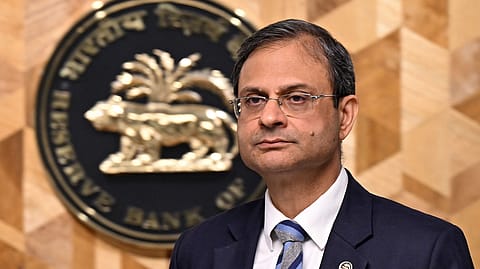
Sanjay Malhotra, Governor, Reserve Bank of India | Credits: Getty Images
RBI Governor Sanjay Malhotra today said the Indian economy has exhibited “remarkable resilience” despite unfavourable and challenging external environment. Malhotra said domestic economic activity is holding up in Q3.
“Despite an unfavourable and challenging external environment, the Indian economy has shown remarkable resilience. It is poised to register high growth. The headroom provided by the inflation outlook has allowed us to remain growth supportive. We will continue to meet the productive requirements of the economy in a proactive manner while ensuring macro-economic stability,” Malhotra said while announcing the decision to cut repo rate by 25 basis points to 5.25%.
FY26 Growth Outlook Up
It may be noted that the RBI today raised FY26 GDP projection to 7.3% from 6.8% earlier. It also lowered inflation forecast for the fiscal to 2.0% from 2.6% earlier.
“Since the October policy, the Indian economy has witnessed rapid disinflation, with inflation coming down to an unprecedentedly low level. For the first time since the adoption of flexible inflation targeting (FIT), average headline inflation for a quarter at 1.7 per cent in Q2:2025-26, breached the lower tolerance threshold (2 per cent) of the inflation target (4 per cent). It dipped further to a mere 0.3 per cent in October 2025,” Malhotra said.
“On the other hand, real GDP growth accelerated to 8.2 per cent in Q2, buoyed by strong spending during the festive season which was further facilitated by the rationalisation of the goods and services tax (GST) rates,” he said.
Inflation: A Goldilocks Moment
“Inflation at a benign 2.2 per cent and growth at 8.0 per cent in H1:2025-26 present a rare goldilocks period. 3. Contrary to earlier expectations, global growth has been relatively strong,” Malhotra said in the statement.
Evolving geopolitical and trade environments, however, continue to weigh on the outlook. Inflation paths remain divergent with headline inflation remaining above target in most advanced economies, while pressures in most emerging markets are contained, providing room for accommodative monetary policy,” he added.
Growth Momentum Continues in Q3
Malhotra said high-frequency indicators suggest that domestic economic activity is holding up in Q3, although there are some emerging signs of weakness in few leading indicators.
“GST rationalisation and festival-related spending supported domestic demand during October-November. Rural demand continues to be robust while urban demand is recovering steadily. Investment activity remains healthy with private investment gaining steam on the back of expansion in non-food bank credit, and high capacity utilization,” said Malhotra.
Domestic Factors to Push Growth
Looking ahead, domestic factors such as healthy agricultural prospects, continued impact of GST rationalisation, benign inflation, healthy balance sheets of corporates and financial institutions and congenial monetary and financial conditions should continue to support economic activity, said Malhotra.
“Continuing reform initiatives would further facilitate growth. On the external front, services exports are likely to remain strong, while merchandise exports face some headwinds,” he added.
Follow Fortune India
NEXT STORY