Bhupender Yadav reviews pollution crisis; Centre warns NCR industries to install emission monitors by Dec 31 or face shutdown
/ 2 min read
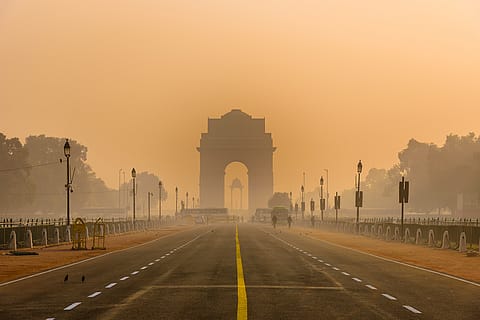
New Delhi is the most air-polluted city in the country | Credits: Shutterstock
Bhupender Yadav reviews pollution crisis; Centre warns NCR industries to install emission monitors by Dec 31 or face shutdown
The Centre has warned over 2,200 industries in Delhi-NCR to install emission monitoring systems, cameras, and pollution control devices by December 31, 2025, or face closure. Union Minister Bhupender Yadav urged strict, time-bound action plans to tackle air pollution, improve traffic, boost public transport, and green open spaces, with enforcement across multiple sectors.
This summary is AI-generated, and Fortune India is not responsible for its content or any associated copyright issues.
The CPCB had in November directed over 2,000 industries in the food and food processing, textile and metal processing sectors to install OCEMS, PTZ cameras and APCDs by December 31, 2025.
New Delhi is the most air-polluted city in the country | Credits: Shutterstock
Environment minister Bhupender Yadav today chaired a review meeting on the air pollution crisis in Delhi-NCR and directed all stakeholders to effectively implement annual action plans on air pollution management. The ministry said the industries which fail to comply to the directives on pollution management will face strict action, including closure.
Stakeholders have been asked to ensure the on-ground implementation of the decisions taken during the past five meetings to improve the air quality in the national capital.
The Central Pollution Control Board (CPCB) had in November directed almost 2,254 industries in the food and food processing, textile and metal processing sectors to install Online Continuous Emission Monitoring Systems (OCEMS), pan-tilt zoom (PTZ) cameras and Air Pollution Control Devices (APCD) by December 31, 2025. Those companies that fail to comply within the given deadline would face "strict actions" that may even lead to closure, according to the latest statement released by the Ministry of Environment, Forest and Climate Change.
Union Minister Bhupender Yadav also stressed the need for high-quality implementation of action plans in Delhi-NCR across all identified categories — accelerated road development and repair, dust control by ensuring end-to-end pavements, construction and demolition waste management, industry compliance to emission standards, smart traffic management, boosting public transport, legacy solid waste management, and greening of open spaces.
Each stakeholder has been instructed to prepare detailed annual action plans for 2026 to control pollution generation at source. The minister also stressed time-bound execution of the plans, by way of achieving monthly and weekly targets.
With regard to traffic congestion in the national capital, Delhi Police have been asked to take urgent action in all the identified 62 traffic hotspots and implement short-term measures immediately to resolve traffic issues at the earliest. The review meeting also highlighted the ongoing transition of the public transport fleet to electric vehicles, with around 3,400 buses currently in operation and expected to increase to 5,000 by March 2026.
While it was informed that commercial vehicles below the BS-III standard have been barred from entering Delhi with effect from November 1, 2025, the minister also called for targeted action against commercial vehicles that are below the BS-IV standard.
Officials have also been asked to identify potential greening sites across NCR and ensure public participation in mapping and execution. The minister also stressed the importance of plantation on degraded forest land, greening of open spaces, and removal of encroachments from urban parks, water bodies, and wetlands.
The meeting included representatives from the environment ministry, Commission for Air Quality Management (CAQM), CPCB, governments of Delhi, Haryana, Punjab, Rajasthan, Uttar Pradesh, municipal commissioners of NCR cities and other concerned agencies.
NEXT STORY