Rural consumers more aspirational than ever before despite income stress
Financial inclusion has led to increase in discretionary spends among women in rural India
Rural India has been the crux of India’s consumption growth story over the last several quarters. However, poor monsoons, rise in inflation and high commodity prices due to the ongoing geo-political crisis has resulted in rural consumers becoming cautious about spends. Here’s an interesting fact - The aspiration of an average rural consumer is actually on the rise, despite he/she being cautious about spends. According to Kantar WPP Media’s Rural Barometer Report, while consumers in rural India are more careful about their spends on daily chores such as detergents, floor cleaners, cooking oil and ghee (they are either buying less or switching to a cheaper brand), their basket is seeing an increase in products such as ready-to-eat and ready-to-cook products, carbonated beverages and fruit juices.
“Since income growth has tapered slightly, consumers have started becoming more nuanced in their shopping choices. They continue to create headroom for expenditure in areas that are aspirational for them. They are cutting down on essential spends,” explains Puneet Avasthi, director (specialist business), South Asia, Kantar. This explains why FMCG companies are focusing more on premiumisation and value growth. Premiumisation is the name of the game even for regional brands.
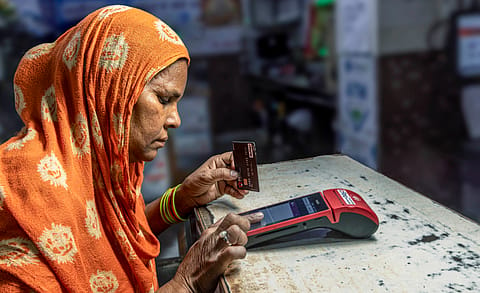
While it’s not surprising that the aspirational rural consumers are mostly Gen-Zs, the Kantar report says that the rural women are no longer holding back desire to lead a comfortable lifestyle. The average rural woman increasingly wants her kitchen to have modern amenities. She is not just investing in refrigerator and mixer grinders, but also in gadgets such as microwave. She is increasingly moving towards using ready-to-cook food in the kitchen. According to the Kantar report, the shopping baskets of rural women have overtaken men, with online shopping becoming a way of life. Around 29% rural women shopped online in the last six months. Rural women are also following women influencers, out of which 14.4% have bought a product after watching content.
The reason for this change is higher rate of financial inclusion, which has led to greater discretionary power of women. “More women are being financially included which is now translating to a phase where women are on their own buying, pretty much the same number of categories that men are purchasing. They have actually gone ahead of men in terms of the basket of categories that they are buying,” says Abhishek S, senior vice-president (head, rural, social and health), media solutions, WPP Media India.
While mobile penetration has surely led to democratisation of content dissemination, improvement of physical infrastructure such as roads and better connectivity has also helped in increasing aspirations. “People are travelling, going to cities and coming back to their villages with lot of information from the outside world. They are trying to ape modern lifestyle that is there in the cities,” says Abhishek.
Around 32.3% rural consumers follow digital influencers. Unlike earlier, when a typical rural influencer used to be either the village sarpanch, the circle of influencers for an individual in rural India has widened considerably. The influencer could be living in a far-off city or even in another country.
Artificial intelligence has been disrupting consumer behaviour not just in the cities, but also in villages. According to the report, 52.6% rural consumers use at least one AI-enabled feature.