Women are redefining luxury, one boutique hotel at a time
/ 4 min read
New-age female hoteliers are reshaping design, strategy, sustainability, and the very meaning of luxury.
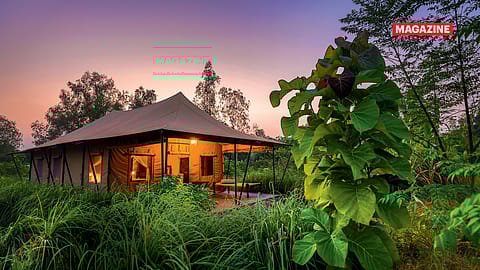
Araiya Hotels & Resorts
This story belongs to the Fortune India Magazine february-2026-mnc-500-indias-largest-multinationals issue.
LUXURY HOSPITALITY in India is quietly undergoing a structural reset. Once measured in the wattage of chandeliers and the length of buffet tables, luxury is increasingly being felt rather than displayed — in the scent of wild jasmine drifting across an open verandah, the warmth of a staff member who remembers how you take your tea, or the stillness of a room designed to let morning light fall like silk across stone.
“Earlier, luxury revolved around grandeur. Now it’s about emotional resonance,” says Rakesh Tripathi, senior consultant at hospitality consulting firm Hotelivate. “Female leadership has contributed to a new emotional grammar within hospitality. They are rewriting the script, placing connection and atmosphere at the heart of the guest experience. They are not simply inserting feminine sensibility into a male-dominated industry; they are reframing business logic.”
New grammar
Each of these hoteliers is a strategist, storyteller, and aesthete. In their hands, luxury is leaning towards intimacy, place, memory — and profitability born from emotional resonance, explain experts.
Few articulate this evolution better than Deeksha Suri, executive director of The LaLiT Suri Hospitality Group, for whom luxury is not ornamental, it is intentional. “We’re building businesses that are design-forward, culturally rooted, and responsible in how they grow. Success today is not just scale — it’s clarity of purpose.”
That clarity is visible across LaLiT hotels. At The LaLiT Palace Udaipur, for instance, the swirl of Mewar arches, mirrorwork, and lake-laced courtyards do not rest as nostalgia but as narrative. A private ghat brings the lake’s shifting moods into the guest experience; cuisine is shaped by regional recipes refined rather than reinvented. The palace illustrates a key tenet of Suri’s thinking — that heritage is not to be displayed but activated.
The power of stories
More Stories from this Issue
The women reshaping this segment share one defining trait — they do not separate business from storytelling. Take for example Priya Thakur, founder of LaRiSa Hotels & Resorts. When she launched her nature-wrapped property in Manali in 2015, India’s boutique conversation was still embryonic. Today, LaRiSa spans Himachal Pradesh, Goa, Uttarakhand, Mussoorie, and Shimla; and after her 2025 merger with AM Hotel Kollection, the brand now counts 30 operational hotels and 10 upcoming ones under three brands — LaRiSa Resort, LaRiSa Homes, and 8fold.
The LaRiSa Resort & Spa Ashwem in Goa is built around sensorial detail.
New-age women hoteliers in India, says Thakur, are bringing a very real shift to what luxury hospitality looks and feels like today. “Their approach is shaped by their own travels, exposure, and experiences, so naturally the way they think about guest stays is becoming more personalised and intentional.”
Her properties are built around sensorial detail — warmth of local wood, lighting softened like dusk, scent profiles tuned to memory. Travellers today want to feel something, she says. “Experience design isn’t an embellishment — it’s strategy. Women understand that intuitively.”
Transforming hospitality
{{#most-powerful-women-snapshot-individual.slug}} {{/most-powerful-women-snapshot-individual.slug}} {{^most-powerful-women-snapshot-individual.slug}} {{/most-powerful-women-snapshot-individual.slug}} {{#showRanking}} {{current-rank}} {{/showRanking}} {{#photo.0.url}}
{{name}}
Amruda Nair, Founder & Director of Araiya Hotels & Resorts, is global legacy meeting contemporary lens. Born into a hospitality family synonymous with India’s hotel history, Nair has crafted her own identity.
Her projects — the restored heritage property Kinwani House and the experiential Aalia Jungle Retreat & Spa — weave together architecture, nostalgia, and contemporary comfort. Kinwani House, once the royal residence of the Tehri-Garhwal family, still retains its 1950s Art Deco character, now complemented by a heated pool and a glass-enclosed conservatory bar with sweeping Himalayan views.
The LaLiT Palace, Udaipur: Here luxury feels less like where you are staying and more like where you belong.
Mornings begin with slow, meditative walks along the Ganga; guests can join a haveli-style cooking session with the estate’s culinary team, learning heirloom Kumaoni recipes. Afternoon tea is served on the sun-drenched terrace, where the Shivaliks rise like a hand-painted backdrop.
Aalia, by contrast, sits on the edge of Rajaji National Park in a mango orchard, offering everything from adventure trails to glimpses of a working cowshed and horse stables.
Industry observers are noting other patterns. “Earlier, luxury meant grandeur. Today it means emotional resonance. Women are rewriting the hotel design vocabulary, which is now aimed at connection, not consumption,” says Amrish Nagpal, a Delhi-based travel planner.
Another thread binding these leaders is sustainability — not as positioning, but as identity. Leadership culture, too, is shifting. The women leading India’s hospitality wave manage teams with collaboration, emotional literacy, and long-arc perspective. Employees stay longer. Guests return more. Brands translate identity into loyalty.
(From L-R): Amruda Nair, founder & director of Araiya Hotels & Resorts; Priya Thakur, founder of LaRiSa Hotels & Resorts; Deeksha Suri executive director of The LaLiT Suri Hospitality Group.
Boutique-led luxury
India’s luxury travel market is expected to surge manifold over the next decade. Market research firm Mordor Intelligence estimates that the segment was at roughly $72.9 billion in 2024, and is projected to grow to $102 billion by 2033 fuelled by domestic HNIs, global inbound curiosity, and young travellers seeking story, rather than status.
In the next decade, says Hotelivate's Tripathi, Indian luxury will not be defined by sameness but specificity. At the centre of this remapping is the country’s female leadership building hospitality as culture, commerce, ecology, memory, and art.
Follow Fortune India
NEXT STORY