Budget 2026: New economics of resilience built on infra and trade, says Shashi Kiran Shetty
/ 3 min read
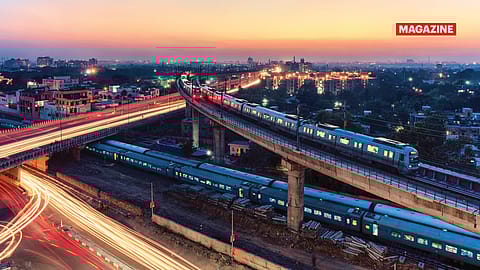
The Budget offers a holistic and vision-driven macro framework that focusses on short-term growth and signals the vision for a deeper and structural economic transformation.
Budget 2026: New economics of resilience built on infra and trade, says Shashi Kiran Shetty
The Union Budget 2026 aims to bolster India's resilience amid global economic fragmentation, focusing on infrastructure, trade, and self-reliance. With a Goldilocks period of high growth and low inflation, the government emphasises structural reforms and ease of doing business. Key initiatives include multimodal connectivity, private investment attraction, and digital integration, paving the way for a globally integrated Viksit Bharat.
This summary is AI-generated, and Fortune India is not responsible for its content or any associated copyright issues.
The Union Budget paves the way for a Viksit Bharat that is resilient, growth-oriented, and globally integrated.
The Budget offers a holistic and vision-driven macro framework that focusses on short-term growth and signals the vision for a deeper and structural economic transformation.
This story belongs to the Fortune India Magazine february-2026-mnc-500-indias-largest-multinationals issue.
THE UNION BUDGET 2026 aims to strengthen India’s resilience and stability in an increasingly fragmented global economy. The domestic economy is witnessing a Goldilocks period of high economic growth and low inflation. This gives the government a platform to maintain its continued focus on structural reforms, promoting ease of doing business to fuel the next phase of the Viksit Bharat journey.
The intent to stick to the fiscal glide path demonstrates a prudent approach, while the proposals to build domestic manufacturing capacity, energy security, and reduce critical import dependencies reflect the vision to attain self-reliance.
The Budget offers a holistic and vision-driven macro framework that focusses on short-term growth and signals the vision for a deeper and structural economic transformation. Rooted firmly in India’s vision of Viksit Bharat, it is cognizant that for any meaningful progress in the current era, there has to be a balance between ambition and stability, inclusion and competitiveness, and domestic capacity and global integration.
A six-point intervention strategy that focusses on manufacturing, MSMEs, infrastructure, security, and city economic regions is a key differentiator of this year’s Budget. It is a continuation of the reforms strategy, but it is also sensitive to the changing global environment characterised by a fragmented trade system and rapid technological shifts. Rather than reacting to global uncertainty, the Budget seeks to prepare India for it.
Infrastructure remains central to this strategy. With a proposed public sector capital expenditure of ₹12.2 lakh crore for FY27, the Centre has reinforced the role of infrastructure as the backbone of economic growth. For a country of India’s scale and ambition, infrastructure is not merely about physical assets; it is an enabler — for productivity, efficiency, and agility.
Logistics is a critical enabler for economic growth, legacy systems, and structural efficiency. But its inadequacies have hindered the policy measures to realise India’s true potential, impacting export competitiveness and supply-chain efficiency.
Therefore, the Budget’s continued focus on multimodal connectivity through the development of new national waterways, a coastal cargo scheme, inland waterway ship repair ecosystems, and the proposed East-West freight corridor aims to unclog the path. These initiatives will significantly enhance cargo movement across regions, improve reliability, and reduce transit times. More importantly, they would contribute to building a logistics ecosystem with an efficient modal mix and a resilient transport network.
More Stories from this Issue
The Budget also recognises that public spending alone would not be sufficient to address India’s infrastructure requirements. Initiatives such as the Infrastructure Risk Guarantee Fund are steps in the right direction to attract private funds through better risk-sharing and confidence-building. This is especially important at a time when global investors are looking for stable and long-term investment opportunities in emerging markets with a credible policy framework.
The Budget redefines self-reliance with a broader outlook, recognising that India’s growth is intrinsically linked to deeper engagement with global markets. By combining domestic capacity-building with the required competitiveness, it supports the goals of expanding exports, attracting long-term capital, and strengthening India’s role in global value chains.
Moreover, another strong reforms signal is the move towards deeper digital integration in governance, with the proposal for a single, interconnected digital window for cargo clearances across government agencies. Faster approvals, improved transparency, and regulatory certainty will enhance ease of doing business and reinforce India’s credibility as a reliable trading partner.
The Budget also emphasises long-term resilience and service delivery capability through skills and energy security. The development of training institutes as regional centres of excellence will help in aligning workforce capabilities with a technology-driven economy, while the ₹20,000-crore outlay for Carbon Capture, Utilisation and Storage (CCUS) over five years reflects a forward-looking approach to sustainable industrial growth.
{{#most-powerful-women-snapshot-individual.slug}} {{/most-powerful-women-snapshot-individual.slug}} {{^most-powerful-women-snapshot-individual.slug}} {{/most-powerful-women-snapshot-individual.slug}} {{#showRanking}} {{current-rank}} {{/showRanking}} {{#photo.0.url}}
{{name}}
Together with AI-enabled platforms to connect workers, jobs, and skilling pathways to bring informal work into the digital economy, the Budget lays the foundation for a more inclusive, resilient, and future-ready labour market.
Cumulatively, the measures announced in the Union Budget 2026-27 improve India’s competitiveness in the international economy and further integrate it into the global value chains.
The focus on infrastructure, logistics, mobilisation of private capital, and technology is a manifestation of a clear policy vision, which understands the interlinked nature of growth, trade, and resilience.
As India looks ahead, implementation will be as crucial as the intention. However, the vision is clear. With its focus on capacity building, quality infrastructure, and efficient supply chains, the Budget paves the way for a Viksit Bharat that is resilient, growth-oriented, and globally integrated. In a world looking for stability and reliable partners, this vision helps India position itself not only for growth but for leadership.
(The author is founder & chairman, Allcargo Group. Views are personal.)
Follow Fortune India
Sign in to read full story
To access our exclusive magazine content, sign in to your Fortune India account.
Sign In NowNEXT STORY