Budget 2026: Reimagining Indian agriculture, from volume to value
/ 4 min read
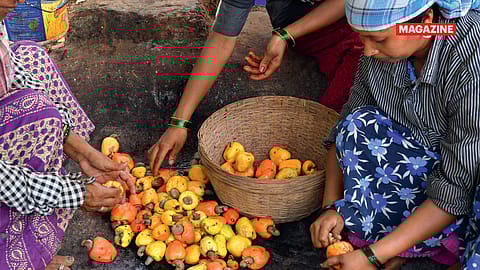
High-value crops often involve longer gestation periods, higher initial investment, and greater exposure to market risks
Budget 2026: Reimagining Indian agriculture, from volume to value
The Union Budget 2026-27 marks a pivotal shift in Indian agriculture, emphasizing value creation over sheer volume. By promoting high-value crops and integrating technology, the budget aims to enhance income security and resilience. However, successful implementation hinges on state collaboration, farmer trust, and robust support systems to ensure inclusive growth and sustainable rural development.
This summary is AI-generated, and Fortune India is not responsible for its content or any associated copyright issues.
The Union Budget lays down a forward-looking framework, but success hinges on execution discipline and farmers’ participation.
High-value crops often involve longer gestation periods, higher initial investment, and greater exposure to market risks
This story belongs to the Fortune India Magazine february-2026-mnc-500-indias-largest-multinationals issue.
THE UNION BUDGET 2026-27 marks an important moment in India’s long and often complex engagement with agricultural reforms. As the rural economy navigates climate stress, market volatility, and structural transition, the Budget’s agriculture narrative signals a conscious shift from a production-centric mindset to one focussed on value creation, diversification, and technology-led resilience.
This is not a radical break from the past, but rather an evolution. And that is what makes it noteworthy.
From staples to specialisation
For decades, India’s agricultural policy has been anchored in food security. That priority remains non-negotiable. However, the Budget acknowledges a truth that policymakers, economists, and farmers alike have been grappling with: food security alone does not guarantee income security.
The explicit push towards high-value crops, including coconut, cashew, cocoa, and sandalwood, among others, reflects a strategic intent to move Indian agriculture up the value curve. These crops are not only aligned with India’s diverse agro-climatic strengths, but also with global demand patterns where margins are driven by quality, traceability, and processing rather than sheer volume.
From an economic standpoint, this approach makes sense. Tree-based and plantation crops typically generate higher per-hectare value, create downstream employment in processing and logistics, and encourage regional specialisation. For states with suitable ecologies, this could catalyse rural enterprise clusters rather than isolated farm-level gains.
That said, such a transition must be approached with care. High-value crops often involve longer gestation periods, higher initial investment, and greater exposure to market risks. For small and marginal farmers, the shift will only be viable if accompanied by robust access to credit, insurance, extension services, and assured market linkages. The Budget sets the direction; execution will determine inclusiveness.
Broadening the income base
One of the more encouraging aspects of the Budget is its recognition that agriculture is no longer synonymous with crops alone. The focus on animal husbandry and fisheries — through initiatives such as training 20,000 veterinarians, developing 500 water bodies for fisheries, and providing credit-linked support to livestock enterprises — reflects a holistic understanding of rural livelihoods.
More Stories from this Issue
Allied sectors are critical for three reasons. First, they provide year-round income, reducing dependence on monsoons. Second, they are labour-intensive and inclusive, creating opportunities for women and youth. Third, they strengthen nutrition security, an often-overlooked dimension of rural development. If implemented effectively, these measures can help stabilise rural incomes and reduce distress migration — outcomes that are as socially important as they are economically sound.
Tech as an enabler, not a substitute
Perhaps the most forward-looking announcement is on ‘Bharat Vistaar’, a multilingual, AI-enabled digital platform that will integrate datasets from AgriStack, research institutions, and local practices. The platform aims to offer customised advisories on crop planning, weather risks, pest management, and market trends.
The potential is significant. India’s traditional extension system has struggled with scale and last-mile delivery. Digital tools designed with farmers at the Centre can bridge this gap by democratising access to knowledge and reducing information asymmetry.
However, technology must be seen as an enabler, not a substitute. Digital advisories will only translate into impact if farmers trust the system, understand the recommendations, and have the capacity to act on them. This requires parallel investment in digital literacy, rural connectivity, and on-ground facilitation. Without these, even the most sophisticated platforms risk remaining under-utilised.
{{#most-powerful-women-snapshot-individual.slug}} {{/most-powerful-women-snapshot-individual.slug}} {{^most-powerful-women-snapshot-individual.slug}} {{/most-powerful-women-snapshot-individual.slug}} {{#showRanking}} {{current-rank}} {{/showRanking}} {{#photo.0.url}}
{{name}}
Policy signalling
The agriculture and rural development allocation, at around ₹1.62 lakh crore, reflects a balance between ambition and fiscal realism. While it may not represent a dramatic expansion in outlays, the Budget’s strength lies less in headline numbers and more in policy signalling. By prioritising diversification, allied sectors, and technology, the Centre is nudging states and the private sector to align their investments accordingly. Public funds, in this context, should be viewed as catalytic capital — crowding in private investment in processing, logistics, agri-inputs, and digital services.
For industries, this creates an opportunity to partner with farmers not merely as buyers, but as co-creators of value chains that are efficient, transparent, and globally competitive.
Execution discipline to be key
Two factors will determine whether the Budget’s promise translates into outcomes.
First, collaboration with states is not optional; it is critical. Agriculture is implemented in the states, shaped by local institutions, agro-climatic realities, and administrative capacity. Whether high-value crop promotion or digital advisory platforms, success will hinge on Centre–state alignment. States must be empowered not merely as implementing agencies, but as co-designers of programmes — adapting schemes to local contexts, strengthening extension machinery, and ensuring last-mile delivery. Without this partnership, even well-intentioned initiatives may remain fragmented or uneven in impact.
Second, and perhaps most importantly, implementation and farmer buy-in are the real tests. The challenge lies in earning the trust of millions of cultivators in rural India, many of whom are understandably risk-averse after years of income uncertainty. Transitioning to high-value crops, adopting new technologies, or engaging with formal markets requires confidence that risks will be cushioned, advice will be reliable, and markets will be fair. Building this confidence will require sustained engagement, visible early successes, and strong on-ground institutions.
In that sense, the Union Budget 2026-27 lays down a necessary and forward-looking framework, but the journey from intent to impact will be defined by execution discipline, state-level ownership, and the willingness of farmers to participate in change.
If these elements align, Indian agriculture can move decisively from surviving on volumes to thriving on value. And in doing so, secure a more resilient and prosperous rural economy.
(The author is chairman and senior managing director, DCM Shriram Ltd. Views are personal.)
Follow Fortune India
Sign in to read full story
To access our exclusive magazine content, sign in to your Fortune India account.
Sign In NowNEXT STORY