Samvat 2083: Markets head into Muhurat after strongest pre-Diwali rally in 20 years
/ 3 min read
Sensex and Nifty surge over 10% in seven sessions, clock strongest pre-Muhurat weekly gains in the historical series dating back to 1992; both benchmarks have ended higher in eight consecutive Muhurat sessions since 2018.
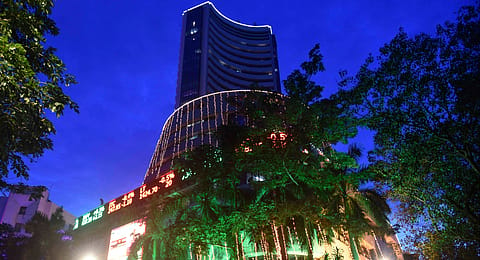
Samvat 2083 Muhurat trading | Credits: Getty Images
After a relatively subdued and less rewarding first half of 2026, traders and investors are looking ahead to this year's Diwali Muhurat trading session. The session will take place on Sunday, November 8, with the block deal window scheduled from 1:50 pm to 2:05 pm, followed by the pre-open session from 2:05 pm to 2:20 pm. Normal market trading will be held between 2:20 pm and 3:30 pm, while the closing and post-close session will continue until 4 pm.
Indian stock markets are heading into this year's Muhurat trading session after their strongest seven-session pre-Diwali rally in at least 20 years, with the Sensex and Nifty gaining more than 10% each in the run-up to the special session.
The Nifty 50 has advanced 2,331.50 points, or 10.27%, between the close of October 28 and November 6, while the Sensex has jumped 7,781.99 points, or 10.62%, over the same period. Both benchmarks have risen for seven consecutive trading sessions, with the Nifty reclaiming the 25,000 mark and the Sensex crossing 81,000 on Friday.
The scale of the rally is substantially higher than the previous strongest comparable run-up ahead of Muhurat trading in the available daily data since 2006. In 2020, the Nifty had gained 6.81% and the Sensex 6.96% over the seven sessions preceding that year's Muhurat trading session.
Current rally outpaces 2020's run-up
Foreign investor buying has been a key support for the rally. Foreign institutional investors (FIIs/FPI) were net buyers in all five trading sessions between November 2 and November 6, purchasing equities worth a combined ₹45,960 crore in the cash market, according to exchange data. Domestic institutional investors (DIIs), meanwhile, were net sellers during each of these sessions, offloading shares worth a net ₹24,197 crore. Thursday saw the biggest single-day FII/FPI purchase of the week at ₹14,974.68 crore.
Indian stock market's 2020 rally offers an interesting historical comparison. The Nifty had gained 6.81% in the seven sessions before Muhurat trading that year, before rising around 40% between the 2020 and 2021 Muhurat closes. The Sensex gained about 38% over the same period. However, that performance came during the post-pandemic market recovery and may not offer a direct template for the year ahead.
Eight consecutive years of positive Muhurat closes
The latest rally comes against the backdrop of an eight-year run in which both the Nifty and Sensex have ended Muhurat trading higher than their previous regular-session closes. The streak runs from 2018 through 2025, following declines in both indices in 2016 and 2017.
Over the past 10 Muhurat sessions, the two benchmarks have ended higher in eight years. The strongest gains came in 2022, when both rose around 0.88%. The advances were marginal in 2025, with the Nifty gaining 0.10% and the Sensex rising 0.07%.
However, a positive daily return does not necessarily mean the indices gained during the special session itself. A comparison of opening and closing levels over the past 10 years shows that the Nifty finished below its opening level in nine sessions, while the Sensex did so in nine sessions as well. The Nifty's exception was 2024, while the Sensex closed above its open in 2022.
Does Muhurat trading indicate the year ahead?
Historical data also suggests that the direction of the special session has limited predictive value for the market's performance over the following Samvat year.
A comparison of consecutive Muhurat closing levels between 2006 and 2025 shows that both the Nifty and Sensex delivered positive returns in 15 of the 19 subsequent one-year periods. However, a negative Muhurat session did not necessarily translate into a weak year ahead. Of the five years in which the Nifty ended lower during Muhurat trading, it went on to post a gain in the subsequent Samvat period four times. The Sensex recorded a similar outcome in three of the four years it ended lower.
{{#most-powerful-women-snapshot-individual.slug}} {{/most-powerful-women-snapshot-individual.slug}} {{^most-powerful-women-snapshot-individual.slug}} {{/most-powerful-women-snapshot-individual.slug}} {{#showRanking}} {{current-rank}} {{/showRanking}} {{#photo.0.url}}
{{name}}
The exchanges have scheduled this year's Muhurat trading session for Sunday, November 8, with continuous trading beginning at 2:20 pm.
Follow Fortune India
NEXT STORY