Sebi chairman calls for sharper disclosures in SME IPOs on risks, valuation, and use of funds
/ 2 min read
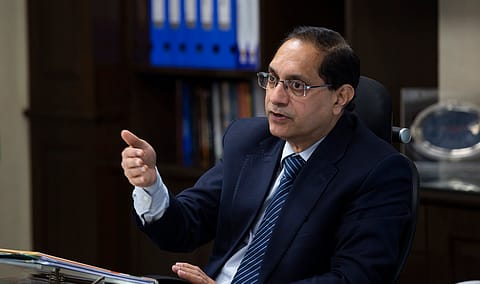
Sebi chairman Tuhin Kanta Pandey | Credits: Sanjay Rawat
Sebi chairman calls for sharper disclosures in SME IPOs on risks, valuation, and use of funds
At the AIBI convention, Sebi Chairman Tuhin Kanta Pandey called for improved disclosures in SME IPOs, particularly on risk factors, valuation, and fund usage. He noted that current gaps hinder transparency and investor understanding, extending fundraising timelines. Pandey stressed the importance of independent verification and commended AIBI's initiatives to enhance disclosure standards among merchant bankers.
This summary is AI-generated, and Fortune India is not responsible for its content or any associated copyright issues.
The regulator continues to observe disclosure gaps that reduce transparency and investor understanding, and also prolong fundraising timelines due to repeated regulatory queries, said Tuhin Kanta Pandey at AIBI event.
Sebi chairman Tuhin Kanta Pandey | Credits: Sanjay Rawat
The Securities and Exchange Board of India (Sebi) has identified key areas where disclosures need to be sharpened, including risk factors, valuation rationale, objects of the issue, and user metrics.
Speaking at the Association of Investment Bankers of India (AIBI) 14th Annual Convention in Mumbai on Wednesday, Sebi chairman Tuhin Kanta Pandey said the regulator continues to observe disclosure gaps that reduce transparency and investor understanding, and also prolong fund-raising timelines due to repeated regulatory queries.
Pandey said deficiencies in disclosures reduce transparency, weaken investor understanding, and lengthen fundraising timelines. He added that Sebi continues to observe disclosure gaps that “reduce transparency and investor understanding” and also prolong fundraising timelines due to repeated regulatory queries.
The regulator has identified key areas where disclosures must be strengthened. “Risk factors, valuation rationale, objects of the issue, and user presence are areas where disclosures need to be sharpened,” Pandey said.
He added that capital structure disclosures must clearly explain “past capital raisings, preferential allotments and changes in control, especially close to the IPO”.
Calling for greater business model clarity, Pandey said issuers must transparently explain their revenue and cost drivers. “The management discussion and analysis should move beyond the niche and explain the internal and external drivers of performance,” he said.
Sebi’s inspections, he said, show that due diligence is not always independent. “At times, it relies on issuer undertakings,” Pandey said, adding that projections—particularly for working capital and capital expenditure—“must be independently verified, and backup papers must be maintained for all material statements”.
He also stressed the importance of basic verification. “Site visits must be evidenced with complete reports and photographs with geotagging and timestamps,” Pandey said.
He further said that initiatives by the AIBI, including its standard observations of Sebi and the SME listing manual, can serve as practical references for issuers, merchant bankers, and intermediaries.
He commended these efforts and noted that merchant bankers are increasingly adopting better practices by maintaining backup documentation and refusing to make claims without adequate evidence.
Pandey urged AIBI to undertake capacity-building measures, particularly for smaller merchant bankers, so that “such practices indeed become the standard”.
{{#most-powerful-women-snapshot-individual.slug}} {{/most-powerful-women-snapshot-individual.slug}} {{^most-powerful-women-snapshot-individual.slug}} {{/most-powerful-women-snapshot-individual.slug}} {{#showRanking}} {{current-rank}} {{/showRanking}} {{#photo.0.url}}
{{name}}
He also noted that Sebi has recently revamped merchant banking regulations as part of its broader effort to improve disclosure quality while supporting ease of doing business.
Follow Fortune India
NEXT STORY