AI can’t be held accountable for financial decisions: RBI’s Murmu
/ 2 min read
Deputy Governor says regulated institutions, not algorithms, must remain accountable for AI-driven financial decisions
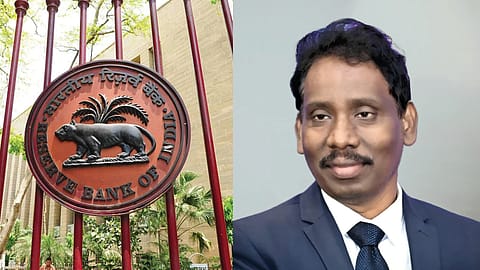
RBI Deputy Governor Shirish Chandra Murmu | Credits: Fortune India
Human accountability must become stronger as finance becomes increasingly automated, Reserve Bank of India (RBI) Deputy Governor Shirish Chandra Murmu said on Friday, stressing that responsibility for algorithm-driven financial decisions cannot be shifted to machines.
"When an algorithm makes or materially influences a financial decision, who is accountable? The answer cannot be the algorithm. Responsibility rests with the regulated institution," Murmu said while addressing the Global Fintech Fest 2026.
"As finance becomes more automated, human accountability must become stronger, not weaker," he said.
Digital lending must focus on quality
On digital lending, Murmu said technology should be used to expand access to formal credit rather than simply accelerate existing lending processes.
"The objective cannot simply be to make credit faster. It must also be to make credit better," he said.
The comments come as digital technologies and automated decision-making become increasingly embedded across lending and other financial services.
Agentic AI raises new risks
Murmu also flagged emerging risks from agentic artificial intelligence, which is moving beyond systems that analyse information and make recommendations to systems capable of planning and acting with limited human intervention.
"These are not arguments against agentic AI. They are arguments for responsible agentic AI," Murmu said.
He said the RBI's FREE-AI Committee is examining issues around the use of AI in finance, including algorithmic bias, explainability and data privacy.
The shift towards more autonomous AI systems, he said, makes it increasingly important to ensure that human oversight and accountability remain embedded in financial decision-making.
RBI calls for quantum-proof payment systems
Murmu also called for payment systems to begin moving towards quantum-proofing, saying banks, payment operators, fintech companies and technology providers would need to work together to prepare for emerging technological risks.
{{#most-powerful-women-snapshot-individual.slug}} {{/most-powerful-women-snapshot-individual.slug}} {{^most-powerful-women-snapshot-individual.slug}} {{/most-powerful-women-snapshot-individual.slug}} {{#showRanking}} {{current-rank}} {{/showRanking}} {{#photo.0.url}}
{{name}}
"Quantum resilience is an ecosystem capability, not an institutional one," he said.
He stressed that the resilience of India's digital financial infrastructure would require coordinated efforts across the ecosystem rather than measures taken by individual institutions in isolation.
Digital payment fraud an ecosystem problem
Murmu said digital payment fraud should increasingly be treated as an ecosystem-wide problem.
The RBI is developing the Digital Payments Intelligence Platform and is also using its MuleHunter.AI initiative to identify mule accounts, he said.
The initiatives are aimed at strengthening the ability of the financial system to detect and respond to fraudulent transactions and accounts as digital payments continue to expand.
Focus on quality, resilience and trust
Murmu said India's next phase of digital finance must focus on "quality, resilience and trust".
He also said regulation should ensure that similar activities carrying similar risks are subject to similar regulatory treatment.
The deputy governor's comments come as financial services increasingly rely on technology, artificial intelligence and interconnected digital infrastructure, making risk management and accountability central to the next phase of India's fintech growth.
On the sidelines of the event, Murmu said the RBI is reviewing feedback received from non-banking financial companies on its proposal that NBFCs should offer only term loans with a pre-determined repayment schedule.
Under the proposal, sanctioned limits would not be restored once they are repaid.
Murmu said the central bank is currently examining the feedback received from NBFCs on the proposal.
(With inputs from PTI.)
Follow Fortune India
NEXT STORY