Smartphone sales set to fall 12% this festive season as rising prices hit demand: Counterpoint
/ 2 min read
India’s smartphone market value is expected to grow 5% despite declining volumes, as memory shortages push up handset prices and consumers delay upgrades; global shipments hit a 14-year Q3 low.
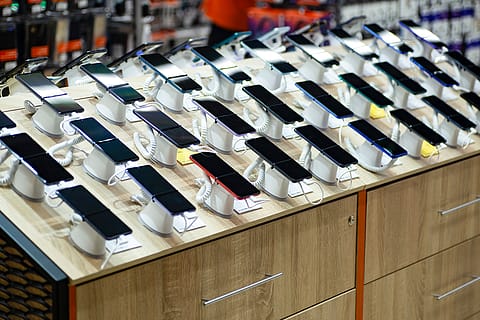
Rising memory costs and higher handset prices threaten festive demand, with smartphone volumes projected to fall 12% even as market value grows 5% year-on-year, Counterpoint Research says. | Credits: Shutterstock
India’s smartphone makers face a tougher festive season this year, with rising component costs threatening to dampen demand during what is traditionally a crucial sales period. Smartphone volumes are expected to fall 12% year-on-year between October 8 and November 8, even as market value grows 5%, as higher handset prices offset the decline in units sold, according to Counterpoint Research.
The contrasting trends point to a market where consumers are spending more but buying fewer devices. Rising prices of DRAM and NAND memory have triggered multiple rounds of handset price increases, making upgrades less affordable and prompting buyers to hold on to their existing phones for longer.
The impact is likely to be felt most acutely in price-sensitive segments, where even modest price increases can push devices out of preferred budget brackets. Manufacturers are also facing limited room for deep festive discounts as higher component costs squeeze their pricing flexibility.
For retailers, the challenge will be to turn festive footfall into actual purchases. Counterpoint expects mainline store visits to improve, but sales conversions will depend on attractive financing schemes, exchange offers and targeted promotions.
“The key challenge this festive season will be the size of the active consumer pool,” said Tarun Pathak, research director at Counterpoint Research. With discretionary upgrades being deferred, he said, consumers planning to buy may find the festive period a relatively attractive window before further price increases.
Global smartphone shipments plunge 20%
India’s demand pressure comes against a sharp global downturn. Worldwide smartphone shipments fell 20% year-on-year in the July-September quarter, reaching their lowest level for any third quarter since 2012, according to Counterpoint’s preliminary estimates. The memory crunch has inflated manufacturing costs and disrupted supply, while global smartphone retail prices have risen 20% so far in 2026.
Premium phones outperform as budget segment faces pressure
The global market is increasingly splitting between resilient premium demand and consumers struggling with affordability. Samsung retained its lead in the September quarter with a 23% market share, despite a 3% shipment decline. Apple’s share rose to 22%, crossing the 20% mark for the first time in a third quarter, even as its shipments fell.
Xiaomi’s shipments dropped more than 30%, taking its share to 10%, while Oppo and Vivo each recorded shipment declines exceeding 20%.
“The extreme memory shortage is pushing the smartphone market into a more selective phase,” said Shilpi Jain, senior analyst at Counterpoint Research. Consumers are holding on to their devices longer and increasingly considering refurbished phones, she added.
With manufacturers prioritising profitability over volumes, a meaningful recovery will depend on easing component costs and improving supply conditions.
Follow Fortune India
NEXT STORY