
Renault bets on hybrid to widen Duster market as CNG, localisation drive India strategy
ADVERTISEMENT
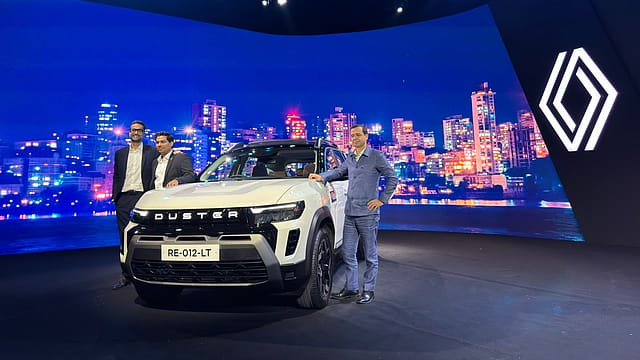
Renault India expects hybrid and CNG vehicles to play a larger role in its India business as the automaker expands its powertrain portfolio and looks to regain market share.
Speaking to reporters at the launch, Renault India CEO Stéphane Deblaise said the company had seen strong expectations for the hybrid version even before customers had fully understood the technology.
The Duster hybrid is expected to help Renault address a much larger part of the Indian SUV market. Deblaise said the initial Duster was positioned towards a relatively narrow customer base because its turbo-petrol version was priced in the ₹16-20 lakh range.
“With the hybrid, we can address the Duster market much better. We have a much better solution in terms of performance, power and efficiency,” he said.
The Strong Hybrid uses Renault’s hybrid technology, which Deblaise said has already been deployed in more than 1 million vehicles globally. The technology is central to Renault’s electrification strategy, with the company positioning hybrid alongside electric vehicles and CNG as key powertrain options for different customer requirements.
CNG to play a bigger role in smaller cars
While Renault is betting on hybrid for the Duster, Deblaise said the company does not currently plan to bring the same hybrid technology to smaller models such as the Triber, Kiger and Kwid.
The reason is largely packaging. The hybrid system requires substantial changes to the vehicle, including the battery, exhaust system and other components. That makes it difficult to integrate into smaller cars that were not originally designed around the technology.
“For these smaller cars, CNG is a better fit,” Deblaise said.
Renault already offers CNG retrofitment kits for the Kwid, Kiger and Triber and is working towards factory-fitted CNG options. Deblaise said the company will introduce CNG where it makes sense based on customer demand and the segment.
The company is also focusing on educating customers about the different powertrain options. Deblaise said Renault is upgrading dealerships with larger screens and interactive displays that can explain how hybrid technology works, including the battery, charging and maintenance requirements.
“It is more complex for customers today because they have many choices. They have EVs, hybrids, CNG and petrol, and they need to understand which technology is right for them,” he said.
Localisation will be another important part of Renault’s India strategy. Deblaise said the company is targeting around 90% localisation across its vehicles, while also increasing localisation of frequently replaced spare parts to reduce costs for customers.
“All our cars will have around 90% localisation. Some are already at 90%, and I will not do a project if it is not 90% localised,” he said.
Renault currently has more than 300 sales points in India. Deblaise said the immediate focus would be on improving the quality of its existing network and after-sales service rather than simply adding more outlets.
“Product first, then good service, good people and good places to sell the cars. After that comes good after-sales,” he said.
The new Duster will also be exported from India, although Deblaise said the company has yet to finalise specific markets and volumes. He added that Renault will continue to adapt its products and powertrains to the requirements of individual markets.