
Jimmy Tata, a '10-year absentee', counters not only Noel, but also Ratan Tata
ADVERTISEMENT
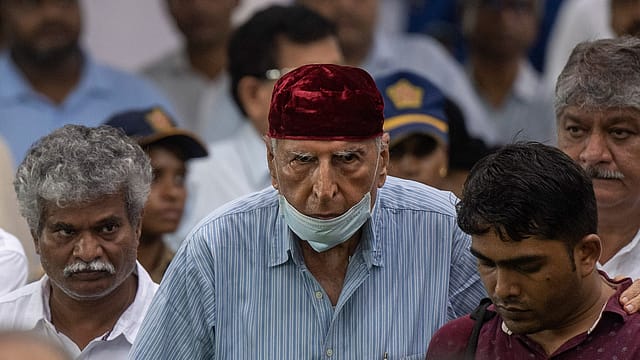
The key allegations attributed to Jimmy Tata, including the alleged manipulation of the Articles of Association (AoA) to control Tata Trusts and Tata Sons, and the appointment of Noel Tata's children to various trusts, raise several questions for the legal team involved in the dispute. They argue that Jimmy's alleged claims have no legal standing, given that he is questioning a system of which he has been a part. He wants to reverse changes in law that have been in place for three-and-a-half decades, they said.
Jimmy Tata, brother of Ratan Tata and half-brother of current Tata Trusts Chairman Noel Tata, serves on the board of the key Sir Ratan Tata Trust (SRTT). Sources said Jimmy has not been a regular presence at board meetings for at least the last 10 years and has never expressed his views on key decisions. This has been the case since Ratan Tata's time, sources said.
Jimmy, who is based in Pune and is not in regular contact with the Tata family, is now accusing the entire Trusts operating system of being flawed for the last three-and-a-half decades, said people in the know. "The interesting part is that he has been a trustee for a long period and never questioned it. He served on the boards of key trusts alongside Ratan Tata. The question of family members and relationships was never an issue then. Noel joined the Trusts—SRTT in 2019 and Sir Dorabji Tata Trust (SDTT) in 2022—during Ratan Tata's tenure, when Jimmy was also a trustee. Why, then, does Neville's appointment become a problem for Jimmy?" a source said.
The two main Tata trusts were set up through the wills and deeds of Sir Ratan Tata and Sir Dorabji Tata, who were childless and bequeathed their wealth and properties to establish SRTT and SDTT, Jimmy said in his alleged communication, shared through dissenting trustee Vijay Singh. "The trusts were established for the benefit of the Indian people—as laid out in the objects of the trusts (alleviation of poverty and safeguarding Indian culture)—and the trustees were custodians of public trusts that can never be dissolved, unlike private family trusts. The trustees are accountable custodians, and both JRD Tata and my father, Naval Tata, were deeply mindful of this responsibility," he allegedly said.
What has transpired in recent times is that the trusts are being filled with family members of the present Tata Trusts chairman, thereby securing a degree of control over Tata Sons that was never the settlors’ intention, he noted.
"It is entirely inappropriate for more than one family member to serve on a given trust; doing so effectively confers ownership rights over the trusts’ significant shareholding in Tata Sons at no consideration whatsoever. Such an arrangement is untenable and amounts to a back-door takeover of Tata Sons," he allegedly said.
"A central driver of this issue is the drastic alteration of the Articles of Association around 2013-14," according to Jimmy's communication. Historically, under the pre-1989 framework, the Articles strictly separated the welfare trusts from the commercial business operations of Tata Sons, ensuring that the trusts had no operational management role. The subsequent amendments fundamentally overturned this balance by granting the Tata Trusts chairman unnatural, dictatorial veto powers and the right to place directors, thereby subverting the collective authority of the rest of the board, he said.
The key changes came after Cyrus Mistry became chairman of Tata Sons in 2012. Ratan Tata introduced amendments to the AoA, giving veto voting powers to Trust nominees on the Tata Sons board. "Ratan Tata wanted Tata Sons and Tata Trusts to work in sync and did not want professional chairmen of Tata Sons to develop an interest in controlling the group by appointing directors of their choice to the board," said a lawyer.
Jimmy Tata also argued that introducing a four-year time limit on the tenure of certain trustees while exempting others has compromised trustee independence and concentrated authority, enabling the marginalisation or removal of trustees who dissent. Ratan Tata followed a similar approach in group companies, removing satraps during his initial years as chairman. After his retirement, he stepped in to remove Cyrus Mistry as Tata Sons chairman. Jimmy Tata was part of the Trusts at the time but never raised his dissent.
To support the dissenting views of Venu Srinivasan and Vijay Singh against Noel Tata, Jimmy Tata cited the appointment of eminent independent luminaries as trustees in the past. JRD Tata valued and nurtured key operating star performers such as Sumant Moolgaokar, Darbari Seth, Xerxes Desai and Rusi Mody, he said. The irony is that some of these were the very individuals Ratan Tata regarded as satraps and sought to remove.
Jimmy Tata, who cited the improved financial performance of Tata group companies under N. Chandrasekaran, demanded the listing of Tata Sons. "These developments make the listing of Tata Sons, as mandated by the RBI, all the more critical. Listing would dismantle the pervasive culture of secrecy, impose statutory accountability, and necessitate rewriting the onerous Articles of Association to restore the pre-1989 separation between business operations and welfare trusts," he allegedly said in the communication.
The RBI should enforce strict timelines for listing without delay and ensure that breaking up the group is not permitted, while the government and the Charity Commissioner must step in to protect the original objects of the trusts for the people of India, Jimmy Tata added.