
How Neil Mehta’s biggest bet is shaping Greenoaks’ India growth story
ADVERTISEMENT
It was in June 2019, Zetwerk Manufacturing Businesses, a B2B manufacturing capacity aggregating platform, was barely a year old when a team from a venture capital firm in the US landed in Bengaluru on about a day’s notice. They did not stay in a conference room but drove down to Trichy to meet the small fabricators which made up Zetwerk’s supplier base, and to see the software that tied them together.
A week later the investor called again, stating that they wanted to meet a couple of more suppliers, and flew all the way back again. “They didn’t cut corners on their own process, and they kept us posted throughout,” Amrit Acharya, co-founder and CEO of Zetwerk, tells Fortune India. Acharya was surprised by their intent when they said, “We’re 80% there [ready to invest], give us another week, here are the open questions.” It never felt like they were wasting our time,” says Acharya, an electrical engineer from IIT-Madras and MBA from Haas School of Business, University of California.
The firm was Greenoaks Capital Partners, a San Francisco-based venture capital firm founded by Neil Mehta. At a time when Zetwerk’s gross merchandise value was in double digits, the fund has since invested around $228 million across eight rounds, including one at the peak of Covid pandemic.
Not surprising that Zetwerk is now Greenoak’s biggest bet in India, fetching the fund over 3x in rupee terms and over 2.5x in dollar terms as the firm got listed this October, valuing it, at present, over Rs 31,000 crore (nearly $3.3 billion).
For a firm which has globally deployed over $20 billion in capital, Greenoaks’ cumulative investment in India is strikingly short.
Of the cumulative 17 investments made since 2014, according to figures from Tracxn, Zetwerk accounts for 79% of top four investments cumulatively worth $290 million, while investment details for the remainder are not available. Flipkart, the fund’s maiden investment in 2014, at $50 million, and Cred at over $12 million are the other prominent investments. While in terms of valuation, Flipkart is the highest valued portfolio company at $38.2 billion, following its latest employee stock buyback program, Zetwerk is the real big bet with the fund holding over 17.81% stake, valued at $592 million.
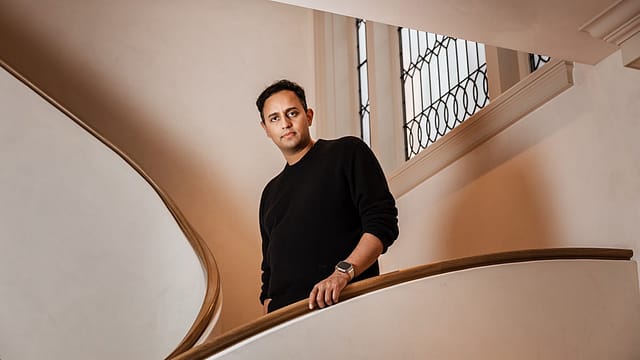
Though the 42-year-old Mehta declined to come on record for the feature, those who know of Mehta and Greenoak’s philosophy tell Fortune India that the firm is built around one idea, that is, own very few companies but own a lot of each.
The early days
Mehta, the son of an Indian immigrant, grew up in the Bay Area, and spent his high school years interning at startups through the dotcom boom and bust that followed. By 14, he was reading about Warren Buffett. After a stint at DE Shaw, an investment management firm, Mehta went on to found Greenoaks, which happens to turn 15 next year.
The founding premise, by those familiar with his thinking, has barely changed since the firm’s first pitch to investors. Mehta’s approach is to find unique founders reasonably early, typically around Series B or C, and become their most-important partner.
Greenoaks reviews a whole lot of companies in year but invests in four or five. About 35 companies, including the likes of Coupang, Stripe, Databricks, DoorDash, Robinhood and Anthropic, account for 95% of its capital.
The template was Coupang, when in 2021, the fund invested close to $20 million about 40% of its first fund, into the-then unproven South Korean e-commerce startup. It was also a bet on founder Bom Kim as much as on the business. When the Coupang listed in 2021, it ended up valuing Greenoaks’ stake at nearly $14 billion.
That concentrated approach is also the reason some of the fund’s investors find convincing.
“We don’t necessarily subscribe to a spray-and-pray approach,” says Sean Montesi, partner at Gerber Taylor, a Memphis-based investment firm that has backed every Greenoaks fund since the first in 2015. Though other funds pitched concentration as their hallmark, he adds, “None stuck to it as tightly [as Greenoaks].”
In fact, the filter has only narrowed. “Maybe they’ve [Greenoaks] leaned even further into the belief that only a select few firms matter and only a select few founders matter,” says Montesi.
While Mehta does not see anything broken in the conventional venture model, where small positions could limit the damage from each failure, his belief is that concentration produces better returns and a better partner for the founder. Those who know him say he would rather take a call from his third best idea than the 25th.
Diversification, in his view, is something to avoid rather than manage. The ceiling on a Greenoaks’ position is rarely the firm’s own appetite it’s also how much a founder is willing to sell. For instance, Mehta would have loved a bigger slice of Anthropic and equally would have loved to own a majority in Stripe too. In May 2026, the AI major raised $65 billion in its Series H round, at a post-money valuation of $965 billion, and is going public at an valuation of $1.3-1.4 trillion. Greenoaks had co-led the round with Altimeter Capital, Dragoneer and Sequoia Capital, alongside other institutional and strategic investors.
Paavan Gami, who worked as an investor at Greenoaks from 2019 to 2023 and now runs an India-focused public equities fund from New York, arrived as a traditional value investor and left converted. “I think the jockey is equally important to the horse, if not more important than the horse. If you have an exceptional entrepreneur, the amount of value that they’re going to create in ways that you don’t even anticipate, because the world changes and they adapt to the world changing, that’s so powerful,” he tells Fortune India.
The process, and the procedure
Greenoaks has no investment committee. Mehta takes every first meeting and makes every call, which lets the firm move at a speed few rivals can match. People familiar with its process say a term sheet can follow within half an hour of a conversation, because the research was done before the founder picked up the phone.
Gami, though, does not tie it down to “one man’s instinct” approach. “I would lean away from the word ‘Neil’s gut.’ The firm is built to enable Neil to make a high quality decision,” he says.
In his time at the fund, Gami reveals that the whole team sat together every Monday for a couple of hours, and every investment decision was debated as a group. The debate was Socratic, aimed at getting to the truth about a founder, a business model and its competition.
The firm is said to look for one founder archetype rather than many, and on the business side, it wants durable competitive advantage, strong unit economics and a customer experience that stands apart. “Greenoaks has codified how it assesses founders and built an extensive database of that work. They give as much thought to this in as rigorous a way as I’ve seen relative to any of their peers,” says Montesi.
A typical venture investor might sit through 10 pitches a day; Gami describes a firm that chose to meet far fewer companies and go deeper on each. “I would not describe it as an extroverted firm,” he says. “It’s a bunch of people who are heads down, focused on research.”
Acharya saw that from the other side of the table. Before any meeting, Greenoaks emailed him a one-page thesis on Zetwerk. Its team had already spoken to several of Zetwerk’s customers. “So, the first meeting wasn’t us explaining the business. It felt like a brainstorm, and it was always forward-looking as to how much bigger [the opportunity] could this be?” says Acharya.
The India approach
In its early days, Greenoaks planned to carve up each fund by geography, with roughly equal shares for India, Europe and the US. But the founder soon realised that great companies and great founders were not spread evenly across the map or across sectors, hence, quotas of either kind made little sense.
What replaced the quota was a single global bar. An Indian company gets Greenoaks’ money only if it ranks among the firm’s best handful of opportunities anywhere in the world that year, at that price.
The result is a slow, steady dealmaking. Over 13 years, Greenoaks has made roughly one investment a year in India. People familiar with the firm contrast that with global investors who have swung between piling into the country and walking away from it. Greenoaks, they say, has never invested at high volume and never stopped looking.
“There’s not some India handicap on it,” says Gami, who spent a quarter to a third of his time at the firm covering India. “It’s not, ‘we had to make one investment in India, this is the one’. It’s like, ‘no, this is one of our 10 most important bets’.”
That bar explains the names missing from the portfolio. Greenoaks looked at Zomato and Swiggy and knows their founders well. But it already owned DoorDash and Deliveroo, and by its reckoning those were far better value. When Zomato listed, by the firm’s comparison, it had lower margins and slower growth than DoorDash yet commanded a much richer multiple. The same logic applied to Flipkart after its Series B, when Coupang and Shopee looked like better investments.
According to people familiar with the fund’s India approach, mention that there is a deeper question the firm asks: can this company be the best in its category anywhere in the world? Greenoaks believes Zetwerk is the best asset-light manufacturing company globally, with no American or Chinese rival doing it better. It thinks Oyo could hold that position in hospitality, and Airbound eventually in drone delivery. Airbound has raised $37 million in a Series A funding round led by Greenoaks in August 2026, bringing its cumulative raise to around $50 million since its founding in 2023.
In food delivery, by sheer scale, that company was DoorDash. Though Greenoaks founder rated the founders of India’s food-delivery companies as exceptional, he wasn’t convinced they would be global winners. Though Mehta is understood to have conceded, in hindsight, that Greenoaks should have backed both Zomato and Swiggy. But the underlying view has not changed, that is, an Indian investment should offer a better return than a comparable American one, not a lower one.
Gami, stressing that he speaks for himself and not his former employer, frames it as a refusal to bend on valuation. “What you want is a great business with a great entrepreneur at a great price. If you’re Greenoaks and you’re going to make 10 investments a year, I don’t think you need to compromise on the third leg of that stool, which is price,” says Gami.
There is a second filter, and it may matter more. People familiar with Mehta’s thinking say he believes the copycat models, the ‘X of India’ pitches, command high prices precisely because they are easy for investors to understand. Greenoaks would rather pay up for businesses that are hard to explain. For instance, a hotel network that is neither Airbnb nor a chain, a manufacturing platform with no global template, a 21-year-old founder [Naman Pushp of Airbound] building what Greenoaks believes is the world’s lowest-cost drone.
None of the three sit on a thematic map. Greenoaks did not set out to find a hospitality company, a manufacturer or a drone maker in India, and those close to the firm say there is no sector it would rule out. It starts with the founder and follows where that leads, then tests hard whether the business is truly one of a kind.
What links them is a pattern the firm has come to recognise. Oyo took underused hotel rooms and filled them through a marketplace. Zetwerk did something similar with underused factory capacity. Airbound, which builds ultra-light delivery drones and already works with Narayana Health, rests on a related bet that a company which can beat delivery costs in India, among the lowest in the world, will be competitive anywhere.
The same patience shows in fintech, where Greenoaks has done little in India. It passed on Paytm despite being urged to invest, and admired Groww but did not back it early. According to observers, Mehta’s view is that while India’s public digital rails are among the best things any government has built for its citizens, the fintech companies, built on top of those rails, have yet to arrive.
That does not mean Greenoaks is staying away. People familiar with the firm say it is spending a lot of time on Indian financial services and expects to invest in the coming years.
The fund’s optimism rests on rising incomes. In China, Brazil and Europe, large financial-services companies emerged as GDP per capita climbed, and the firm expects India to follow. It sees the openings in lending, securitisation and long-term investing platforms rather than in payments, where free public rails have taken out the margin.
The Zetwerk test
Zetwerk was exactly that kind of hard-to-explain business. Today the company describes itself as a technology-led, asset-light manufacturing platform: 23 facilities, a network of 5,385 third-party suppliers across four countries, and a customer list that includes 98 of India’s Fortune 500 companies, all run on its proprietary Zetwerk OS. In 2019, it was stil a year-old startup whose model was still shifting.
The pitch Greenoaks heard in 2019 was simple. Zetwerk then worked with a few dozen suppliers, mostly in steel fabrication and precision parts. These small workshops relied on brokers for orders and typically ran at 30% to 40% of capacity. Zetwerk offered to catalogue what each could make, assess its quality and track its schedule, then send it verified orders from buyers who paid on time.
Suppliers got fuller order books; people familiar with Greenoaks’ diligence say utilisation could more than double. Buyers got relief. A large equipment maker building a power plant, which once had to chase 20 fabricators for parts, could make one call. To the Greenoaks team it echoed Oyo, that is, take the idle capacity, organise it, and give the customer a far better experience.
The firm’s preferred analogy today is Amazon, which sells from its own shelves and from third-party sellers while the customer sees a single storefront. Zetwerk does the same for manufacturing. Whether a part comes from its own plant or a partner’s, in India, Mexico or Vietnam, the buyer deals with one supplier accountable for quality, price and delivery.
Those shifts can unsettle investors. “You respect the past, but you keep updating your thesis as you learn more, and those pivots can sometimes confuse an investor. Greenoaks works from first principles too, so when we changed our minds with better information, they got it,” reveals Acharya.
The real test came in 2020. Zetwerk had been growing fast when the lockdown shut the country and its numbers collapsed. “The long-term picture hadn’t changed, but the short-term numbers looked ugly,” says Acharya.
When India locked down in March 2020, its revenue fell to zero. Greenoaks led a round anyway. Its reasoning, according to people familiar with the decision, had four parts. One, the shutdown could not last forever, second, the value proposition was intact, third, the founders were the right ones, and, lastly, no other investor was willing to step up. “Greenoaks led a round right in that moment, when the metrics were at their worst,” says Acharya.
It did not stop there. Greenoaks invested again at the end of 2020 as business began to return and led another round in January 2021.
Gami, who was at Greenoaks at the time, saw it as the mirror image of the deals the firm declined. When others were paying an India premium, Greenoaks stayed out; when Zetwerk needed capital and nobody was paying one, it stepped up at what it considered a great price.
The position was built in stages. Gami recalls a first cheque in the tens of millions of dollars, growing to hundreds of millions over successive rounds. “Firms that invest hundreds of millions don’t also invest tens of millions. Conviction comes from the ability to scale your position over time and be a multi-year partner,” says Gami.
Greenoaks’ own figures bear that out. The firm says it has invested nearly $230 million in Zetwerk across seven rounds, before it went public. It is, they add, the firm’s biggest investment in India, and one it hopes will follow the path of Coupang, the Korean e-commerce company that anchored its early years.
Acharya says the involvement goes beyond capital, and beyond one partner. Whenever he met the wider Greenoaks team in the Bay Area, everyone was up to date on the company. “It became a company-to-company relationship rather than just a founder-and-partner one, which made every subsequent round faster,” says Acharya.
Build to scale
On the Greenoaks side, much of the day-to-day work falls to Neil Shah, a partner who joined Mehta in the firm’s earliest days and has spent much of his time since on India. He has attended Zetwerk’s board meetings since 2019 and is in frequent contact with Acharya. The conversations cover which business units to pursue, senior hires, and when and how to go public. What they do not include is instruction. Shah began his career in private equity, where portfolio companies are often run to a single playbook. Greenoaks’ partners decided early that great founders run their companies differently and should be left to.
The firm’s job, as its people describe it, is to know a business better than any other investor, which it can do only by doing far fewer things. That knowledge is what lets it act when others freeze. It was the logic behind the Zetwerk round in 2020, and behind similar moves at Rippling, a workforce and payroll management platform, during the Silicon Valley Bank crisis and at Coupang when margins were going backwards and few wanted to invest.
Zetwerk’s move into defence shows how the advice works. Greenoaks liked the sector and shared case studies of companies that had compounded for two decades, along with frameworks for thinking it through. Zetwerk made its own call to enter in 2022. “That’s how it usually goes with them. Not ‘why don’t you do this’, but a case study and a framework that sharpens your own thinking,” says Acharya.
Defence was not the only turn Greenoaks did not foresee. In 2019, Zetwerk was an India-to-India business, matching domestic demand with domestic supply. A few rounds later it began serving European and American buyers from Indian factories, and it now has customers and suppliers in about 15 countries, Siemens and US solar developers among them.
People familiar with the firm say it sees Zetwerk as exposed to capital-spending cycles in energy, electronics and precision manufacturing that could run for 20 years.
The firm has also opened doors to other founders and to veterans such as Rakesh Gangwal, now a Zetwerk adviser. “And it has made bad news easier to deliver. The counsel in those moments is always the same. ‘This is at least a decade-long journey. It’s never a straight line up and to the right’,” says Acharya.
The patience for Greenoaks is also possible because of who funds it. The fund’scapital comes from a group of roughly 40 investors, largely university endowments, sovereign funds and large family offices, and Mehta is himself the largest investor in its funds. The firm says it has generated nearly $20 billion in gains for its limited partners since inception.
For Gerber Taylor, which works with more than 10 venture managers, Greenoaks ranks among the top two or three. “They have grown to become one of, if not our most significant venture capital partner,” says Montesi. On cash returned, he is brief: “The distributions have certainly been there.”
He also remembers the small things. Mehta sends handwritten thank-you notes. “I could probably count on one hand the number of times I’ve received those,” says Montesi. “It makes an impression. It’s so simple.”
Greenoaks’ profile has lagged its record, partly by choice. Gami says the firm never believed it needed a loud public brand to win over founders. Montesi recalls that even five years ago most people he mentioned it to had little idea who it was. That is changing. In the top tier of venture names, he says, “it probably is only a matter of time before they are universally understood in that same breath”.
Playing for the long haul
None of this makes Greenoaks a big India investor by deal count. But those familiar with Mehta’s thinking say he expects Indian entrepreneurship to get much better over the next 10 to 15 years, and that the coming wave of founders is the one Greenoaks will really back. He saw the past decade as India’s first internet wave, the one that had to produce successes at scale before founders could move from chasing growth to building something distinctly better.
The companies he wants from the next wave look as Zetwerk and Airbound, those built from first principles for Indian conditions, hard for outsiders to categorise, and capable of travelling abroad once they work at home.
Greenoaks’ largest position in the country is not a consumer app modelled on a Western success. It is a manufacturer tied to factories, energy, defence and capital spending, the parts of the economy the firm expects to grow for two decades. Not surprising that as other investors, prominently Accel chose to sell part of its stake, Greenoaks is staying put.
Since inception, Greenoaks has made 189 investments in 120 companies, and 75 of them have become unicorns and 19 decacorns. But what’s notable is how Mehta often does nothing after the portfolio companies get listed. The fund is still invested in Coupang and so is the case with Robinhood, years after its IPO. Being right on Nvidia at its IPO in 1999 was nothing compared to the value it created two decades later, and the same was true of Microsoft long after Bill Gates stepped down. Mehta’s stated ambition of building a trillion dollars of value through Greenoaks is explicitly not achievable through private markets alone and requires holding great compounders through public volatility rather than harvesting gains early.
Seven years after its team drove to Trichy, Greenoaks’ biggest bet in the country has already fetched it rich dividends, but the compounding chapter for India has just begun.