
Government tightens rules on abnormally low bids in procurement, sets 30% threshold
ADVERTISEMENT
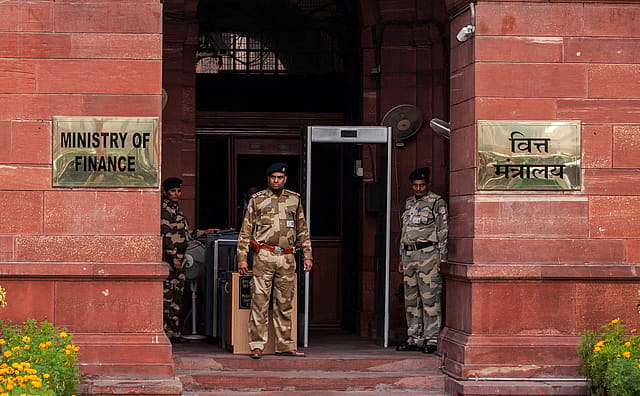
The finance ministry has made it mandatory for government agencies to scrutinise bids quoting prices more than 30 per cent below the estimated cost in a government procurements, tightening checks on abnormally low bids to safeguard service and product quality.
The Department of Expenditure under the ministry has defined Abnormally Low Bids (ALBs) in government procurement, mandating scrutiny of bids falling below the prescribed threshold and seeking written clarifications wherever "concerns" arise over the bidder's ability to execute the contract at the quoted price.
"A bid quoting a price more than 30 per cent below the estimated cost shall mandatorily be examined as a potentially ALB," the department said in an office memorandum.
In such cases, the procuring entity would seek written clarifications from the bidder, including detailed price analyses of its bid price in relation to scope of work as given in the tender document.
Where a bid is more than 30 per cent below the estimated cost, the procuring entity may, seek clarifications and price analysis if the bid price, in combination with other elements of the bid, appear so low that it raises material concerns as to capability of the bidder to perform the contract at the offered price.
A bid may be rejected if the bidder fails to adequately demonstrate its capability to execute the contract at the quoted price following the evaluation. In such cases, the procuring entity will assess the next higher bidder at its own quoted rate, provided the price is considered reasonable, the department said.
Earlier, procurement manuals did not prescribe a fixed numerical threshold for identifying ALBs, leaving the decision largely to the discretion of procuring entities based on their assessment of potential risks to contract execution.
The department, however, said that such threshold would not constitute a ground for "automatic rejection" of the bid. It also advised procuring entities to frame tender specifications carefully to guard against submission of ALBs.
This definition of ALBs would bring greater uniformity and transparency in the identification of ALBs in government procurement, while addressing concerns that unrealistically low quotations could compromise the quality, timely execution and overall delivery of projects.
With no fixed numerical threshold prescribed earlier, procuring entities largely relied on their discretion to identify such bids, leading to the need for a standardised framework.
The revised guidelines aim to ensure that bidders are assessed on their ability to execute contracts at the quoted prices, without discouraging genuine price competition or resorting to automatic rejection of low bids.