
Private sector gives the cold shoulder to second round of coal gasification scheme
ADVERTISEMENT
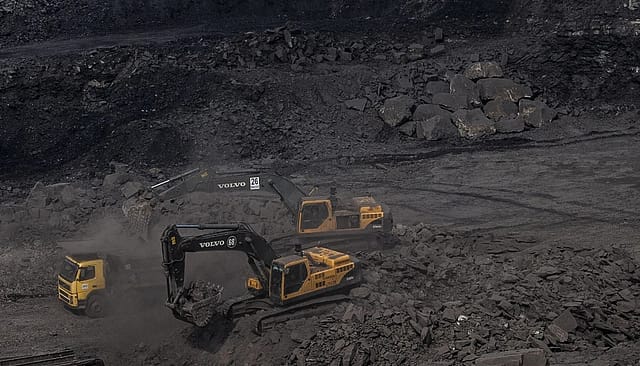
India’s ambitious coal gasification programme has encountered another hurdle in attracting industry participation, with state-owned NTPC Ltd emerging as the sole applicant in the second round of the Centre’s ₹37,500-crore incentive scheme. NTPC submitted two proposals, one for coal-to-urea production and another for methanol and dimethyl ether (DME), while no other company participated in the latest tender.
The first round attracted seven applications from five companies, including Adani Enterprises, Talcher Fertilisers, Gallantt Ispat, and Shyam SEL & Power, along with NTPC. The limited participation in the second round has revived questions about the commercial viability of coal gasification projects, despite the government’s substantial financial incentives and policy support.
The Ministry of Coal concluded the second round on November 10 and simultaneously opened the third round of applications, with January 11, 2027, as the deadline. The ministry said successive rounds were intended to widen industry participation, attract investment, and accelerate adoption of coal gasification technology.
The scheme aims to support 75 million tonnes of coal and lignite gasification capacity by 2030, contributing to the national target of 100 million tonnes annually by the same year. The government expects the programme to catalyse investments of ₹2.5-3 lakh crore.
Industry experts attribute the weak response to a combination of financing constraints, uncertain demand, coal supply concerns and logistical costs. The capital-intensive nature of gasification projects makes assured buyers for downstream products critical to their commercial viability, particularly for companies selling in the open market.
Atanu Mukherjee, chief executive officer of Dastur Energy, said NTPC’s continued participation was encouraging, but financial incentives alone may not be sufficient to make projects commercially viable.
“Such a framework could improve access to debt, lower financing costs, and encourage greater private investment,” Mukherjee said, advocating a government-supported partial credit guarantee mechanism to share lenders’ risks.
The first round had attracted seven applications from NTPC, Adani Enterprises, Talcher Fertilisers, Gallantt Ispat and Shyam SEL & Power. Adani Enterprises submitted three proposals, all targeting urea production, while Talcher Fertilisers proposed another urea project. NTPC had applied for a synthetic natural gas project, Gallantt Ispat for direct reduced iron and syngas, and Shyam SEL & Power for syngas production.
The ₹37,500-crore scheme, approved by the Union Cabinet in May 2026, provides financial support of up to 20% of plant and machinery costs, subject to prescribed limits. It is intended to reduce India’s dependence on imports of liquefied natural gas, urea, ammonia and methanol, which together amounted to approximately ₹2.77 lakh crore in FY25.
Coal gasification involves converting coal into syngas, a mixture of carbon monoxide and hydrogen, which can subsequently be processed into fertilisers, chemicals, hydrogen and synthetic natural gas.