
AI can identify the best chess move, but only humans make us care about it: Anand Mahindra
ADVERTISEMENT
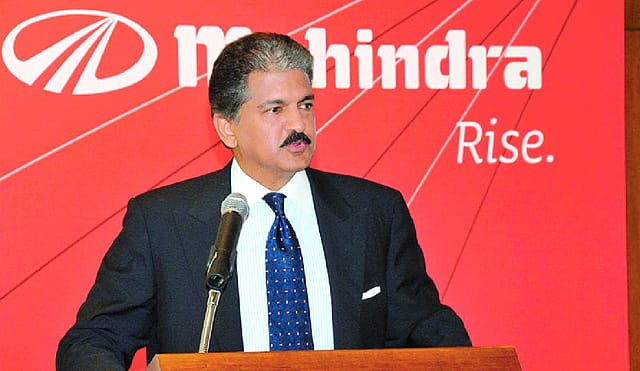
Anand Mahindra believes the growing sophistication of artificial intelligence has made the human element of chess more important, even as machines have decisively surpassed people at the game.
Speaking at the Global Chess League (GCL), Mahindra said chess had for decades been used as a benchmark for measuring the ability of machines to replicate human thinking. "Long before artificial intelligence, the way we used to measure the progress of machines and their ability to think like humans was to have them play chess with humans," he said.
However, the contest between humans and machines has long been settled, he said, pointing to the era of Deep Blue and Fritz. Mahindra said he continues to experience that gap personally while playing chess bots online. "Ever since Deep Blue and Fritz, we've long since lost that battle to machines," he said.
Why human fallibility still matters
For Mahindra, however, the superiority of machines does not diminish the appeal of watching people play chess. Instead, it gives audiences a reason to remain invested in the players behind the moves.
"I console myself by saying that I've contributed or I contribute every day in a small way to ensuring that the vulnerable, the fallible human element is kept alive in the game of chess," he said.
According to Mahindra, spectators are not merely interested in whether a move is objectively the best one. "We admire the quality of a move but only because we want to see the courage of the person who made that move," he said.
He added that players' willingness to take risks and even make mistakes makes them relatable. "We enjoy seeing grandmasters occasionally blunder because it makes them endearing and more like us, fallible as it were." His conclusion was blunt: "A machine can tell us what the best move is but it's only people who make us care about it."
GCL's journey from Dubai to India
Mahindra also outlined the league's evolution. The GCL began in Dubai to establish itself as a global league, moved to London for its second season and returned to India in its third season.
He said India was particularly significant because Chaturanga, the ancient precursor to modern chess, originated in the country. The league's Mumbai edition also demonstrated the enthusiasm among Indian chess followers, he said.
Bengaluru, according to Mahindra, represents an especially fitting venue because of its association with information technology and computing. He described the city as the point where "two journeys coincide"—humanity's pursuit of mastering chess and its effort to build increasingly intelligent machines.
Mahindra also credited comedian Samay Raina and Sagar, whose live streaming of the 2020 Chess Olympiad helped demonstrate chess's entertainment potential. Raina subsequently challenged Mahindra to create a global chess league.
Mahindra said FIDE president Arkady Dvorkovich later contacted him after seeing his comments and eventually became a collaborator. He also thanked Viswanathan Anand for joining the initiative and acknowledged the franchise owners, sponsors and players who helped build the league.
"All the pieces are in place," Mahindra said, as he concluded his address with a call for the games to begin.