
AI still lacks long-term planning and consistency: Google DeepMind CEO Demis Hassabis warns of bio, cyber risks
ADVERTISEMENT
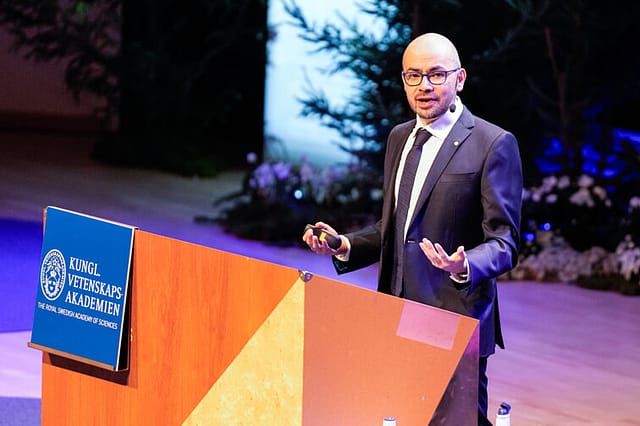
Leading artificial intelligence experts on Wednesday cautioned that while AI systems have made rapid strides over the past decade, they still lack long-term planning, consistency, and robust safety guardrails, even as their impact becomes increasingly global.
AI models fall short of standards required for truly general and reliable intelligence
Speaking at the Research Symposium on Enabling AI at Nation Scale, hosted by the Ministry of Electronics and Information Technology (MeitY) at the AI India Summit 2026, Demis Hassabis, CEO and Co-Founder of Google DeepMind, said current AI models fall short of the standards required for truly general and reliable intelligence.
“I have quite a high bar for AI… we are not there yet,” Hassabis said, noting that today’s systems still struggle with consistency across tasks. While AI can plan in the short term, it lacks the ability to sustain long-term, multi-year planning similar to human reasoning, he added.
Hassabis pointed out that although foundation models are powerful tools for scientific assistance and specialised problem-solving, they lack creativity and judgment — qualities that distinguish great scientists from good ones. “What separates good scientists from great scientists is creativity and taste,” he observed.
On risks, he flagged biosecurity and cybersecurity as the two most pressing near-term concerns. AI systems are becoming increasingly capable in cyber domains, he warned, stressing the need to ensure that defensive capabilities remain stronger than offensive ones. He also underscored that AI, being a digital technology, cannot be contained by national borders and will require global cooperation.
Despite the risks, Hassabis expressed optimism about AI’s transformative potential, particularly for India. He said India’s positive stance on AI could position it as a global superpower in business and scientific innovation over the next decade.
Govts, technology firms, and civil society to “reset our moral compass” in managing AI development: Wendy Hall
In a separate keynote, Wendy Hall, Professor of Computer Science at the University of Southampton, raised concerns about the safety and unintended social consequences of increasingly intelligent AI systems. Calling for collective responsibility, she urged governments, technology companies, and civil society to “reset our moral compass” in managing AI development.
The session was moderated by Anand Deshpande, Founder and Chairman of Persistent Systems, and featured participation from leading researchers and policymakers focused on scaling AI for national infrastructure and discovery.