
Air India cost N. Chandrasekaran dearly: It’s likely to be a thorn for a new chairman too
ADVERTISEMENT
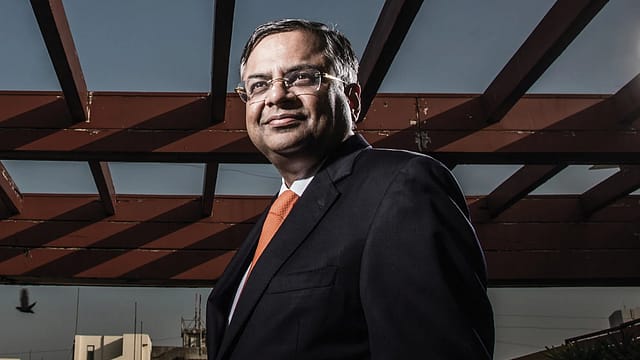
It may not have been the foremost reason, but it certainly was a sticking point at Bombay House for many months.
Amidst all the tension that's been brewing between N. Chandrasekaran and Noel Tata, the group's capital allocation towards newer businesses, such as Air India, Tata Digital and Tata Electronics, remained a matter of concern. Noel Tata, the only Tata in Tata Sons, the holding company of the Tata Group, had sought greater clarity from Chandrasekaran on the strategy for the loss-making new businesses.
And it’s quite likely that none of them have faced as much scrutiny as Air India, a company that the Tata Group was adamant about taking over, after it was snatched away by the government some seven decades ago. And, there is good reason for that.
Consider this. In January 2022, when the airline was handed over to the Tata Group, it had a market share of 22.3 percent of the domestic skies. On international routes, the airline had a market share of 25.26 percent, with the Tata Group also operating airlines such as AirAsia India and Vistara alongside Air India and Air India Express, which came back under the group’s control.
A few months after the acquisition, in September 2022, the airline put in place a turnaround plan called Vihaan.ai. According to the plan, the airline set clear milestones focussed on growing its network and fleet, developing a completely revamped customer proposition, improving reliability and on-time performance, and taking a leadership position. The company set a target to increase its domestic market share to at least 30% while significantly expanding its international operations.
The company also merged Air India and Vistara to form a full-service carrier, while Air Asia India and Air India Express were merged to form a low-cost carrier.
Today, four years after the launch of the plan, the Tata Group’s Air India Group has a domestic market share of 23.9 percent, despite spending billions on the revamp and a new identity. In contrast, its market share on the international route has sharply fallen to 19.72 percent from 25.26 percent. Rival IndiGo has seen its international market share grow to 20 percent from 16 percent in the same period. On the domestic market, IndiGo’s market share has swelled from 55 percent to over 66 percent.
Last year, the airline also posted a combined net loss of Rs 22,238 crore for the fiscal year ending 2026, more than double its loss of Rs 10,859 crore from the previous fiscal year, despite pulling in Rs 71,870 crore in total revenues. Adding to all those woes have been the repeated strikes on the brand value, with instances such as a passenger urinating on another passenger in the business class, and a pilot being reportedly held with a positive drug test after the airline ran into severe turbulence, injuring passengers.
Neither the airline nor the Indian government has been able to explain the cause of an accident last year, when the London-bound AI-171 crashed soon after take-off. Over 260 people died in the crash, the first of its kind involving a Boeing Dreamliner.
That’s not to say that it’s only been bad at Air India. The group had also signed a deal to acquire as many as 470 aircraft, worth $70 billion, even as it undertook the merger of four airlines into two. Air India’s orders comprise 34 A350-1000, six A350-900, 20 Boeing 787 Dreamliners, and 10 Boeing 777X widebody aircraft, as well as 140 Airbus A320neo, 70 Airbus A321neo, and 190 Boeing 737MAX narrowbody aircraft.
“Rebuilding Air India is a long journey,” Chandrasekharan, the outgoing chairman of the Tata group, said on July 28. “Fleet renewal, training, service transformation, network expansion. Every great airline in history was built over decades, not quarters.” That means it seems the next five years, or the decade, will also be spent doing the same.
“Globally, big airline turn-around can take up to 10 years, unless you use bankruptcy/receivership provisions, which Air India is not using,” Alok Anand, the chairman of Acumen Aviation, an aircraft asset management and leasing company, had told Fortune India. “You can’t pause operations, and simultaneous fixes are needed for fleet and cabins, engineering and MRO, crew scheduling and rostering, IT, culture and service, network strategy and partnerships. On top of it, supply chain constraints can stall everything.” British Airways, Anand says, took almost a decade to turn around, while Japan Airlines had a faster turnaround only because of bankruptcy levers.
India is often a graveyard for airlines, with IndiGo being the lone exception over the past few decades. The sector has forced billionaires who dabbled in it out of the country or into jails, or worse, made them bankrupt. That’s why, in a capital-intensive market like aviation, backing by the promoters remains critical in a turnaround, or even in staying afloat. With Noel Tata now repeatedly raising questions about the direction of the airline business, it will also pose a significant challenge to the turnaround ambitions of the airline business itself.
A new CEO steps in at Air India
Last week, Air India announced the appointment of former Ethiopian Airlines Group chief Tewolde Gebremariam as its chief executive officer (CEO) and managing director, succeeding Wilson.
Gebremariam is widely recognized for his tenure as CEO of Ethiopian Airlines Group, where he led the airline through a period of major expansion. Air India said that under his leadership, Ethiopian Airlines grew into Africa’s largest and most profitable airline group, with revenue increasing more than fourfold and its fleet nearly tripling.
When Wilson joined, the airline's turnaround plan comprised six months of addressing accumulated issues, followed by an 18-month program to invest in systems, people, aircraft, training, and internal products, followed by the growth phase.
But a global supply chain shortage put the company on the back foot, with much of the retrofit program suffering delays.
McKinsey reckons that only about 7,000 aircraft were delivered in the six-year period from 2019 through 2024—far below the pre-pandemic trajectory, which, if it had continued, would have resulted in the delivery of about 12,000 aircraft over that same time frame. That’s essentially a shortfall of 5,000 aircraft, which the likes of Air India would have liked to have in its fold.
With the situation improving, Air India will find some reprieve as far as the supply chain constraints go. But what about the frequent instances tarnishing the brand? That’s going to be a tough task for the new CEO of Air India, and perhaps even the new chairman of Tata Sons.