
Cabinet clears 8.45-km Aqua Line Metro extension in Noida, extends key entrepreneurship schemes
ADVERTISEMENT
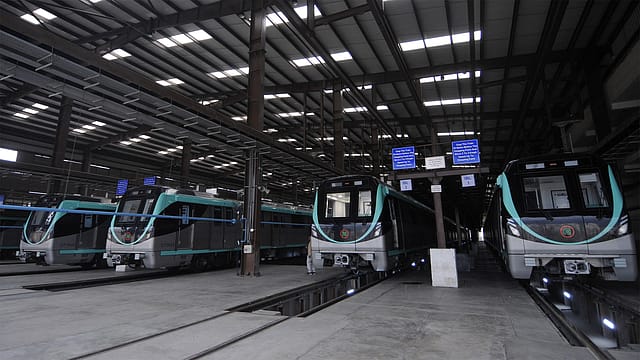
The Union Cabinet, chaired by Prime Minister Narendra Modi, on Wednesday approved the extension of the Aqua Line Metro corridor in Noida, the continuation of the Stand-Up India Scheme and the Credit Guarantee Fund for Micro Units (CGFMU) for five years until March 2031.
Separately, the Cabinet Committee on Economic Affairs (CCEA) approved the development of the Yuge Yugeen Bharat Museum at the North and South Block Complex in New Delhi at an estimated cost of ₹3,230 crore.
8.45-km Aqua Line extension approved
The Cabinet approved the extension of the Noida Metro Rail Project's Aqua Line from Noida Sector-51 to Greater Noida Sector-04. The proposed corridor will span 8.449 km and have five elevated stations. Once operational, the active metro rail network across Noida and Greater Noida will expand to 71.878 km.
The extension is expected to improve connectivity across key commercial, residential, educational and healthcare hubs. It will also provide connectivity to high-demand corridors, including an interchange with the Blue Line at Noida Sector-61.
The project is expected to connect commercial centres and office hubs, including those around Noida Sector-51, Sector-60, Sector-73, and Greater Noida Sector-04 while improving access to major IT and corporate establishments, educational institutions, and healthcare facilities.
According to the government, the expanded metro network will help ease road congestion, reduce travel time, and improve road safety. It is also expected to lower carbon emissions by encouraging a shift from fossil fuel-based road transport to public transit.
Improved connectivity to workplaces and transportation hubs, including Delhi's airport, railway stations and bus terminals, may also boost productivity and stimulate economic activity in areas surrounding the new stations.
Stand-Up India scheme extended till 2031
The Cabinet also approved the continuation of the Stand-Up India Scheme for another five years until March 31, 2031. The scheme aims to promote entrepreneurship among women and members of the Scheduled Castes and Scheduled Tribes, with a target of providing financial assistance to an additional 2.5 lakh entrepreneurs over the next five years.
Since its launch in April 2016, the scheme has facilitated loans to more than 2.75 lakh women, SC and ST entrepreneurs.
Eligible borrowers can avail loans for setting up new or greenfield enterprises in manufacturing, services, trading and agriculture-allied activities. Loans ranging from above ₹10 lakh to ₹1 crore can be provided as composite loans or term loans, with support of up to 85% of the project cost. The scheme provides credit guarantee coverage of 85% of the loan amount, with a standard guarantee fee of 0.50%.
CGFMU to support ₹12.6 lakh crore in loans
The Cabinet approved the continuation of the Credit Guarantee Fund for Micro Units for five years until March 31, 2031. The fund provides credit guarantee coverage to lending institutions through the National Credit Guarantee Trustee Company against default risks.
As of September 2026, lending institutions had sanctioned more than 60.36 crore loans worth ₹43.34 lakh crore under the Pradhan Mantri Mudra Yojana, according to the government.
The extended CGFMU scheme is expected to facilitate loans worth ₹12.6 lakh crore over the next five years. It covers loans of up to ₹20 lakh to eligible micro enterprises under PMMY, overdrafts of up to ₹10,000 under Pradhan Mantri Jan Dhan Yojana accounts and specified loans to self-help groups.
The guarantee fee for eligible loans has been reduced to 0.75% annually from 1%, while the existing fee structure for self-help groups will continue.
₹3,230-crore museum project gets CCEA nod
The CCEA also approved the development of the Yuge Yugeen Bharat Museum at the historic North and South Block Complex in New Delhi.
The museum, to be developed through the adaptive reuse of the two heritage buildings, will showcase India's civilisational journey, cultural traditions, knowledge systems and artistic heritage.
Spread across a proposed built-up area of around 1,78,509 square metres, the project will include thematic galleries, exhibition spaces, conservation and collection storage facilities, visitor amenities and immersive technologies.