
For Perfetti Van Melle, the road to ₹8,000 crore starts with candy priced above ₹1
ADVERTISEMENT
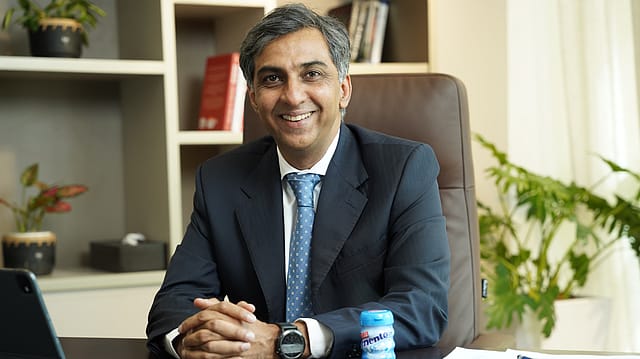
For a company whose business is built around products that can still be bought for ₹1, getting Indian consumers to pay more could be the key to its next phase of growth. Perfetti Van Melle India is now working to steadily shift consumption towards higher price points such as ₹5 and ₹10, even as it acknowledges that changing the country’s deeply ingrained ₹1 candy mindset will not be easy.
With brands ranging from Mentos and Chupa Chups to Alpenliebe, Perfetti Van Melle has grown into one of the biggest names in the global confectionery and gum business.
The company, which expects to touch ₹4,000 crore in revenue this year (up from ₹3,500 crore), is targeting ₹8,000 crore over the next three to four years. Nikhil Sharma, managing director, Perfetti Van Melle India, told Fortune India the company needs to increasingly drive value growth rather than depend only on volumes in a market where per-gram realisation remains low.
“We certainly need to grow value now, and especially by upgrading the consumer price points,” Sharma said.
The challenge, however, is that around 70% of Perfetti’s business still comes from the ₹1 price point. While the company is market leader with nearly 29% share in the highly fragmented sugar confectionery market, Sharma said moving consumers upwards will take time.
Why ₹1 remains a tough habit to break
From ₹1 to ₹2 to then ₹5 and ₹10, that's the progression they are looking at.
“If it were easy, it would already be done,” Sharma acknowledged, pointing to how Indian consumers have gradually accepted higher price points in categories such as soft drinks. Perfetti had itself moved from 50 paise to ₹1 in 2016, when the lower price point became difficult to sustain.
A similar transition could eventually happen again. “We are 10 years from that decision now and we could come to a point where we will seriously compromise consumer value if we continue to set the ₹1 price point,” he said.
The company does not necessarily expect a direct jump from ₹1 to ₹5. Sharma said ₹1 could move to ₹2, while ₹5 would be built around a separate product range. For the next two to three years, Perfetti plans to increase the contribution from ₹5 and higher price points before deciding on a broader price-point change.
The company is also looking at newer channels, including e-commerce and quick commerce, where individual low-priced products do not fit the minimum basket size. Quick commerce currently contributes around 2.5-3% of Perfetti India’s business, and the company hopes to double that contribution in two years by developing larger and customised packs.
Perfetti’s growth opportunity also rests on India’s relatively low per-capita confectionery consumption compared with developed markets. Sharma said consumption remains largely centred around single candies, while the company wants to build demand for sharing bags and larger packs that can be consumed at home.
That strategy is being supported by Perfetti’s distribution reach of around 5.5 million outlets, including nearly 2,000 distributors and 16,000 sub-distributors. Its homegrown brands Center Fresh and Centerfruit together account for around 40-45% of the company’s business.
A good year, despite higher costs
The company’s growth has also come despite cost pressures. The West Asia crisis pushed up oil prices and, in turn, packaging costs, while imported inputs also became more expensive and some supplies were delayed. Perfetti used forward contracts where possible to limit the impact, but absorbed some of the increase elsewhere.
It did not pass those costs on to consumers. “Us passing on the cost is not easy also, like other players,” Sharma said.
Still, he described FY27 as a strong year so far, with growth in topline, profitability and market share. GST tailwinds have also benefited the business.
For now, Perfetti is not forecasting a major festive-quarter boost, as confectionery tends to have relatively stable demand through the year. But with India already its third-largest market globally and headquarters viewing the country as a priority, the larger ambition is clear: grow the business by getting Indian consumers to spend more per purchase without losing the enormous volume base that has made the ₹1 candy such a durable part of the market.