
Fortune India Luxury Summit: India needs cultural confidence, collaboration to make a mark globally
ADVERTISEMENT
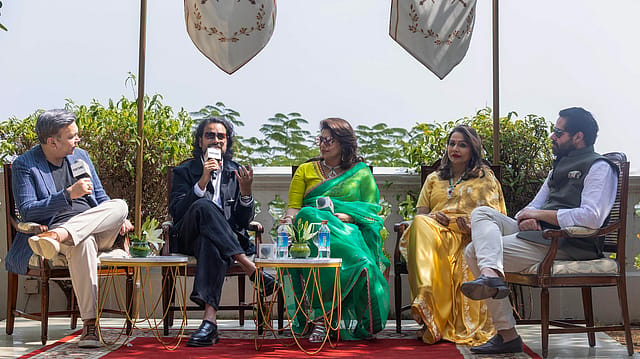
India needs to move beyond being a manufacturing destination for global luxury brands and establish itself as an originator of design and luxury ideas, speakers at a panel discussion said at the inaugural Fortune India Business of Luxury Summit in Hyderabad. They were of the view that highlighting the country's craftsmanship, heritage, and creative talent were key to its global ambitions. The panel featured fashion designer Rahul Mishra; jewellery designer Samir Andrea Kasliwal, partner, Gem Palace; Pinky Reddy, chairperson, Reddy Hospitality; and multidisciplinary designer Raseel Gujral Ansal. The discussion was moderated by Manoj Adlakha, former CEO of American Express India and founder CEO of Red Beryl.
Mishra said India has historically been viewed as a maker of luxury for the world, but the country also has the ability to shape the ideas and aesthetics that define luxury globally. He said Indian heritage and craftsmanship could create substantial business opportunities if brands and designers began recognising the value of their own cultural influences. “India had long been imagining luxury for the world. We are not just the makers of luxury,” Mishra said, adding that the country needed to recognise the authorship of Indian minds and designs rather than limit itself to manufacturing for international labels.
He also argued that craftsmanship and brands should work together rather than be seen as competing interests, saying a sustainable luxury ecosystem would require collaboration between artisans, entrepreneurs, institutions, and the government.
Raseel Gujral Ansal, who has worked in design for four decades, said Indian consumers and designers still often seek western validation, particularly in spatial and interior design. She said while Indian fashion and hospitality had seen greater confidence in expressing local aesthetics, the same risk-taking was yet to become widespread in design. “We just have too much at home to need to have space to borrow,” she said, arguing that Indian designers should express their cultural influences more boldly instead of relying on familiar international aesthetics.
Luxury is increasingly about exclusivity, experiences, and craftsmanship
The panel also discussed how luxury consumption is changing, with exclusivity, personalised experiences, and craftsmanship becoming increasingly important to buyers. Samir Andrea Kasliwal said Gem Palace has seen a shift towards more wearable jewellery, particularly among younger consumers, who are increasingly buying lighter designs featuring semi-precious stones. At the same time, the demand for distinctive, non-replicable pieces has grown among some customers. “We are focussing more on one-off and one-of-a-kind pieces,” Kasliwal said, explaining that the business was increasingly investing in research, design and technical expertise to create jewellery that could not be replicated for another customer.
Pinky Reddy said luxury hospitality was increasingly defined by personalised experiences rather than expensive fittings or material displays. Citing Palacio Aguada in Goa, the boutique property developed by her and her husband, she said the focus was on anticipating guests' preferences, from their choice of drinks to food and experiences. “We know everything about our guests who are going to come and stay with us. And then we know what kind of food they like, what kind of experiences, everything,” Reddy said.
Gujral Ansal said luxury experiences and ownership were not mutually exclusive, arguing that consumers could value both the experience of travelling or visiting a destination and owning objects that carry personal or artistic value.
Mishra, meanwhile, argued that time invested in craftsmanship was central to the meaning of luxury, including the time taken to create an object and the emotional value it acquires over generations. He also called for greater recognition of Indian craftsmanship in global luxury supply chains, saying the country should claim authorship for work and design created by its artisans.