
GST reform to boost freight traffic: Ashok Leyland CEO Shenu Agarwal
ADVERTISEMENT
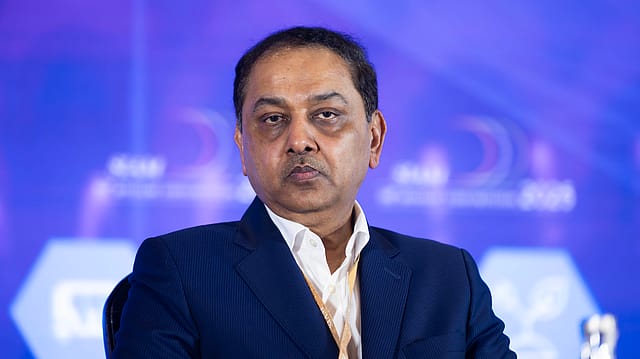
The Goods and Services Tax (GST) reform, which comes into effect on September 22, will increase consumption, which in turn will directly boost freight traffic, according to Shenu Agarwal, managing director and CEO, Ashok Leyland .
“The GST reform is not limited to price cuts on commercial vehicles (CVs). It is touching every consumer in the country, every business in the country and every sector in the country,” Agarwal told reporters on the sidelines of SIAM Convention 2025.
As part of the GST rate rationalisation, the GST Council had slashed the tax rate on commercial vehicles from 28% to 18% on September 3.
“On one side, there is lowering of the cost of CVs, and on the other side there is creation of demand for the end use of the truck,” the Ashok Leyland MD and CEO said. “This is very typical of CVs."
The commercial vehicle industry, which was expecting about mid-single digit growth for medium and heavy commercial vehicle sector, could surpass the all-time high seen in FY19, said Agarwal.
“I see a lot of fillip, especially on the retail side, which is 50% of the market,” said Agarwal. Retail sales are to individual CV buyers while the rest of the market caters to fleet owners.
In FY25, the commercial vehicle industry registered a marginal de-growth of 1.2% in domestic sales, closing the year at 9.57 lakh units while exports grew by 23% to 81,000 units, according to SIAM.
Agarwal said the industry has been discussing the issue of ageing of fleets in the country. “Average age of the fleet is 10 years now. Historically, it has never been 7-8 years,” he said.
“There is a potential opportunity to replace 11-12 lakh vehicles in the MHCV segment. We still have BS2, BS3 vehicles in the fleet,” he explained.
The Ashok Leyland CEO further said that unleashing the replacement demand required some kind of a trigger, which the industry hadn’t seen in the last two to three years. "We had seen some obstacles in terms of BS6. But we hadn’t seen a positive trigger. The GST cut could be that trigger," he said.