
GST cut, interest rate relief fuel record 4.5 million car sales in 2025
ADVERTISEMENT
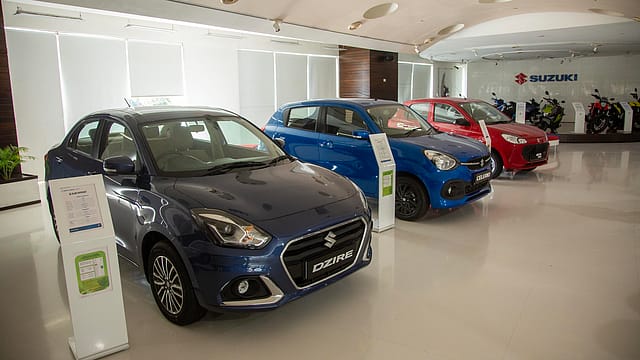
India’s automobile industry wrapped up calendar year 2025 on a strong footing, with passenger vehicle (PV) wholesales rising about 6% year-on-year (YoY) to an all-time high of roughly 4.5 million units, despite a high base, as per industry estimates.
The upswing was underpinned by a combination of GST rate reduction, cumulative repo rate cuts of around 100 basis points, and income tax relief, which lifted disposable incomes and revived buyer confidence across both urban and rural markets.

Sales get a fillip
Sales momentum accelerated sharply after the GST reduction that came into effect on September 22, 2025. Industry estimates show that December wholesales jumped 24–26% YoY to around 4 lakh units, compared with about 3.22 lakh units a year ago, marking the third consecutive month of double-digit growth.
Industry observers note that these figures largely reflect wholesale dispatches to dealers rather than retail sales to end customers.
Healthy numbers for carmakers
Several carmakers reported their highest-ever annual sales during the year. PV market leader Maruti Suzuki India Ltd (MSIL) closed CY25 with 1.84 million domestic units, while total sales, including exports, stood at 2.35 million vehicles, supported by record exports of nearly 396,000 units.
In December alone, Maruti’s PV volumes surged 37% YoY to 178,646 units, with dealer inventory levels at just three days and pending bookings of around 175,000 vehicles. The company’s Senior Executive Officer (Marketing & Sales), Partho Banerjee, said demand improved even in the small car segment after the GST cut, aided by income tax rebates for earnings up to ₹12 lakh and softer interest rates. He expects industry growth of 6–7% going forward, provided monsoons remain favourable.
SUVs step up on the gas
Sport utility vehicles (SUVs) continued to anchor growth, with their share of PV sales rising to 55.8% in CY25, up from 53.8% a year earlier.
Mahindra & Mahindra (M&M) ended the year with record SUV volumes, reporting 476,476 PVs, an 18% annual increase. The country’s largest utility vehicle maker saw December PV sales rise nearly 23% YoY to 50,946 units, driven largely by the Scorpio range.
M&M CEO Nalinikanth Gollagunta said the company is ramping up EV capacity to 8,000 electric SUVs per month and plans to roll out 1,000 ultra-fast 180 kW charging points by 2027, while continuing to strengthen its internal combustion engine (ICE) SUV portfolio.
At Tata Motors Passenger Vehicles, CY25 marked the fifth consecutive year of record sales, with 587,218 units, including 81,125 EVs, the highest ever in a calendar year. The company’s Managing Director Shailesh Chandra said the post-GST momentum strengthened through the second half, supported by rising SUV preference and accelerating adoption of cleaner powertrains. The Nexon and Punch together crossed 3.7 lakh units in 2025.
Among other major players, Toyota Kirloskar Motor (TKM) posted 351,580 domestic sales in CY25, while total volumes including exports touched 388,801 units, up 19%. Kia India grew 15% to 280,286 units, while Škoda Auto more than doubled sales to 72,665 units. Hyundai Motor India, despite strong demand for the Creta at over 201,000 units, slipped to fourth place overall as annual sales declined.