
India has 500 million gamers. Why doesn't it have enough global esports champions?
ADVERTISEMENT
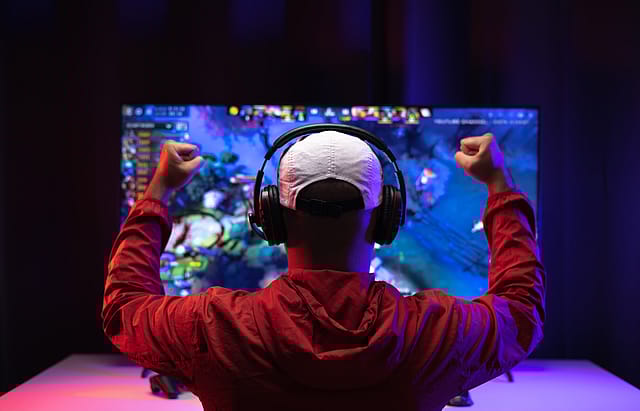
With more than 500 million gamers, India is home to one of the world's largest gaming communities. But it has yet to produce a deep pipeline of players consistently competing at the highest levels of global esports.
In an exclusive interaction with Fortune India, Charlie Cowdrey, CEO of JioBLAST, said the problem is not a lack of talent—it is the absence of a structured pathway that can take that talent from grassroots competition to the global stage.
“I don't believe it's a talent problem at all. India has over 500 million gamers, making it one of the largest gaming communities in the world. The bigger challenge has been the pathway between being a talented gamer and becoming a world-class professional,” Cowdrey said.
His comments come as JioBLAST, a joint venture between BLAST and RISE Worldwide Limited (a wholly owned RIL subsidiary), seeks to build a broader competitive gaming ecosystem in India through its India Rising: Road to EWC initiative. The programme is designed to create a national route for Indian talent to the Esports World Cup, while bringing together players, teams, creators, publishers, brands and fans.
From grassroots talent to global competition
Cowdrey said India's esports ecosystem is still developing some of the structures that have long existed in traditional sports.
“In traditional sports, you have academies, structured leagues, coaching, scouting systems and clear progression. Esports in India is still building those foundations,” he said.
He pointed to coaching, performance analytics, talent development and sustained international exposure as areas that are still evolving.
“Building champions isn't about one tournament; it's about building an ecosystem. Publishers, teams, tournament organisers, governments and brands all have a role to play,” Cowdrey said.
That is the gap JioBLAST is trying to address through India Rising. Rather than treating the initiative as a standalone competition, the company sees it as a platform connecting Indian players with international opportunities while also expanding the commercial ecosystem around competitive gaming.
“India Rising was never intended to be just another tournament. It's a platform designed to bring together competitive gaming, creators, fans, publishers, brands and the wider gaming community under one roof,” Cowdrey said.
The initiative provides an official Indian pathway to the Esports World Cup, beginning with chess in 2026, alongside exhibition matches in titles including VALORANT and MOBA Legends: 5v5. The programme is also being positioned as a longer-term property that can expand across more games and audiences.
India is moving beyond being a gaming consumer
For global gaming and esports companies, Cowdrey believes India's opportunity goes beyond its sheer number of gamers.
India has a young population and one of the world's largest internet user bases, creating a large potential audience for games, esports, creators and digital entertainment. But Cowdrey said the country's evolution is now creating opportunities on the supply side as well.
“What makes India particularly exciting is that it's evolving from being purely a consumer market into a market capable of producing world-class talent, hosting major events and attracting long-term investment,” he said.
That shift is also visible in the number of games entering India's competitive ecosystem. Cowdrey has previously described India as moving from a one- or two-game esports market towards a multi-game market, with the potential to expand significantly over the next few years.
For JioBLAST, that diversification creates an opportunity to build an ecosystem around multiple titles rather than depend on a single game.
The bigger business is beyond the players
Cowdrey also sees esports increasingly converging with the wider creator and entertainment economy. For brands, he said, gaming offers something traditional media often cannot: participation.
“Gaming offers something few other platforms can: active participation. Audiences don't just watch—they compete, create content, interact with creators and build communities,” he said.
That engagement, he added, gives brands an opportunity to become part of gaming culture rather than simply advertise around it, particularly as younger, digitally native audiences become increasingly important to advertisers.
The commercial opportunity, however, extends beyond sponsorships. Cowdrey said the next stage of India's esports industry will depend on developing stronger commercial fundamentals, including intellectual property, sponsorships, fan engagement, media rights and year-round experiences.
“The next phase is about creating stronger commercial fundamentals,” he said. “That means developing sustainable intellectual property, expanding sponsorship opportunities, increasing fan engagement, strengthening media rights and creating year-round experiences rather than standalone events.”
“As the ecosystem matures, monetisation naturally becomes more diversified,” he added.
For Cowdrey, the long-term opportunity is therefore bigger than producing a few Indian esports champions.
“India's biggest opportunity is to become a global leader not just because of its audience size, but because of the strength of its ecosystem,” he said.
“If we continue investing in talent pathways, creators, infrastructure, innovation and live experiences, India can become a market that produces world-class players, exports intellectual property, hosts global events and attracts international investment.”