
Once India’s retail king, Kishore Biyani was looking for a comeback. That’s unlikely now
ADVERTISEMENT
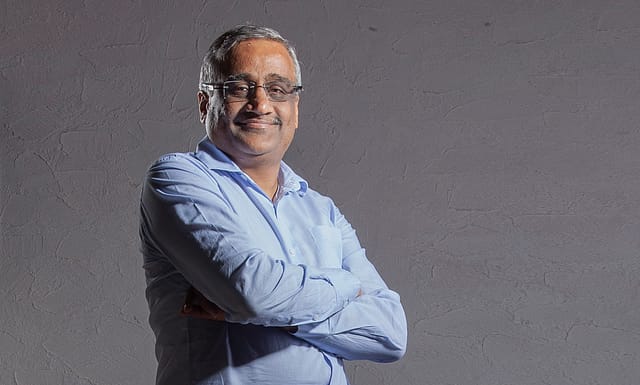
About 25 years ago, Kishore Biyani had four portraits hanging in his office.
There was the peerless JRD Tata, the legendary Jack Welch, the hallowed Mother Teresa, and the illustrious Sam Walton, all looking upon anyone who walked into the once retail czar’s office. Then, there was a mirror in the centre, separating them.
“I want to be put in the same pantheon,” Biyani told a senior management consultant who had been waiting in his office. “That’s why I have the mirror there.”
“That is the man,” the consultant, who is now an industry veteran in the retail and FMCG sector, says. “Unfortunately, he cut corners everywhere and then went on to claim that Indians love their butts to be rubbed against each other.”
The reference is to Biyani’s oft-quoted "butt and brush" theory, which suggests that Indians prefer to shop in an overcrowded environment. In fact, Big Bazaar stores, founded by Biyani, were designed to push that philosophy, and were perhaps a factor in its success early on.
But that was a long time ago. And Biyani has since fallen from grace, after an attempt to sell his debt-laden Future Retail to Mukesh Ambani’s Reliance Retail fell through and is now battling insolvency proceedings. While he has been attempting a comeback of sorts—at least through the family, which has been building businesses in gourmet groceries, multi-brand D2C retail, and value fashion—it is now certain to be stuck in a quagmire.
“The family's investment structures and the next generation may provide a ring-fenced platform for the newer business ventures, and consumers won't really view the brands negatively, but criminal investigations could have a reputational impact among investors and business associates,” says Devangshu Dutta, chief executive of consultancy firm Third Eyesight and managing partner of PVC Partners, an early-stage investment advisory firm.
On November 6, India’s top investigative agency, the Central Bureau of Investigation, registered an FIR against Biyani and Future Retail Ltd, a company that he owned, for an alleged bank fraud of ₹904.32 crore and conducted searches at premises linked to him in Mumbai.
The CBI alleges that, according to a complaint filed by the country’s largest bank, the SBI, the accused criminally conspired to obtain credit facilities from the bank and a consortium of nine banks, before diverting and siphoning off the funds through associate companies and connected entities and causing loss to the bank.
That also means there might be more to come out of the closet considering that investigation is ongoing. Already, the resolution professional appointed to oversee the insolvency proceedings had in 2023 said that the former directors of Future Retail had caused a loss of ₹14,809.44 crore to creditors, and that the amount must be sought from them.
“Investigation is continuing to ascertain the full extent of the conspiracy, identify the role of all involved persons, including public servants and private individuals, and trace the end-use of the loan funds,” the CBI had said in a statement.
Free fall
Future Retail operated multiple retail formats, including hypermarkets and supermarkets such as Big Bazaar, Fashion@Big Bazaar and Foodhall. It was also engaged in the general trading of FMCG and fashion goods through its stores. The CBI has also booked Biyani’s cousin Rakesh Biyani, former operations head of Future Retail, in the case registered under offences of criminal conspiracy.
Rakesh Biyani, since Future Retail folded up, has gone on to set up Style Union, a fast fashion retail chain, and was last looking to raise ₹800 crore and targeting a post-money valuation of ₹7,500–8,000 crore ($790–840 million). In all, Style Union has some 180 stores across the country and last year posted revenues of ₹588 crore.
“Whether you are a family office, private investor, or a bank, you will be very hesitant to fund a business,” the industry veteran and senior management expert quoted earlier says on condition of anonymity about the impact the case will have on the businesses Biyani's family was trying to build. “You can't ignore it. And therefore, the fundraising itself will become a bit more difficult.”
That means a second coming of sorts for Biyani is increasingly becoming difficult. Biyani’s daughters, Ashni and Avni, are currently in the midst of scaling Foodstories, a premium gourmet concept, strikingly similar to the Foodhall retail outlets that it once operated under Future Retail. Food Stories sells everything from avocados from Peru to blackberries from New Zealand. The company claims to source products directly from farmers, producers, bakers, and chefs through a combination of physical stores and digital channels. It has stores in Delhi, Mumbai, Hyderabad, and Bengaluru.
Earlier this year, it also raised ₹50 crore in a round led by Zerodha co-founder Nikhil Kamath, with participation from the Narotam Sekhsaria Family Office, an existing investor. Both Ashni and Avni Biyani are also co-founders of Think9, a brand co-creation platform. Apart from Foodstories, Think9 has direct-to-consumer (D2C) brands like Super You (protein), Good Bug (gut health), Anaar (shoes and bags), BiE (clean beauty), and more.
Biyani himself has meanwhile been busy building Foundery, which claims to be a venture builder that forges entrepreneurs into co-founders and builds companies with them from the ground up. The programme for which interviews are currently ongoing is certain to face disruptions as Biyani now faces the wrath of the CBI. Selected entrepreneurs were to enter a 90-day venture-building environment at The Foundery Sanctum in Alibaug.
No Pantheon for the czar
For Biyani, who once started out trying to escape the conservative business of his family, the allegations and investigations are certainly a coup de grace. After moving away from his family, Biyani had set up Manz Wear and sold trousers under the brand name Pantaloon, a word strikingly similar to patloon, the Hindi word for trousers. Pantaloons went public in 1992 and sold brands such as John Miller and Bare Jeans.
In 2001, Biyani decided to foray into large-scale hypermarkets, opening Big Bazaar in Kolkata. Over the next decade, Biyani scaled up Big Bazaar across the country, operating some 250 stores across the country, and rightly earning him the moniker of retail czar. But the fast-paced expansion also meant that the Future group, now comprising Pantaloons and Big Bazaar, was being saddled with a heavy debt burden.
In 2012, Biyani sold a controlling stake in Pantaloons to the Aditya Birla Group. “An overleveraged, stretched balance sheet is not a strange or unique phenomenon in business,” says Dutta. “It is in the very nature of scalable entrepreneurship to chase seemingly impossible dreams. The real problem arises when high-cost short-term borrowings get locked into rapid expansion of long-term assets such as fit-outs and supply chain infrastructure, or when short-term assets (i.e. store inventory) can't be rotated fast enough.”
In 2020, Biyani finally sold Future Group’s retail, wholesale, logistics, and warehousing arms to Mukesh Ambani’s Reliance Retail for ₹24,713 crore. That deal was never completed, with creditors objecting to it, and Reliance has since taken over several Big Bazaar stores over nonpayment of dues. Lenders meanwhile have dragged Future Retail into insolvency proceedings, which the National Company Law Tribunal has admitted.
“The sale of Pantaloons to Aditya Birla Group could have provided a window to recoup and consolidate,” says Dutta. “However, the group pushed for further growth by acquiring businesses like Nilgiri's, Easyday (Bharti), Heritage Foods, Hypercity and others, expanding the footprint and formats into businesses and locations that were already underperforming.”
Now, with the CBI and insolvency proceedings behind him, the path ahead seems quite bumpy for the 65-year-old, who had once come to redefine shopping for millions of Indians. But Biyani has found a way back most of the time. Whether he can do so this time around remains the bigger question. Regardless, one thing is clear. Making it to the pantheon he had long wanted is very unlikely.