
Investors must move beyond capital and become operators, says Sudhir Sethi
ADVERTISEMENT
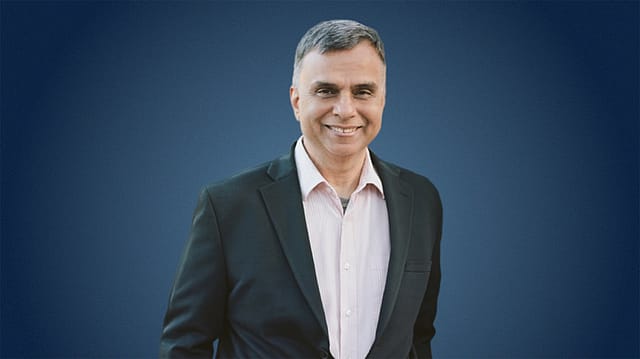
Sudhir Sethi, founder and chairman of Chiratae Ventures, said the biggest lesson from the past decade of venture investing in India is simple: investors need to move beyond writing cheques.
Sethi was speaking at the Founders Forum India event in Mumbai. He said that when capital was easily available, many investors, including himself, believed they knew what to do. “But the biggest learning is to listen to the founder,” he added.
Using Lenskart's journey and its founder Peyush Bansal as an example, he said, “Peyush kept saying, 'I am not getting eyeglasses. I’m trying to correct myopia in the country.' There are 500 million people in the country who need myopia correction.”
That purpose, Sethi said, “was built into the work in the company, into the strategy.” He explained how eyewear prescriptions were earlier tied to store purchases. “The store which used to give prescriptions said, 'you have to buy it from me.'” Lenskart changed that. “Testing of eyeglasses came into the homes,” he said. “He started doing prescriptions at stores and at homes and said you can buy from anyone.”
“Guess what? The conversion rate was far, far higher. It was 67%," Sethi explained. For Sethi, that experience reshaped his view of venture capital. “VCs have to become operators,” he said directly. “VCs cannot be just financial people giving money. The value adders understand the business.”
According to Sethi, venture capital globally is driven by technology. In India, he elaborated, founders and VCs have realised that technology is not just incremental improvement — it can be true differentiation if executed well. He cited examples of “a loan being given with very low NPAs in three minutes, while the bank would take 30 minutes” and companies using “technology and AI” to decide store positioning and optimise KPIs.
“Every company is different. Every challenge is very different,” he added. He also said that “the role of technology is increasing day by day,” and that differentiation is becoming deeper. “Many of our companies who are building products have gone into investing in material science.” Unlike six or eight years ago, when “many products were just imported from China”, founders are now designing products themselves.
He also pointed out the importance of governance. “The whole space of the regulatory environment is getting complex every day,” he said, adding that many in the ecosystem may not have paid enough attention to these aspects five years ago.
Sethi also expressed strong belief in Indian companies going global. “What can succeed in India can succeed outside the country. I’m very clear about it,” he said. If a company can operate in India’s price-sensitive environment and solve tough supply and delivery problems, “you can solve it anywhere in the world.”
He noted that in many of Chiratae’s portfolio companies, “the first and the second round in 70% of our companies was by Indian capital.” That, he said, shows that “risk has now been taken by Indian capital,” which he described as “a very, very big movement in the country”.