
L&T Q1 profit rises 14% to ₹4,123 crore as strong order wins offset margin pressure
ADVERTISEMENT
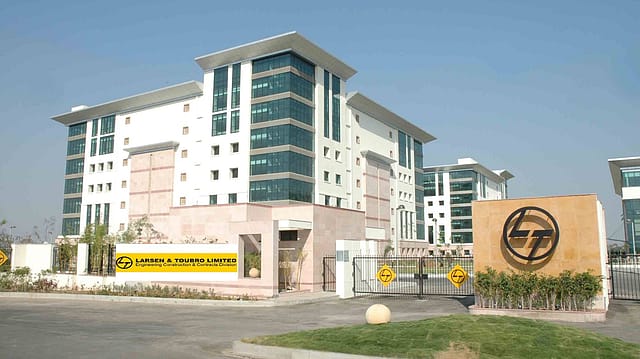
Larsen & Toubro (L&T) reported a 14% year-on-year increase in consolidated net profit for the June quarter, driven by strong order inflows, healthy revenue growth and lower finance costs, even as operating margins came under pressure due to execution challenges, forex headwinds and higher provisions.
The engineering and infrastructure major posted a consolidated profit after tax (PAT) of ₹4,123 crore for the first quarter of FY27, compared with ₹3,617 crore in the year-ago period. Revenue from operations rose 6.7% to ₹67,942 crore from ₹63,679 crore a year earlier.
However, operating performance softened during the quarter. EBITDA declined 3.2% year-on-year to ₹6,116 crore, while the EBITDA margin narrowed to 9.0% from 9.9% a year ago. The company attributed the margin pressure to lower execution levels across parts of its order book, supply-chain constraints in the Middle East, forex variation in its IT businesses and higher expected credit loss provisions.
Order inflows remain robust
L&T secured fresh orders worth ₹1.08 lakh crore during the quarter, up 14% year-on-year, aided by large wins across residential and commercial buildings, transportation infrastructure, ferrous metals, offshore wind and heavy engineering businesses. International orders accounted for 56% of the total order inflow.
The company's consolidated order book stood at ₹7.79 lakh crore as of June 30, 2026, marking a 27% increase over the previous year, with international projects contributing 52% of the total order book.
Commenting on the performance, S N Subrahmanyan, chairman and managing director, said, "The financial year has commenced against the backdrop of geopolitical uncertainties. The Company has managed to maintain momentum by rotating its focus across sectors and geographies while maintaining robust cash flows. The performance for the quarter reflects our portfolio resilience."
Strategic moves and outlook
During the quarter, L&T completed the divestment of Nabha Power Ltd and signed a share purchase agreement to sell its stake in the Hyderabad Metro Rail special purpose vehicle, in line with its strategy of exiting concession assets. The board also approved the merger of wholly owned subsidiary L&T Power Development Ltd with the parent company.
Looking ahead, the company said India's economic fundamentals remain supportive despite persistent geopolitical risks, supply-chain disruptions and elevated energy prices. It expects its diversified portfolio, disciplined execution, investments in artificial intelligence and digital technologies, and robust order book to support sustainable long-term growth.
Shares of L&T ended 0.63% higher at ₹3,830 apiece on the NSE on Tuesday. Over the past one year, the stock has gained nearly 12%, outperforming the benchmark Nifty 50, which has declined nearly 3% during the same period.