
N Chandrasekaran’s two-year deal blitz behind Tata Electronics’ semiconductor rise
ADVERTISEMENT
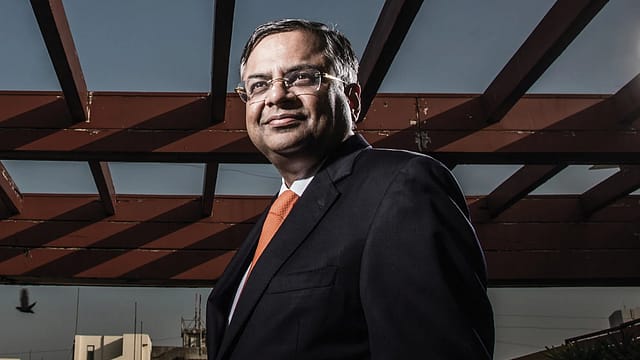
Over the past two years, N Chandrasekaran has been the quiet architect behind nearly 15 strategic partnerships and acquisitions, guiding Tata Electronics towards the creation of India’s first large-scale homegrown semiconductor manufacturing platform. By committing an unprecedented ₹1.18 lakh crore to set up a mega semiconductor fabrication facility in Dholera (Gujarat) in partnership with PSMC, along with a greenfield semiconductor assembly and test facility in Jagiroad (Assam), he has outlined a clear direction for the Tata company to master the complex science of semiconductor fabrication and assembly. The latest addition to this network of alliances is the partnership with Japan’s ROHM to manufacture power semiconductors.
Chandrasekaran’s ambitious roadmap seeks to transform India from a major consumer of electronics into a global manufacturing hub, addressing supply-chain vulnerabilities that have come into sharp focus in recent years. The major initiative is semiconductor fabrication plant in Gujarat. Representing an investment of approximately ₹91,000 crore, the facility is being developed in collaboration with Taiwan’s Powerchip Semiconductor Manufacturing Corporation (PSMC). Envisioned as India’s first greenfield semiconductor fab of scale, it will deploy high levels of automation and data-driven manufacturing processes to enhance efficiency and yield. The Dholera plant will produce mature-node chips used in power management, microcontrollers, and other applications serving sectors ranging from automotive electronics to telecommunications.
Parallel to the foundry project, Tata Electronics is establishing a large outsourced semiconductor assembly and test (OSAT) facility in Assam. With an investment of ₹27,000 crore, the plant will handle advanced packaging and testing, completing a critical link in the semiconductor value chain. Together, these two projects represent the largest manufacturing commitment under India’s semiconductor mission, enabling wafers produced domestically—or sourced globally—to be assembled, tested, and readied for the market entirely within India.
Success in the semiconductor industry depends on a dense ecosystem of expertise, and Chandrasekaran has moved decisively to secure global alliances. A partnership with Intel focuses on semiconductor ecosystem enablement and advanced computing platforms, while an agreement with Analog Devices (ADI) explores collaboration across manufacturing and supply-chain domains for automotive and industrial applications. To strengthen its position in power semiconductors—vital for electric mobility and renewable energy—Tata’s collaboration with ROHM combines the Japanese firm’s device technology with Tata Electronics’ manufacturing and assembly capabilities.
Tata Electronics is also targeting specialised segments. An alliance involving Himax Technologies and PSMC is aimed at display driver ICs and low-power solutions. Meanwhile, partnerships with Merck for specialty materials and with Synopsys for electronic design automation and IP support ensure access to critical inputs across the semiconductor stack. To support operations at scale, Tata has engaged Tokyo Electron (TEL) and ASMPT for equipment support, process integration, and workforce training.
Beyond semiconductor fabrication and packaging, Tata Electronics has expanded its footprint in electronic manufacturing services (EMS). The acquisition of Wistron’s Karnataka operations and a majority stake in Pegatron Technology India have positioned the Tata Group firmly within the global smartphone manufacturing supply chain.
To steer this complex and capital-intensive business, the group appointed Dr Randhir Thakur, a former senior executive at Intel and Applied Materials, as CEO and Managing Director in 2023. Under his leadership, Tata Electronics is also strengthening internal capabilities through memorandums of understanding with C-DAC for chip design enablement and with Bharat Electronics Ltd (BEL) for defence electronics.
Tata Electronics’ revenue for FY25 was approximately ₹66,600 crore, a sharp jump from ₹3,752 crore in FY24.
The company has also signed an agreement with NIELIT Kohima to address skill gaps in semiconductor assembly and packaging. These initiatives—stretching from Assam to Gujarat—underscore a significant shift in India’s industrial ambitions. While the journey towards global semiconductor competitiveness remains challenging, Tata Group’s financial commitment and expanding network of global partners suggest that India’s long-cherished semiconductor aspirations are steadily moving towards reality.