
Recovery is returning to consumption, though weather and global risks keep companies cautious
ADVERTISEMENT
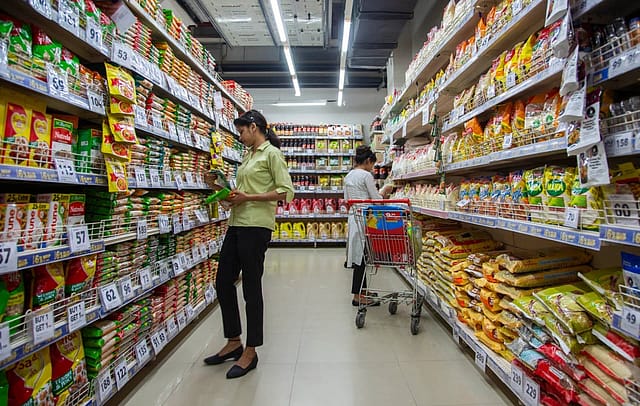
The latest earnings season suggests India's consumption recovery is gaining traction. Consumer demand is picking up and showing more signs of improvement, with companies such as Marico, Berger Paints and Tata Consumer Products reporting stronger volume-led growth, wider distribution and steady premiumisation in the June quarter. However, management teams remain cautious, warning that weather uncertainty, the West Asia conflict and input cost inflation could keep the recovery uneven.
Marico perhaps offered the strongest evidence that demand is improving. The company posted 22.9% year on year consolidated revenue growth in the June quarter, supported by 11% volume growth, its highest in 20 quarters. Standalone revenue rose 18.9%, with Parachute coconut oil reporting 10% volume growth and value-added hair oils growing 22% by value. The company attributed the improvement to portfolio transformation, expanding premium categories and Project SETU, which has increased direct reach by 1.5 times across urban and rural markets.
"Marico has seen a strong start to FY27, and we expect the trend to remain robust led by softening copra prices aiding volume and gross margin, scaling of foods biz, premium personal care & digital-first offerings, and a project SETU-driven distribution ramp-up supporting urban recovery," said Rohan Kalle, research analyst, InCred in the brokerage report.
Berger Paints also reported encouraging trends, with standalone revenue growing 12.7% and volume rising 8.4%, driven by healthy decorative demand. The company said urban expansion, premium products including waterproofing and construction chemicals, along with price hikes, helped sustain double digit growth despite lingering competitive intensity.
However, InCred flagged downside risks of intense competition and inflationary pressure impacting growth. "While Berger witnessed a strong start to FY27, we expect the competitive intensity to remain firm."
Premiumisation and distribution remain the biggest growth engines
Across companies, premiumisation is emerging as one of the strongest drivers of consumption.
Nestlé India said its long-term strategy remains centred on increasing market penetration and premiumisation rather than relying on widespread price hikes. Management highlighted that penetration remains relatively low across key categories, with Maggi at 37%, coffee at 33% and chocolates at 23%, leaving significant room for expansion. Premium products now account for 14% of its food and beverages portfolio, growing around 400 to 500 basis points faster than the rest of the business. The company has expanded its distribution to 6.2 million outlets, while e-commerce and quick commerce contribution has doubled since 2021.
Tata Consumer Products painted a similar picture. Domestic revenue grew 13.3% to ₹3,540 crore, driven by Tata Sampann, Ready to Drink beverages, Capital Foods and Organic India, which grew 58%, 41%, 40% and 27%, respectively. The company also launched 14 products during the quarter and reiterated its focus on innovation, premiumisation and expanding acquired businesses.
"Its broad exposure across beverages, staples and packaged foods enabled healthy momentum across key operating segments. The successful integration and scaling up of acquired businesses further strengthened the portfolio, while the company’s presence across domestic and international markets added to overall business resilience and reinforced its competitive positioning," according to a report by Geojit.
Emami's performance further highlighted how new age brands are reshaping growth. While consolidated revenue rose nearly 15%, domestic business expanded 20%, supported by strategic investments such as The Man Company, Brillare, Axiom and IncNut. However, excluding these newer businesses, the core domestic business grew only around 6%, suggesting that traditional consumption is recovering at a slower pace. Organised channels grew 19%, while quick commerce now contributes about 35% of the company's e-commerce sales.
"The core domestic business (ex-strategic investments) grew by a muted 6%, underscoring that the headline numbers were carried by the new-age portfolio. The international business declined 12% yoy on West Asia conflict-led supply disruption," according to InCred's report.
Recovery faces familiar headwinds
Despite improving demand indicators, companies are reluctant to declare victory.
Nestlé cautioned that the West Asia conflict, an uncertain monsoon and El Niño risks could soften consumption in the near term, citing market data that points to slower growth in both urban and rural food and beverage demand. It also identified supply continuity and cost inflation as the two biggest risks going forward.
However, Kalle said, "Higher investment in brands and capacity is driving volume-led growth, better profitability
and cash generation, which is recycled into the business. Savings improved to 2.6% of sales (1.9% earlier), helping offset input costs, currency and freight headwinds."
Emami's international business fell 12% because of supply disruptions linked to the West Asia conflict, while higher crude oil and packaging costs squeezed margins despite strong domestic growth. The company has initiated calibrated price increases to offset these pressures.
"Emami is taking the right steps around expanding its play within organised channels, premiumisation as well as scaling recently acquired brands; however, we believe near-term pressure will remain on margins due to scaling of strategic portfolio," said Kalle.
Berger expects a stronger second quarter as the full benefit of recent price hikes flows through, while Marico said stable gross margins and high teen EBITDA growth should be supported by softer copra prices, though inflation in other raw materials remains a watch point.