
Solar Group is getting bigger and bigger. Can the dream run continue?
ADVERTISEMENT
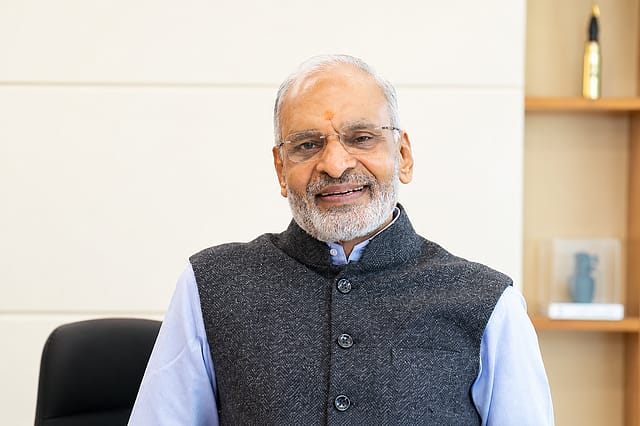
Even in his wildest dreams, Satyanarayanan Nuwal couldn’t have seen it coming a few decades ago.
Spending a staggering ₹13,000 crore to buy an explosives company in South Africa looked like a distant dream when he spent nights sleeping on the benches at railway stations. But fortune favours the brave. And in Nuwal’s case, the clever.
This week, Nuwal’s Solar Group announced it will acquire South Africa's Omnia Holdings in an all-cash deal worth about $1.36 billion, as the explosives and ammunition maker looks to expand its global mining business. Omnia operates in 23 countries, including southern and Western Africa, Australia, the United States, Canada, Brazil, and Indonesia.
Solar Industries (SIL) is one of the largest domestic manufacturers of bulk and cartridge explosives, detonators, detonating cords, and components, mostly used in the mining, infrastructure, and construction industries. The company’s product range includes packaged explosives, initiating systems, UAS drones, ammunition, military explosives, rocket integration, and bombs.
"Omnia is a business we have long admired for the strength of its Mining and Agriculture businesses, differentiated technologies and brands, and deep customer relationships built over many years,” Manish Nuwal, CEO of Solar Industries, said. Omnia's mining business, operating under the BME brand, focusses on open-cast mining, bulk explosives, electronic detonation systems, digital blasting solutions and mining chemicals, alongside a strong presence across Africa and international markets.
For Solar though, the acquisition marks a watershed moment, especially since it started as a supplier of explosives to state-owned coal mines and a consignment agent for the chemical company ICI (Imperial Chemical Industries) before it decided to enter explosives manufacturing. A little over a decade ago, Solar had forayed into India’s lucrative defense sector, which has now been given a massive impetus by the government’s Make in India initiative.
Currently, Solar Industries makes everything from explosives and propellants to grenades, drones and warheads, among others. The company’s key defence programs include the Pinaka ammunition, guided systems, 155mm artillery ammunition, loitering munitions, counter-drone systems and medium-calibre ammunition.
“The proposed $1.35 billion (~₹12,951 crore) acquisition of Omnia materially strengthens Solar’s international explosives franchise, with combined annual revenue expected at ₹31,000-32,000 crore post-acquisition,” brokerage firm ICICI Direct says. “The acquisition brings BME’s (blasting & metallurgy solutions segment) established presence in bulk emulsions, packaged explosives, initiation systems, etc. across Africa and other global markets, while Omnia’s nitric acid and ammonium nitrate capabilities provide greater raw-material security and vertical integration.”
With distribution reach increasing from around 90 countries to over 110, and manufacturing presence from 11 to 25 countries, thanks to the deal, Solar will also be seeing significant global traction. “The company is also benefiting from a favorable tailwind in the global explosives & high-energy materials industry, with shortages of these key materials supporting higher realizations across both domestic and international markets,” adds ICICI.
The rapid global expansion, alongside the domestic defence play, is also why the company’s market capitalization has grown 100 times in the 15 years, from ₹1,765 crore in 2012 to over 1.8 lakh crore now.
“The company’s expanding portfolio across UAVs, counter-drone systems, missiles and other advanced munitions, along with a strong defence order pipeline, provides visibility for sustained growth,” ICICI Direct says. “Management expects Solar standalone revenue at ~₹14,000 crore in FY27 with 28-29% EBITDA margin. Importantly, the Omnia acquisition is not at the expense of defence investments, while the enlarged global footprint could also create additional avenues for exporting Solar’s defence and explosives products.”
From railway benches
In many ways, Solar’s story is a quintessential rags-to-riches one.
Long before he started Solar, Satyanarayan Nuwal, the company’s founder, slept at railway stations because he couldn’t afford to pay for a stay. Nuwal came from Bhilwara in Rajasthan, where his father worked for the government, and after class 10 began trying his luck in business. That included manufacturing ink for fountain pens and a transport company.
In the late 1970’s, Nuwal moved to Chandrapur in Maharashtra, where a relative had worked at the Western Coal Fields. There, Nuwal had to sleep at railway stations because he couldn’t afford rent, before dabbling in explosive storage and later becoming a consignment agent for the chemical company ICI (Imperial Chemical Industries).
By the late 1990s, Nuwal’s Solar Group forayed into manufacturing its own explosives and in 1996 set up a small manufacturing unit in Nagpur. With his personal savings and loans, Solar Group began manufacturing detonators and bulk explosives. Among its clients over the years has been India’s state-controlled Coal India, which uses Solar Industries’ explosives for its mines. By 2006, the company decided to go public, with a turnover of ₹78 crore and a net profit of around ₹11 crore. It used the money largely to set up 13 manufacturing plants and expand the business.
But the defence play picked steam in 2010, when Solar Industries was the first private company to get a licence from the government to make explosives for warheads for India’s defence forces. With the realization that India will look at self-sustenance, especially in the defence play, the group began building capacity to expand into ammunition, including grenades and medium- and large-caliber ammunition, as well as high-energy explosive (HMX) and HMX-compounded products, propellants, and warheads.
That decision turned out well, especially with the Narendra Modi government’s push for Atmanirbhar Bharat, especially in the defence sector. India's defence production stood at ₹46,429 crore in FY2014-15 growing to ₹1.78 lakh crore in FY2025-26. Private companies accounted for ₹42,000 crore, or about 24%, of the latest figure.
On a roll
Today, the company has an order book of more than ₹21,000 crore, and the product pipeline includes Bhargavastra, a counter-drone system, 155mm artillery shells, guided Pinka, loitering munition UAVs, and BrahMos boosters. “Several macro tailwinds remain firmly in place. ReArm Europe, global replenishment demand for high energy materials, and India's own push towards ammunition self-sufficiency all play directly into SOIL's expanding product and geography portfolio,” ICICI reckons.
In the explosives segment, with a market share of around 24%, the Solar group is one of the largest manufacturers and exporters of explosives and initiating systems in India. Its Nagpur unit is the world’s largest single-location plant. The group offers a complete product range such as explosives like bulk & cartridge and explosive accessories like detonators & detonating cord also military explosives like HMX & its compounds, detonators and detonating cords. “The group's diversified clientele, spread across geographies and sectors such as mining, infrastructure and defence, along with ability to secure repeat orders enhances its market position,” ratings agency, Crisil notes.
“Solar saw its profits rise 10x in the last decade between market share gains globally in explosives, an acquisition in South Africa in 2024 and its foray in defence,” brokerage firm Jefferies said a statement. “Management has a healthy track record on sound capital allocation and cash flow focus.”
Into this mix comes the Omnia acquisition, that’s certain to add topline, and wider geographic play. “We see the transaction as a shift in Solar's identity from a predominantly India-led explosives and defence manufacturer into a much more global mining and blasting platform,” brokerage firm, Deven Choksey says. “The acquisition is strategically significant as it expands Solar’s global mining and blasting footprint, adds BME’s technology and mine-level capabilities, and provides greater vertical integration through Omnia’s nitrogen and ammonium nitrate infrastructure.”
From Bhilwara in Rajasthan to South Africa, Nuwal and Solar Group has travelled quite a distance. Now it’s about taking it to the finish line.