
Why Mercedes-Benz’s premiumisation strategy is a cautionary tale for JLR
ADVERTISEMENT
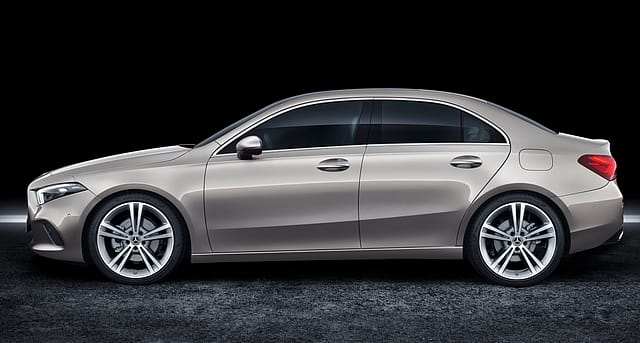
Jaguar Land Rover's current strategy to maintain profitability relies on its premium and core models—the Range Rover, the Discovery and the Defender, which make up nearly 73% of JLR's sales. Yet, a recent report by Kotak Securities red flags this approach, comparing it with Mercedes-Benz’s similar strategy, which has proved to fail, forcing it to pivot towards making entry-level and moderately priced products.
What worked for Mercedes-Benz initially turned out to be a pain point:
The report states that Mercedes’ recent pivot away from an aggressive premiumization strategy provides a clear stress test of the ‘value-over-volume’ model. During the COVID-19 pandemic and supply chain crisis, Mercedes still had buyers who were ready to pay for the premium offerings, thereby securing the profit margins.
But as global demand normalised, demand in China softened, and EV competition intensified, the strategy failed to deliver adequate results. Mercedes saw a sharp decline in profitability, despite strong brand equity and scale advantages, ultimately forcing a recalibration toward broader volume, more accessible models and moderate margin expectations. The underlying lesson is that premiumization works in boom times, but becomes fragile in the face of macro-volatility, stiff competition from other brands, and high EV/software investment requirements.
Why JLR needs to learn from Mercedes?
Data from the Kotak Securities report indicate the declining trend in Mercedes’ sales volume, EBIT margin and EBIT per vehicle. On a year-on-year basis, the Three-Pointed Star brand had an EBIT margin of 12.2% in Q3 CY2023, which dropped sharply to 4.7% in Q3 CY2024, and for the quarter in review for the current year, it stood at 1.8%. In terms of sales volume, Mercedes made 5,10,564 units in Q3 CY2023, dropping to 5,03,573 units in Q3 CY2024, and to 4,41,453 units in Q3 of CY2025. EBIT per vehicle also saw a steep drop from £7,662, the highest value recorded in Q2 CY2024, to a loss of £6,393.
On the other hand, the Tata-owned British company saw a decline in profit margins as a cyberattack incident left JLR's manufacturing units paralysed for more than a month. As per its Q2 results, revenue for Q2 was £4.9bn, down 24% year-on-year (YoY), while H1 revenue was £11.5bn, down 16% YoY. As per the company, its revenue was impacted by the cyber incident and the planned wind-down of legacy Jaguar models, ahead of the launch of the new Jaguar brand. Loss before tax and exceptional items of £485 million for Q2 and £134 million for H1, down from a profit of £398 million and £1.1 billion respectively a year ago, due to the challenges above and the continuing impact of US tariffs. EBIT margin was down by 8.6% for Q2 and 1.4% for H1, while guidance was revised to 0% to 2% for the remainder of FY26.
As per a report by Deven Choksey Research, JLR’s China market share was hit due to a new luxury tax on vehicles priced above 900,000 yuan, which structurally pressured margins for premium manufacturers, as many high-end models fall within this bracket and automakers have been forced to absorb part of the tax amid already weak demand, resulting in higher discounting and lower profitability.
In the US, tariff rates on vehicles imported from the UK and EU, though reduced to 10–15% in Q2 from the peak 25% level earlier, remain significantly above historical norms. Compared to the original pre-tariff rate of around 2.5%, the current structure still represents a 300–500% increase, meaning JLR continues to face a materially higher cost burden despite the recent reduction.
What should JLR do to avoid Mercedes' fate?
With all the presented issues JLR faces, the present scenario is a clarion call for it to change its strategy to maintain its position as a profitable luxury carmaker. JLR, with its higher concentration and lower scale model, leaves it more exposed to disruption. "As pricing power moderates and electrification costs rise, reliance on a narrow luxury niche can become a structural risk," the report stated.
Without building selective volume or diversification levels, JLR may continue to face sharper earnings volatility and increased competitive pressures. "Mercedes’ experience shows that a pure premium, low-volume strategy becomes vulnerable once supply chains normalise, markets soften, and electrification costs rise," the report said.
JLR, with an even lower scale and a narrower portfolio, faces similar pressures ahead. "To protect margins, JLR must either (1) fully commit to a tightly focused luxury-niche model or (2) selectively add volume through partnerships, sub-brands or localised programs." However, the first path also carries meaningful risk—if the luxury strategy fails to sustain consistent demand, JLR lacks a broader volume base to absorb shocks, magnifying earnings volatility and strategic vulnerability.
The report concluded saying that JLR’s profitability trends will be at risk from a macro slowdown, the intensifying premium EV competition and the erosion of pricing power.