
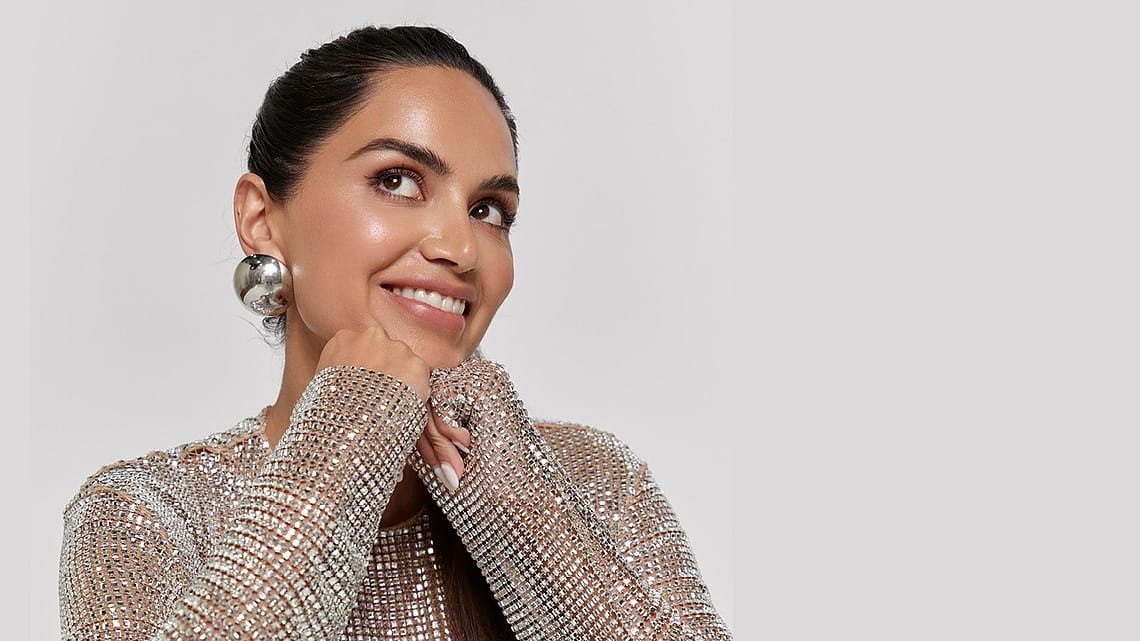
How Diipa Büller-Khosla turned her beauty journey into a global business
When Diipa Büller-Khosla was growing up, beauty was as much about wellness and everyday rituals as appearance. Her mother, an ayurvedic doctor and dermatologist, introduced her to a world where natural ingredients and traditional remedies coexisted with modern medicine. Ghee could serve as a lip balm, while hair oils were infused with botanicals. These practices shaped her understanding of beauty long before she considered building a business.
Today, Büller-Khosla is the founder of indē wild, a beauty and wellness brand combining ayurvedic traditions with science-backed formulations. Launched in 2021, the company has expanded beyond India into markets including the US, the UK, the UAE, Canada, and Europe.
Her journey, however, did not begin with entrepreneurship. Büller-Khosla initially intended to pursue a career in law, studying international human rights law in the Netherlands and interning at the International Criminal Court. She completed her bachelor’s degree, but did not complete a master’s degree. An internship at an influencer marketing agency introduced her to the commercial possibilities of social media and changed the direction of her career.
From law to the creator economy
Büller-Khosla’s early years were shaped by exposure to different cultures. She began schooling in New Delhi before moving to a boarding school in Ooty at around 11. Later, she moved to the Netherlands to study international human rights law, exploring questions around politics, justice, and human rights.
Law remained her intended career until an internship opened up an alternative. At the time, Instagram was relatively new and the influencer economy was beginning to take shape. While working at an early European influencer marketing agency, she helped close a deal between a fashion brand and an Italian fashion blogger.
The experience made her reconsider the relationship between media, marketing, and audiences. Creators could communicate directly with large audiences through a more personal connection than traditional advertising often offered. She also recognised an opportunity to represent Indian women in an industry dominated by European and American creators.
Büller-Khosla decided to pursue content creation, putting her legal career on hold. The transition was not straightforward. Her parents initially needed convincing that social media could be a viable profession, while limited industry networks made securing opportunities difficult.
She and her sister spent evenings emailing brands, agencies and public relations teams. Gradually, she secured opportunities with international fashion and beauty brands. However, she also became conscious of being treated as the token Indian creator in international spaces. The experience influenced her approach to representation and creating opportunities for other Indian women.
Turning a personal struggle into a beauty business
The origins of indē wild can also be traced to Büller-Khosla’s struggle with severe acne for more than a decade.
Working in an industry where polished photographs and carefully curated appearances were commonplace, she frequently edited her skin in pictures before posting them online. Eventually, she decided to write a blog post about her acne, sharing unedited photographs and describing her experience honestly.
The response was immediate. The post attracted so many visitors that her website crashed, while women reached out to share similar concerns.
The experience changed how she understood her relationship with her audience. She realised that honest conversations about personal experiences could create a deeper connection than aspirational beauty content alone.
Her search for solutions involved consulting dermatologists, experimenting with clinical ingredients, and returning to the ayurvedic rituals she had grown up with. Over time, she found that combining traditional practices with modern actives worked for her.
This prompted a business question. If finding a suitable skincare routine had been difficult for her, were other consumers facing the same problem?
The answer became the starting point for indē wild. Rather than build a brand around flawless skin, she wanted to create products addressing everyday beauty concerns while drawing on traditional wellness practices. She launched the company in 2021 with her husband, Oleg Büller-Khosla, as co-founder.
The idea behind Ayurvedistry
At the centre of indē wild is what Büller-Khosla calls “Ayurvedistry”, a combination of Ayurveda and modern chemistry.
The idea emerged from what she saw as a divide in the beauty market. Traditional ayurvedic products offered familiar ingredients and rituals, while modern skincare emphasised clinical formulations and active ingredients. She wanted to bring these approaches together rather than ask consumers to choose between them.
The philosophy informs the company’s product development, which spans skincare and haircare, including Champi Hair Oil, alongside fragrance mists such as After Heat and Solar Skin.
For Büller-Khosla, expanding the product range is not simply about entering more categories. Each launch must address a consumer need and remain consistent with the brand’s approach to traditional rituals and modern formulations.
“The first question we always ask is, ‘Is this solving a real problem?’” she says.
The company uses direct messages, WhatsApp groups, surveys, polls, and its Inner Circle community to identify gaps in consumers’ routines. This feedback loop allows Büller-Khosla to draw on her experience as a creator while making decisions as a founder.
Scaling a creator-led brand
Building indē wild has required Büller-Khosla to move from working largely independently as a creator to managing a growing company. In its early days, the business operated with a lean team, with members handling multiple responsibilities. As it expanded, she had to learn to delegate, build systems and trust others with decisions.
Her partnership with Oleg has also shaped the company’s growth. While she describes herself as instinctive and quick to act, she says her husband encourages the team to consider the bigger picture before moving ahead.
The company has received investments from SoGal Ventures and Unilever Ventures to support its expansion. India, the US, and the UK are currently its largest retail markets, according to Büller-Khosla. Its entry into Sephora in the US marked another milestone.
The company has raised $8 million across three funding rounds, with its latest disclosed $5 million seed round in March 2025. Tracxn lists its post-money valuation at $313,000 as of April 2025.
Rather than enter markets simply to increase its geographical footprint, she wants the company to understand local consumers and establish a meaningful presence while retaining its Indian origins.
Community as a business strategy
Büller-Khosla’s creator background has also influenced how indē wild engages with customers. The company’s community-first approach began with small gatherings, one of which attracted around 10-12 people at a café. Three years later, the brand was seeing thousands of event registrations, she says.
The company uses focus groups, polls, surveys, and online communities to understand consumer preferences, treating feedback as an input into product development rather than simply a marketing tool.
For Büller-Khosla, the relationship with customers carries responsibility alongside commercial value. Having built an audience through personal storytelling, she believes maintaining trust is essential as she moves further into entrepreneurship.
Beyond beauty
Social impact remains another part of her work. Before entering the creator economy, Büller-Khosla had wanted to become a human rights lawyer. That interest found another outlet through Post For Change, an initiative she co-founded with her husband to connect social media with social causes.
The initiative has worked with organisations including UNICEF and UN Women on issues such as menstrual hygiene and women’s rights, allowing her to retain a connection to the social-impact work that initially drew her to law.
Building the next chapter
Over the next five years, Büller-Khosla wants indē wild to expand internationally, with haircare a particular focus. She sees an opportunity to combine India’s traditions around champi, scalp care, oils and botanicals with modern formulations and introduce these practices to consumers across markets.
“I think the next five years are really about taking everything we’ve built with indē wild and seeing how far it can go,” Büller-Khosla says. She says the ambition was never simply to build an Indian beauty brand that became global, but “to build a global beauty brand from India.”
The near-term focus is on building out haircare, a category she sees as a natural extension of Indian beauty rituals such as oiling the hair, champi and scalp care. She wants to show that Indian haircare can be innovative, efficacious and relevant to how people live today, while helping Indian beauty and Ayurveda become part of the global beauty conversation alongside Korean and Japanese beauty.
Beyond haircare, she says the company is looking at gaps in beauty and wellness and exploring categories it has not entered before. Personally, she sees the next five years as being about continuing to build beyond the label of “creator” or “founder”. “I don’t see myself becoming less curious. If anything, I think I’m just getting started,” she says.
Her broader ambition is to build a global beauty business from India without diluting its cultural roots.
The journey from law to content creation and entrepreneurship was not part of her original plan. Yet each stage contributed to the business she is building today, from an understanding of storytelling and a direct connection with consumers to an interest in questioning established ideas.
With indē wild, Büller-Khosla is applying those experiences to building a business that brings together Indian beauty traditions and modern science.