
Govt in ‘reform express mode’ to fast-track critical minerals push: Minister Kishan Reddy
ADVERTISEMENT
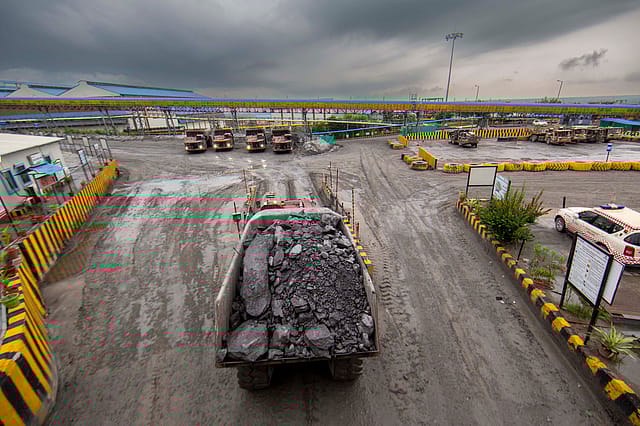
India is stepping up efforts to reduce its heavy reliance on imported critical minerals, with the government pushing reforms, boosting exploration, and encouraging domestic value addition, said G. Kishan Reddy, Minister of Coal and Mines.
Addressing the second edition of ‘Indian Critical Minerals Landscape: Foundation for a Sustainable Future - Empowering Innovation, Growth & Self-Reliance’, organised by FICCI jointly with the ministry, Reddy said the country must move from being resource-dependent to creating higher value within its borders.
Building a resilient domestic ecosystem
He said India remains nearly 95% dependent on imports of critical minerals and stressed the urgency of building a resilient ecosystem spanning exploration, extraction, processing, recycling, and advanced manufacturing.
The government, he said, is operating in a “reform express mode” to accelerate changes in the sector. “The central government along with state governments, and all stakeholders, are committed to working in unity to accelerate reforms in the critical minerals sector,” Reddy said.
Under the National Critical Minerals Mission, work has begun with an outlay of ₹32,000 crore. He said over 4,000 exploration activities have already been initiated across the country. “Over 4,000 critical mineral exploration activities have already been initiated across the country. We are strengthening the entire value chain, from exploration to advanced processing, to ensure India converts its resource potential into strategic advantage,” the minister said.
To support research and skill development, nine Centres of Excellence have been identified. The government has also exempted import duty on certain raw materials for critical minerals and created a dedicated fund to back the industry. Support is being extended through the National Mineral Exploration Trust as well.
Push for domestic manufacturing and global partnerships
In a major push to domestic manufacturing, Reddy announced that production of permanent magnets will begin by the end of this year under a PLI scheme of ₹7,280 crore. Four states — Andhra Pradesh, Odisha, Maharashtra, and Gujarat — have been identified for establishing critical minerals processing units to increase domestic value addition and reduce import dependence. Additionally, 143 coal mines have been identified under mine closure activities to be completed by 2028, focusing on sustainable transition and optimal resource use.
The minister also underlined the importance of overseas asset acquisition and stronger global partnerships, saying this reflects growing international confidence in India’s mineral strategy.
Highlighting international cooperation, Ed Jager, Minister (Commercial) at the High Commission of Canada in India, said, “Critical minerals are now strategic assets shaping the global economy. Canada intends to be a stable and responsible partner for India as we deepen cooperation across exploration, processing and resilient supply chains.”
Industry leaders echoed the call for closer collaboration. Kishore S., Senior Member, FICCI Taskforce on Critical Minerals and COO, Hindustan Zinc Ltd, said, “Critical minerals have moved from the periphery to the core of India’s national strategy. The reforms under the National Critical Minerals Mission and transparent auction mechanisms send a strong signal of India’s long-term commitment. Industry stands ready to partner with the government to build an integrated and globally competitive ecosystem.”