
India opposes BRICS currency proposal; no support for any such scheme, says Piyush Goyal
ADVERTISEMENT
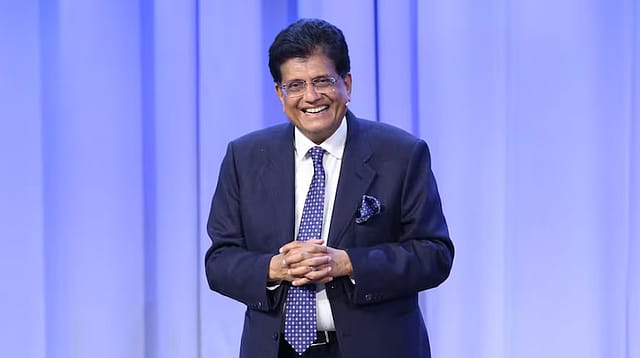
India is firmly opposed to the idea of a common BRICS currency and does not support any proposal to introduce one, Union Commerce and Industry Minister Piyush Goyal said on Friday, clarifying New Delhi's position amid periodic discussions within the grouping on reducing reliance on the US dollar.
Addressing reporters after the two-day BRICS Trade and Industry Ministers' Meeting in Jaipur, Goyal said India has made its stand unequivocally clear.
"Bharat BRICS currency ke paksh mein nahin hai. Hum samarthan nahin dete ki aisi koi BRICS currency jaisi nai yojna lai jaye. Bharat ka uske upar virodh hai (India is not in favour of a BRICS currency. We do not support the introduction of any such BRICS currency scheme. India opposes it)," he told reporters.
The minister's remarks assume significance as discussions around alternatives to the US dollar have periodically surfaced within BRICS, particularly with Russia and China advocating greater use of local currencies and exploring the possibility of a common currency. The issue also drew global attention last year after US President Donald Trump warned BRICS nations against any attempt to replace the dollar in international trade.
Focus shifts from currency debate to trade and MSME financing
The expanded BRICS grouping comprises Brazil, China, Egypt, Ethiopia, India, Indonesia, Iran, Russia, Saudi Arabia, South Africa and the United Arab Emirates.
Beyond the currency issue, Goyal said the ministerial meetings focused on strengthening trade and investment among member countries, improving access to finance for micro, small and medium enterprises (MSMEs), expanding digital commerce and enhancing industrial cooperation.
"The agenda included coordinating our bilateral trade, specifically imports and exports, and ensuring adequate financing and investment for MSMEs through banks and other channels," he said, adding that ministers also discussed paperless trade and greater use of digital technologies to simplify commercial processes.
AI, quantum computing take centrestage in BRICS discussions
The minister said India, which currently holds the BRICS presidency, also led discussions on leveraging emerging technologies such as artificial intelligence and quantum computing to boost industrial growth and create employment opportunities across member nations.
"There were extensive discussions on creating new jobs and opportunities through emerging technologies like artificial intelligence and quantum computing, and on how these technologies could accelerate economic and industrial progress across all BRICS nations," Goyal said, adding that "constructive decisions were reached".
FDI reforms to boost e-commerce opportunities for artisans, farmers
Goyal further highlighted India's recent amendments to foreign direct investment (FDI) regulations aimed at facilitating large-scale e-commerce.
"We have recently amended FDI regulations to facilitate large-scale e-commerce trade for products such as handlooms, handicrafts, textiles, footwear and various everyday items, including food products, that consumers typically purchase online. This will benefit our farmers and fishermen," he said.
Emphasising the government's focus on small enterprises, Goyal said India wants to use e-commerce to connect products made by artisans, traders and MSMEs with larger domestic and global markets.
"India is keen to harness the power of e-commerce to connect small-scale products with vast markets. Many nations have already generated massive trade volumes through this channel, and India is now striving to ensure that our micro and small enterprises and traders gain similar opportunities," he said.
Referring to National Handloom Day, Goyal said the initiative would also support traditional and labour-intensive sectors, including khadi, handlooms, textiles and leather craftsmanship. (With inputs from PTI)