
India showcases reform-led growth, digital transformation at WTO Trade Policy Review; Commerce Secretary highlights Aatmanirbhar Bharat push
ADVERTISEMENT
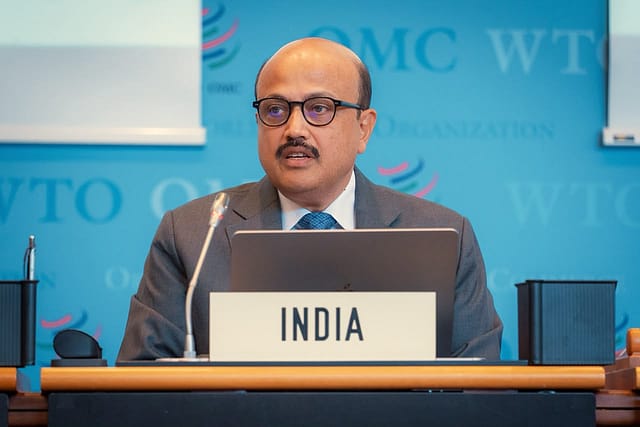
India highlighted its strong macroeconomic fundamentals, reform-driven growth and commitment to building a globally competitive economy during its eighth Trade Policy Review (TPR) at the World Trade Organization (WTO), with Commerce Secretary Rajesh Agrawal outlining the country's progress on economic reforms, digital transformation and ease of doing business.
The Ministry of Commerce and Industry, in a post on social media platform X, said, "India's 8th Trade Policy Review at the WTO. Commerce Secretary Rajesh Agrawal highlighted India's strong economic fundamentals and reform-driven growth, reaffirming the nation's commitment to Aatmanirbhar Bharat and the vision of Viksit Bharat." The review forms part of the WTO's Trade Policy Review Mechanism, under which members periodically assess each other's trade and economic policies.
India highlights reforms, digital transformation
According to the ministry, India used the multilateral platform to showcase its progress across key pillars of economic development, including sustained economic resilience, digital transformation, ease of doing business, food security and governance reforms aimed at improving regulatory certainty for businesses.
The ministry said, "From sustained economic resilience and digital transformation to ease of doing business, food security, and the Jan Vishwas trust-based governance framework, India showcased its progress towards inclusive and sustainable growth."
It is to be mentioned that the Jan Vishwas framework is part of the government's broader effort to simplify regulations, decriminalise minor business-related offences and foster a trust-based compliance ecosystem, with the objective of improving the investment climate and reducing compliance costs for enterprises.
WTO review comes amid evolving global trade landscape
India's Trade Policy Review comes at a time when global trade continues to face challenges from geopolitical uncertainties, supply-chain diversification, tariff measures and shifting investment patterns. The WTO's review mechanism provides member countries an opportunity to explain their trade and economic policies while responding to questions raised by other members.
Historically, India has consistently projected its trade strategy as one that balances domestic manufacturing ambitions under the Aatmanirbhar Bharat initiative with deeper integration into global value chains. The government, at the same time, has also been pursuing an ambitious trade agenda through bilateral free trade agreements and policy reforms aimed at boosting exports, attracting investments and strengthening manufacturing competitiveness.