
Threat of up to 100% tariffs on India over Russian oil looms as US House advances sanctions Bill
ADVERTISEMENT
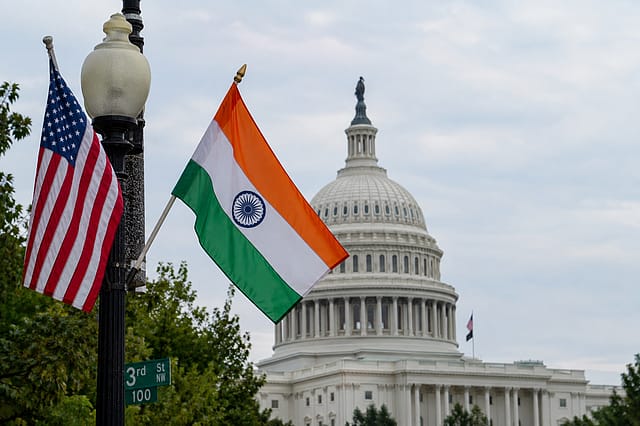
India faces a fresh tariff threat from the US as the House of Representatives advances legislation that could empower President Donald Trump to impose duties of up to 100% on countries purchasing Russian oil and gas.
The Lindsey O. Graham Sanctioning Russia and Iran Act of 2026, passed by the US Senate 86-11 last month, cleared a key procedural vote in the House and is now headed towards a final vote. The legislation has triggered a debate within Congress over the extent of presidential tariff powers.
India among countries named in proposed amendment
An amendment introduced by Democratic Congressman Steny Hoyer proposes explicitly naming 10 countries, including India, China, Türkiye, Azerbaijan, Hungary, Slovakia, the UAE, Singapore, Kazakhstan and Kyrgyzstan, as being eligible for duties of up to 100% under the bill's secondary tariff provisions.
Importantly, the amendment does not itself impose a 100% tariff on India. It would specifically make India eligible for such duties if the legislation is enacted and the President subsequently exercises the authority.
Defending his amendment, Hoyer said it would "tighten the scope of the legal tariff authority by naming the countries".
Hoyer also argued that Congress needed to send a clear message on Russia, saying, "Sanctions ought to be imposed, tariffs or penalize countries who are funding Russia's ability to make war."
The proposed tariff escalation could have wider implications for India's growth outlook. Aditi Nayar, Chief Economist, ICRA Ltd, said, "Any imposition of higher tariffs by the US, and the associated uncertainty, would cast a downside on Indian growth prospects."
Democrats oppose wider tariff authority
Another amendment, moved by Democratic Congressman Gregory Meeks, seeks to remove the provision granting the President broad secondary tariff authority.
Meeks said the bill was a "deeply flawed bill" that would "hand the president sweeping new tariff authorities that he can abuse to raise costs on the American people".
He argued that Section 113 could allow tariffs of up to 100% on goods from major purchasers of Russian oil and gas, potentially affecting a large volume of US imports.
"If the House passes this bill as written, the result will not be sanctions on Russia or support for Ukraine, it will be higher costs and more inflation for the American people," Meeks said.
Final legislation to determine India's tariff exposure
The final provisions affecting India will depend on the amendments adopted by the House and subsequent legislative action. The bill would also target Russia's leadership, energy sector and vessels accused of helping Moscow evade sanctions.
For India, the proposed measure adds another layer of uncertainty to bilateral trade relations, with the immediate tariff exposure still dependent on whether the legislation becomes law and whether the President uses the powers it provides.
Meeks summed up the Democrats' objection by saying: "American families will pay the cost of this bill. Vladimir Putin will not."